Best Dedicated Hosting

If you need consistent, high performance with strict isolation and full control, dedicated hosting is your best fit. For most buyers, that means choosing between bare metal (OS on physical hardware) and dedicated cloud hosting (your own single-tenant virtualized cluster).

If you prioritize rapid elasticity and lowest operational overhead, dedicated public cloud instances may be preferable. If your applications have a steady workload with periodic load spikes—or you’re migrating in stages—hybrid hosting (dedicated core with public-cloud bursting) can help to balance cost, control, and agility.

Why it matters: The compute model you choose determines performance consistency, isolation for compliance, scaling mechanics, and how predictable your monthly costs will be.
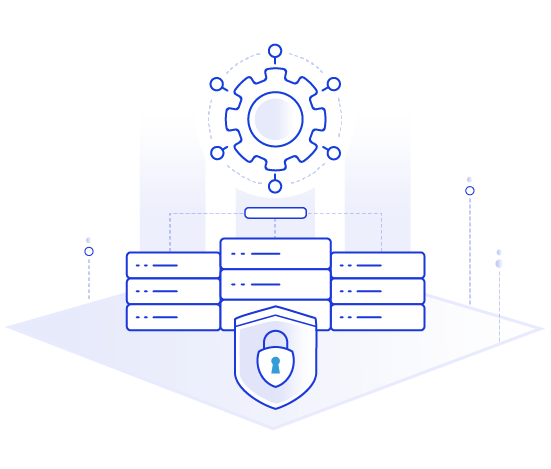
Best Dedicated Hosting Graphic

Key Takeaways

Dedicated Hosting Icon

Dedicated Hosting - single-tenant hardware (bare metal or dedicated cloud) with consistent performance & maximum control.

Cloud Hosting Icon

Cloud Hosting - fastest elasticity & managed services; performance can vary under multi-tenant contention.

Hybrid Hosting Icon

Hybrid Hosting - steady core on dedicated; burst or augment with cloud as needed.

Isolation Icon

Isolation is highest on dedicated hosting and on the dedicated portion of hybrid.

Ease of scaling favors Icon

Ease of scaling favors the public cloud; hybrid hosting balances fast bursts with a stable core

Cost predictability Icon

Cost predictability is highest on dedicated for steady usage; public cloud varies depending on compute consumption.

Benefits & Features

Features

These are the building blocks that deliver those benefits into practice. Use these features to customize your environment—from compute and storage to networking, security, operations, and optional GPUs—so it fits exactly what your workloads need.

  • Latest-gen CPUs & high-memory tiers with options for CPU pinning and NUMA awareness.
  • Storage flexibility: NVMe, RAID levels, and SAN/NAS attachment for tiered performance.
  • High-throughput networking: 10–40 Gbps ports, private VLANs, and peering/interconnect options.
  • Security stack: baseline DDoS protections, firewall/WAF options, micro-segmentation.
  • Resilience & Ops: snapshots/backup/DR, automation/API, infrastructure-as-code, monitoring/alerting.
  • GPU options (select SKUs): dedicated GPU servers for AI/ML, HPC, and rendering workload
Features Icon
Benefits Icon

Benefits

When your business application relies on stable and reliable hardware, slowdowns or surprises can cause a major headache. Dedicated hosting keeps resources exclusively yours. Below are some of the real-world advantages that your business can rely on day to day.

  • Predictable performance for latency-sensitive apps (databases, analytics, real-time APIs).
  • Hardware isolation to avoid noisy neighbors and support compliance segmentation.
  • Deep customization of OS, storage layout, networking, and security controls.
  • Stable costs for steady, long-running workloads and reserved capacity planning.

Definitions of the best
dedicated hosting

Terms like “bare metal,” “dedicated cloud,” and “isolation” can mean different things to different businesses. This quick glossary spells out how we’re using each term in this article, so you can skim the rest without ambiguity.

  • Dedicated hosting → Single-tenant physical resources reserved for one customer. Includes bare metal and dedicated cloud hosting.
  • Bare metal → OS runs directly on a physical server (no provider hypervisor layer).
  • Dedicated cloud hosting → Your own single-tenant virtualization hosts (private/managed cloud, “dedicated hosts”), giving VM flexibility with hardware isolation.
  • Cloud hosting (public VMs) → Virtual machines on a shared hypervisor (multi-tenant).
  • Hybrid hosting → Dedicated core platform integrated with public-cloud services or burst capacity.
  • Isolation → Degree to which compute, storage, and network are single-tenant and segmented.
  • Noisy neighbor → Performance impact caused by other tenants on shared infrastructure.

Service Type Comparison

Service Type Ideal For Compute Model Isolation Scaling Performance Security & Compliance Fit Operational Overhead Cost Predictability
Dedicated (Bare Metal or Dedicated Cloud) Steady, high-throughput apps; databases; regulated workloads; fixed licensing; GPU/HPC Single-tenant physical (optional virtualization) High Manual/Planned (add hosts/servers) High/consistent Strong (clear boundaries) Med–High (you control stack) High
Cloud (Public VMs) Bursty traffic; experiments; fast time-to-market; managed PaaS Shared hypervisor Med Elastic/Auto Variable (multi-tenant) Good with controls Low–Med (provider manages more) Variable (usage-based)
Hybrid Steady core + bursts; phased migrations; cost control with agility Mixed High on core Mixed (plan core, burst cloud) Balanced Strong if well-architected Med–High (integration work) Mixed

Introducing Atlantic.Net Dedicated Options

When your decision points to dedicated or hybrid, Atlantic.Net offers single-tenant compute from bare metal to private/dedicated cloud—and dedicated GPU servers for acceleration:

Dedicated Server Hosting Icon

Dedicated Server Hosting

Single-tenant servers with modern CPU families, high-memory profiles, NVMe options, private VLANs, and high-bandwidth ports.

Bare Metal Servers Icon

Bare Metal Servers

Direct-to-metal performance with OS control, BIOS/firmware tuning, and custom RAID/storage layouts for IO-intensive workloads.

Managed Private Cloud Icon

Managed Private Cloud

Your own single-tenant virtualization hosts for VM flexibility with hardware isolation—ideal when you want live migration-style agility, snapshots, and high density under your control plane.

Dedicated GPU Servers Icon

Dedicated GPU Servers

Purpose-built SKUs for AI/ML training and inference, rendering, and scientific computing; align GPU memory, PCIe bandwidth, and storage throughput to your accelerator profile.

Decision Paths by Scenario

Pick Atlantic.Net Dedicated Hosting if…

  • Your workloads are steady and resource-intensive—think OLTP/OLAP databases, video processing pipelines, or high-throughput APIs—and you want them on Atlantic.Net single-tenant bare metal for stable, low-jitter performance.
  • You require strict isolation for latency-critical services and prefer having your own Atlantic.Net dedicated servers instead of sharing hosts with other tenants.
  • Software licensing is tied to sockets/cores and you want to control consolidation density on fixed hardware in Atlantic.Net data centers.
  • You care about cost predictability and hardware-level control—BIOS tuning, CPU pinning, custom RAID layouts—delivered on Atlantic.Net infrastructure rather than shared platforms.
  • You need GPU acceleration for AI/ML training and inference, rendering, or CUDA-based HPC, and want those GPUs dedicated to your team on Atlantic.Net.
Pick Atlantic.Net Dedicated Hosting Graphic
Pick Public Cloud if Graphic

Pick Public Cloud if…

  • You face bursty or seasonal demand and most of the value is in scaling up and down rapidly on hyperscale clouds.
  • You want fully managed services (databases, queues, serverless) to offload as many ops as possible, and you’re comfortable with multi-tenant infrastructure.
  • You prioritize rapid experimentation and broad global reach, using many regions and services your team already knows.

Atlantic.Net often fits alongside this: keep the most sensitive or performance-critical workloads on Atlantic.Net dedicated hosting, while experimental or short-lived projects run in the public cloud.

Pick Hybrid with Atlantic.Net if…

  • You have a stable baseline that belongs on Atlantic.Net dedicated servers and periodic spikes you handle by bursting into public cloud.
  • You’re migrating in phases or refactoring over time and want Atlantic.Net as the landing zone for your long-lived, stateful systems while the rest evolves.
  • You want tight cost control for core systems on Atlantic.Net, with agile extension into the public cloud for analytics, edge, or event-driven workloads.
Pick Hybrid with Atlantic.Net Graphic

Costs, Performance & Risks with Atlantic.Net Dedicated Hosting

Before you lock in an architecture, it helps to look at three angles through an Atlantic.Net lens: what your Atlantic.Net dedicated hosting will cost over time, how it will perform under real load, and what resilience you have when something fails.

Use the checklists below to firm up your assumptions, tune for consistent throughput and latency, and reduce exposure to common pitfalls—always tying decisions back to your SLOs and RTO/RPO targets.

Costs (with Atlantic.Net in mind)

  • Hardware lifecycle. With Atlantic.Net, servers are provisioned, monitored, and refreshed for you—effectively amortizing the host cost over 3–5 years without you owning hardware or dealing with parts.
  • Licensing. Atlantic.Net can help you design around OS, hypervisor, database, and application licensing, optimizing core/socket counts and consolidation density on your dedicated nodes.
  • Bandwidth & transit. Instead of unpredictable egress from public cloud, Atlantic.Net offers committed ports and bandwidth options, plus inter-DC connectivity and private cross-connects where needed.
  • Support & management. Decide how far you want to go: run DIY on Atlantic.Net dedicated servers, or add managed services (monitoring, backups, security, DR testing) to reduce in-house SRE load.

Performance on Atlantic.Net

  • I/O consistency. Atlantic.Net dedicated hosting gives you direct access to NVMe and RAID-tuned storage, so you can design for low, stable latency instead of shared I/O pools.
  • CPU/NUMA awareness. On Atlantic.Net bare metal or dedicated cloud, you can pin cores for critical threads and align memory locality for performance-sensitive workloads.
  • Storage tiers. Build sensible tiers—hot NVMe, warm SAS/SATA, object storage for cold data—and let Atlantic.Net handle the underlying hardware and reliability.
  • Network paths. Use private VLANs, redundant uplinks, and optional jumbo frames/QoS on Atlantic.Net networks to keep east–west traffic (app ↔ DB, replication, HA) efficient and predictable.
  • GPU throughput. Atlantic.Net dedicated GPU servers can be sized for VRAM capacity, PCIe bandwidth, and interconnect requirements so your ML/HPC workloads aren’t bottlenecked by I/O.

Risks & Mitigations with Atlantic.Net

  • Capacity planning (Dedicated/Hybrid). Atlantic.Net monitoring and capacity telemetry help you maintain headroom, plan rolling expansions, and avoid surprise saturation.
  • Failover design. Use Atlantic.Net’s backup, snapshot, and DR tooling, plus documented runbooks, to test restores and DR regularly—not just backups.
  • Vendor lock-in (Public Cloud). If you’re hybrid, keep core systems portable: containerize, favor open engines, and codify infra with IaC. Atlantic.Net’s dedicated hosting gives you a stable, predictable base that’s easier to target than rapidly changing cloud primitives.
  • Security drift. On Atlantic.Net, you can enforce CIS-style baselines, patch windows, and periodic audits, and layer on firewalls, AV/EDR, and other managed security services.

How This Maps to Your Goals with Atlantic.Net

This is where Atlantic.Net’s platform turns into concrete outcomes for your team. Use it to map your requirements—performance, isolation, networking, security, resilience, day-2 operations, and hybrid integration—to specific Atlantic.Net capabilities.

Performance & isolation. Atlantic.Net bare metal delivers lowest jitter for databases and high-throughput services, while Atlantic.Net dedicated cloud gives you single-tenant hosts with VM-level flexibility.

Networking. Private VLANs, redundant uplinks, and inter-DC connectivity on Atlantic.Net support replication, HA, and DR without hair-pinning traffic through the open internet.

Security. Single-tenant servers by design, plus optional firewalls/WAF, segmentation, and HIPAA-ready environments, help you meet strict isolation and compliance goals.

Resilience. Snapshots, backups, and DR solutions on Atlantic.Net can be tuned to your RPO/RTO, with 24×7 support available when you need help designing or testing them.

Operations. Atlantic.Net offers 24×7 expert support and automation-friendly APIs so you can accelerate provisioning and day-2 operations instead of hand-building servers.

Hybrid enablement. Reference architectures and network options make it easier to burst to public cloud while keeping your stateful cores and regulated data on Atlantic.Net dedicated nodes.

How to Get Started with Atlantic.Net

The path below takes you from a rough workload inventory to validated, production-ready Atlantic.Net dedicated infrastructure. It’s designed to reduce implementation risk, accelerate time-to-value, and prove that performance, availability, and compliance goals are being met.

Cost predictability Icon

Assess →

Work with Atlantic.Net to inventory workloads, understand latency requirements, data gravity, and compliance obligations (e.g., HIPAA), and decide what belongs on dedicated vs. hybrid.

Cost predictability Icon

Design →

Choose Atlantic.Net server/host profiles, storage tiers, VLAN layout, and HA/DR patterns that align with your licensing model and growth plans.

Cost predictability Icon

Provision →

Use Atlantic.Net’s automation and portal to roll out base images, configuration baselines, monitoring, and alerting on your dedicated servers.

Cost predictability Icon

Migrate →

Sequence databases and other stateful services onto Atlantic.Net first; use replication and parallel performance tests to validate behavior before cutover.

Cost predictability Icon

Validate

Run failover drills, load tests, and cost/performance checks against your original assumptions, adjusting capacity or architecture with Atlantic.Net engineers if needed.

FAQ

Dedicated hosting at Atlantic.Net provides single-tenant compute for one customer. Your CPU, memory, storage, and private network segments are not shared with other tenants, which delivers predictable performance and strong isolation for critical workloads.

A common Atlantic.Net example is a transaction-heavy database or low-latency analytics engine running on a bare-metal server with NVMe storage and dedicated 10–40 Gbps networking. Another is an Atlantic.Net dedicated cloud cluster where only your VMs run on your reserved virtualization hosts.

At Atlantic.Net, a dedicated host is a physical server reserved for your use. In a dedicated cloud model, you consume these hosts through a virtualization layer (your VMs on your hosts). On bare metal, you install and manage the OS directly on the hardware.

Atlantic.Net dedicated hosting is used by organizations with steady, performance-critical workloads, regulated industries needing clear segmentation (for example, HIPAA-covered entities), teams optimizing license costs on fixed cores/sockets, and applications where I/O consistency and low jitter are non-negotiable.

Atlantic.Net Dedicated vs. Public Cloud: Atlantic.Net gives you single-tenant hardware and consistent performance, while public cloud focuses on elasticity and a vast service catalog on multi-tenant infrastructure. Atlantic.Net Dedicated vs. Private Hosting/Private Cloud: “Private hosting” can mean many things; with Atlantic.Net you can choose dedicated cloud (your own virtualization hosts) or bare metal (OS on hardware), both reserved for a single customer.

Hybrid is often ideal when you have a stable baseline that runs best on Atlantic.Net dedicated servers, plus sporadic peaks or analytics workloads that make sense in public cloud. You keep stateful systems and sensitive data on Atlantic.Net, and burst or offload stateless and analytic workloads to the cloud.

Atlantic.Net can help, but a good starting point is:
  • CPU: Profile peak usage and add 25–40% headroom for failover and growth.
  • RAM: Size for dataset/resident set + OS overhead, with margin for caching.
  • Storage: Use NVMe for hot data, choose RAID based on read/write patterns, and define IOPS/throughput targets from real traces. Plan backups and consider replication for HA on Atlantic.Net.

Yes. On Atlantic.Net, you can design for horizontal scale (clusters, load balancers) and use rolling deployments to avoid downtime. Dedicated cloud options allow more flexibility (e.g., maintenance on hosts while VMs stay online), while bare metal may require brief maintenance windows for vertical upgrades.

Atlantic.Net dedicated GPU servers are well-suited for AI/ML training and inference, GPU rendering, and CUDA-based HPC. The Atlantic.Net team can help you match GPU memory and interconnect bandwidth to your model sizes and data pipelines, and ensure storage and network throughput keep up with the accelerators.
Final Guidance Icon

Final Guidance

If you value control, isolation, and consistency, Atlantic.Net dedicated hosting is a strong place to start—choose bare metal for direct hardware control and lowest jitter, or Atlantic.Net dedicated cloud when you want single-tenant isolation plus VM flexibility. When you also need rapid bursts or fully managed services, add a hybrid strategy: anchor stateful, steady workloads on Atlantic.Net dedicated hardware and use public-cloud elasticity where it adds the most value.

Your critical applications deserve dedicated resources backed by an experienced partner. Atlantic.Net has been doing this for 30 years. Contact our sales team for help designing your ideal cluster, or deploy a dedicated cloud server instantly on the Atlantic.Net Cloud Platform and start building on a foundation of uncompromising speed and security.

Dedicated to Your Success

Jason Profile Picture

- Jason Coleman

VP of Information Technology, Orlando Magic

"After evaluating a range of managed hosting options to support our data operations, we chose Atlantic.Net because of their superior infrastructure and extensive technical knowledge."

Erin Profile Picture

- Erin Chapple

General Manager for Windows Server, Microsoft Corp.

"Atlantic.Net’s support for Windows Server Containers in their cloud platform brings additional choice and options for our joint customers in search of flexible and innovative cloud services."

Form Icon

Share Your Vision With Us

And We Will Develop a Hosting Environment Tailored to Your Needs!

Contact an advisor at 866-618-DATA (3282), email [email protected], or fill out the form below.

Atlantic.Net
Privacy Overview

We use cookies for advertising, social media and analytics purposes. Read about how we use cookies in our updated Privacy Policy.

If you continue to use this site, you consent to our use of cookies and our Privacy Policy.