
Backdrop CMS is a simple, user-friendly, and lightweight content management system used for building attractive and professional websites. It was forked from Drupal CMS and designed for small and medium organizations. Backdrop CMS is a full-featured CMS that helps non-technical users to manage a wide variety of content. Backdrop CMS offers more than 750 modules, themes, and layouts that help you to extend the functionality of your website.
In this post, we will show you how to install Backdrop CMS on Oracle Linux 10.[jumpbox]
Step 1 – Install the LAMP Server
Before starting, you will need to install a LAMP stack on your server. First, install the Apache and MariaDB with the following commands:
dnf update -y

dnf install httpd mariadb-server  -y
Next, run the following command to install PHP with other required extensions:
dnf install php php-cli php-fpm php-gd php-mysqlnd php-json php-curl php-pdo php-mbstring php-dom php-xml unzip -y
Next, start and enable the Apache, MariaDB, and PHP-FPM services:
systemctl start httpd mariadb php-fpm
systemctl enable httpd mariadb php-fpm
Step 2 – Create a Database for Backdrop CMS
Next, you will need to create a database and user for Backdrop CMS. First, connect to MariaDB with the following command:
mysql
Once you are connected to MariaDB, create a database and user with the following command:
create database backdrop;
create user 'backdrop'@localhost identified by 'password';
Next, grant all permissions to the backdrop database:
grant all privileges on backdrop.* to 'backdrop'@localhost;
Next, flush the privileges to apply the changes and exit from MySQL with the following command:
flush privileges;
exit;
Step 3 – Download Backdrop CMS
Next, visit the Backdrop CMS GitHub page, pick the URL of the latest Backdrop CMS, and download it with the following command:
wget https://github.com/backdrop/backdrop/releases/download/1.32.1/backdrop.zip
Once the download is completed, unzip the downloaded file using the following command:
unzip backdrop.zip
Next, move the extracted directory to the Apache web root:
mv backdrop /var/www/html/
Next, change the ownership and permissions of the backdrop directory:
chown -R apache:apache /var/www/html/backdrop
chmod -R 775 /var/www/html/backdrop
Step 4 – Create an Apache Virtual Host for Backdrop CMS
Next, you will need to create an Apache virtual host configuration file for Backdrop CMS. You can create it with the following command:
nano /etc/httpd/conf.d/backdrop.conf
Add the following configurations:
<virtualhost *:80>
ServerAdmin [email protected]
ServerName backdrop.example.com
DocumentRoot /var/www/html/backdrop
<directory /var/www/html/backdrop>
allowoverride all
allow from all
</directory>
TransferLog /var/log/httpd/backdrop_access.log
ErrorLog /var/log/httpd/backdrop_error.log
</virtualhost>
Save and close the file, then restart the Apache service to apply the changes:
systemctl restart httpd
To check the Apache status, run the following command:
systemctl status httpd
You should see the Apache status in the following output:
● httpd.service - The Apache HTTP Server
   Loaded: loaded (/usr/lib/systemd/system/httpd.service; disabled; vendor preset: disabled)
  Drop-In: /usr/lib/systemd/system/httpd.service.d
           └─php-fpm.conf
   Active: active (running) since Tue 2025-12-19 05:20:56 EDT; 7s ago
     Docs: man:httpd.service(8)
 Main PID: 32357 (httpd)
   Status: "Started, listening on: port 80"
    Tasks: 213 (limit: 11409)
   Memory: 24.4M
   CGroup: /system.slice/httpd.service
           ├─32357 /usr/sbin/httpd -DFOREGROUND
           ├─32359 /usr/sbin/httpd -DFOREGROUND
           ├─32360 /usr/sbin/httpd -DFOREGROUND
           ├─32361 /usr/sbin/httpd -DFOREGROUND
           └─32362 /usr/sbin/httpd -DFOREGROUND
Step 5 – Access Backdrop CMS Web UI
Now, open your web browser and access the Backdrop CMS web interface using the URL http://backdrop.example.com. You should see the following screen:
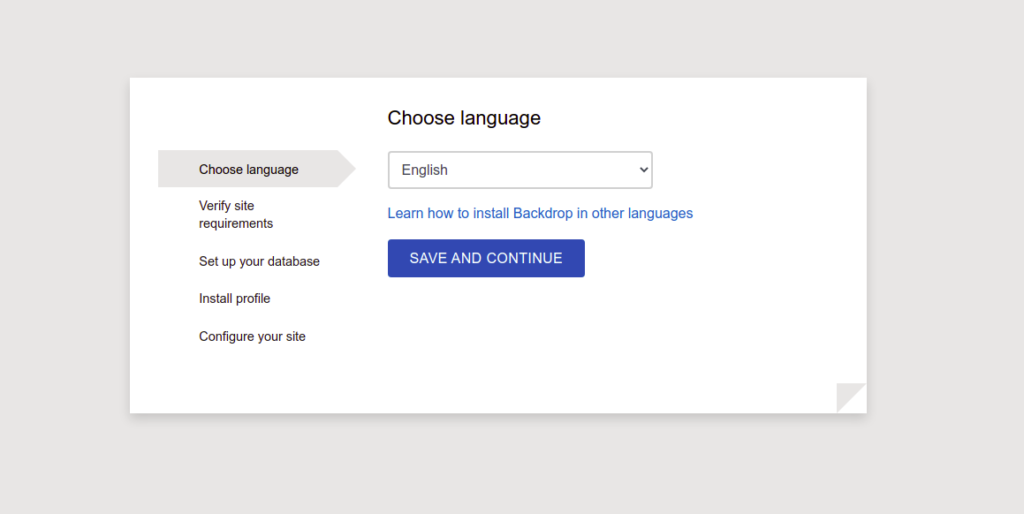
Select your language and click on the SAVE AND CONTINUE button. You should see the database configuration screen:
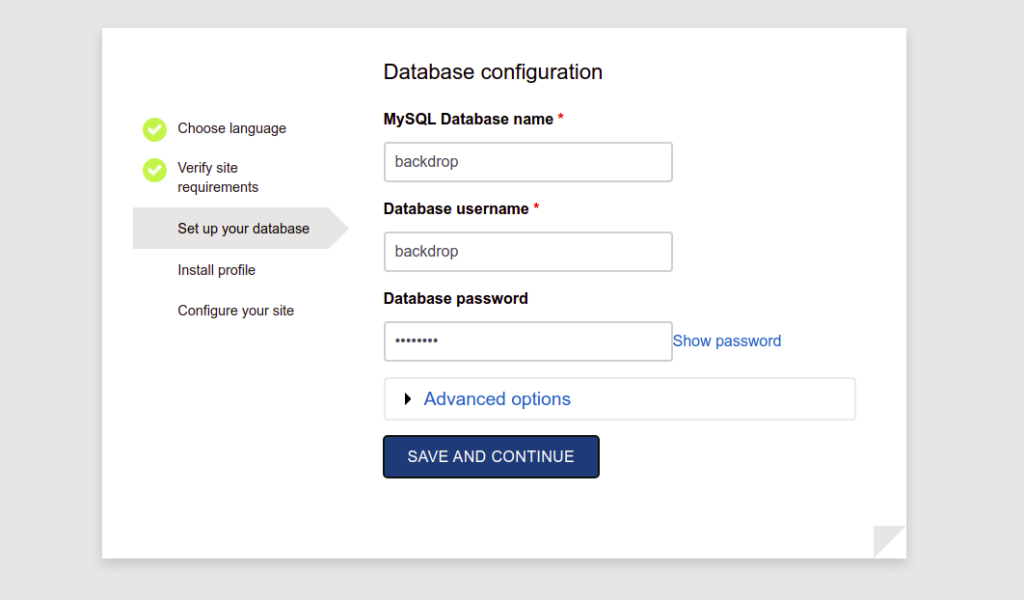
Provide your database settings and click on the SAVE AND CONTINUE button. You should see the site configuration screen:
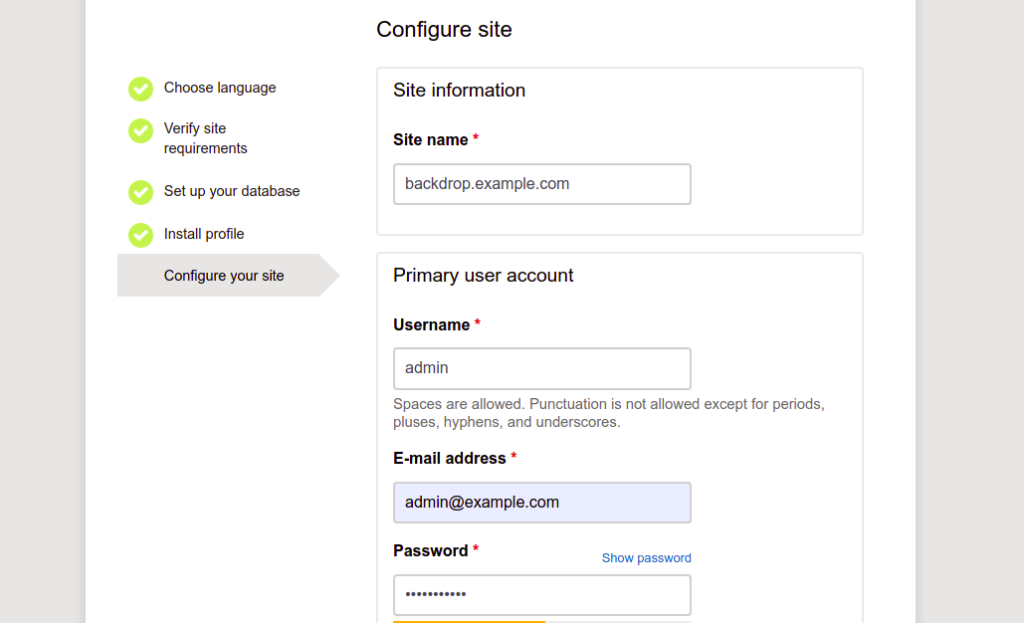
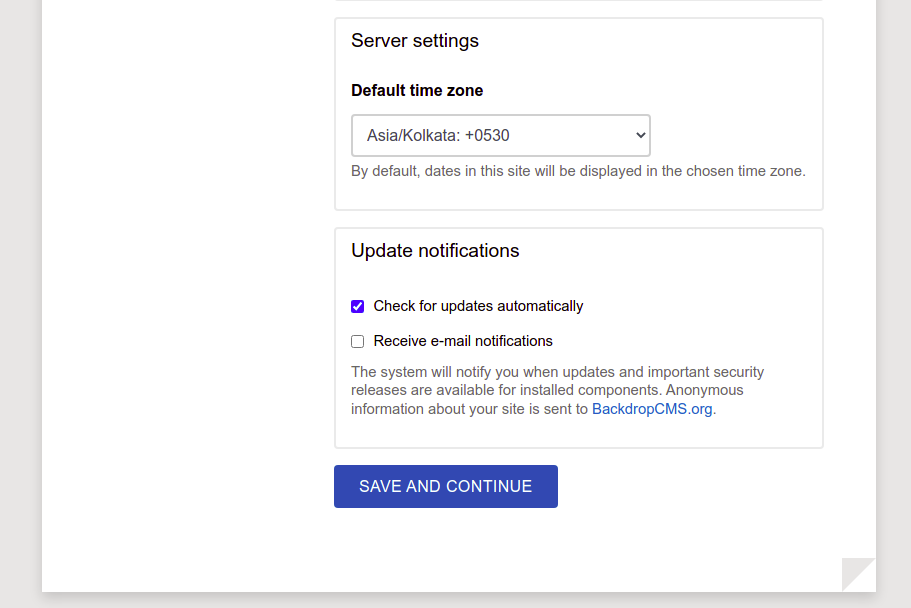
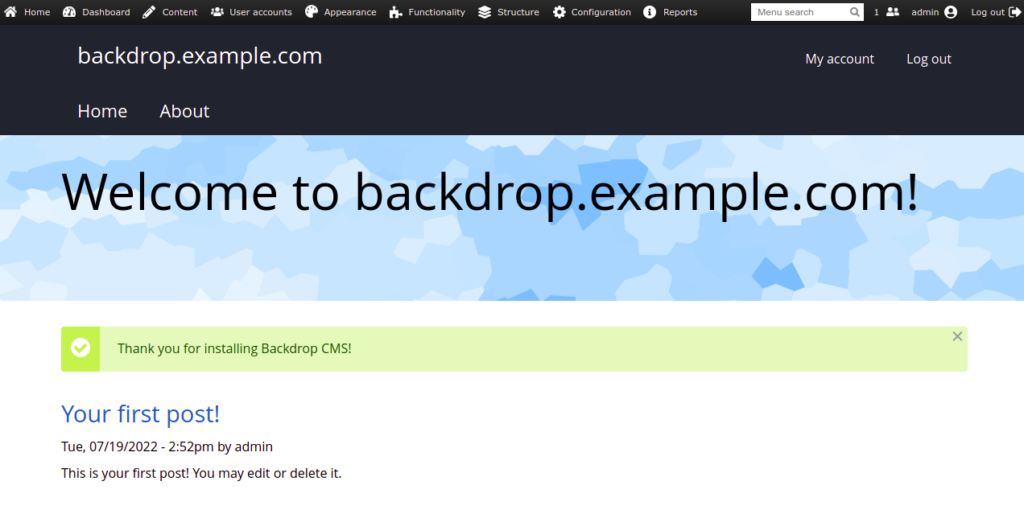
Provide your site information, admin username, password, email, time zone and click on the SAVE AND CONTINUE button. You should see the Backdrop CMS dashboard:
Conclusion
In this post, we explained how to install Backdrop CMS on Oracle Linux 10. You can now start building modern and comprehensive websites using the Backdrop CMS platform. Try it on dedicated hosting from Atlantic.Net!
* This post is for informational purposes only and does not constitute professional, legal, financial, or technical advice. Each situation is unique and may require guidance from a qualified professional.
Readers should conduct their own due diligence before making any decisions.