
Artificial intelligence (AI) is a very popular subject for learners and readers, and staying informed on its key themes is essential, especially considering how quickly the technology changes and develops. Keeping pace with AI now requires high-signal resources rather than broad speculation. In 2026, the most valuable books focus on practical frameworks for engineering, deployment, and ethical decision-making. AI books, authored by leading experts, provide a critical resource for understanding complex AI subjects. Ever since ChatGPT was put on general release in November 2022, AI has gone mainstream, and generative AI has ushered in a new era in science and technology, making a foundational understanding of its basic concepts really important for anyone interested in the field.
Books are a great way of demonstrating how integrating AI into daily life and business operations is achieved. The strongest titles now clearly signal intent—whether they are written for engineers building systems, leaders managing adoption, or readers focused on governance and ethics. Personal stories from authors and the brief history of AI’s evolution offer valuable insights and perspective. Books on AI explain the fundamental science of neural networks, image recognition, and the concept of co-intelligence.
The best books on the subject are a must-read for those who wonder about the future, the challenges, and the ethical considerations that AI presents. From sci-fi-inspired concepts to practical applications, AI books offer a fascinating look at the potential impact of artificial intelligence on humanity. Understanding AI happens one concept at a time, and these texts provide an accessible path for teachers, students, and business professionals alike. As the field matures, the essential reading list has expanded – covering not just what AI is, but how it is built, governed, and used responsibly at scale.
How to Choose an AI Book in 2026
Use this checklist before you buy:
- Your goal: learn theory, build systems, lead adoption, or govern risk
- Your level: math-heavy textbook vs. narrative + examples
- Time horizon: near-term practice (evaluation, deployment) vs. long-run strategy
- What you’re building: LLM apps, ML products, policy, or team workflows
- Signal vs. noise: prefer books with clear frameworks over trend-chasing
- Complementarity: pair one technical book with one governance/ethics book
A Selection of Must-Read AI Books
We managed to narrow down a huge selection of books down to our ten favorites. For clarity and usefulness in 2026, the books are grouped by reader intent—such as foundational theory, engineering practice, or ethics and governance. We have chosen a varied selection, some old, some new. Several books offer a complete view of artificial intelligence, from its technical underpinnings to its societal implications. This intent-based structure helps readers quickly identify which books match their goals, whether they are building systems, shaping policy, or studying AI’s long-term impact. Here is a list of some of the best books available for gaining a deeper understanding of AI.
Foundations and Theory
#1: Artificial Intelligence: A Modern Approach by Stuart Russell and Peter Norvig (2021)
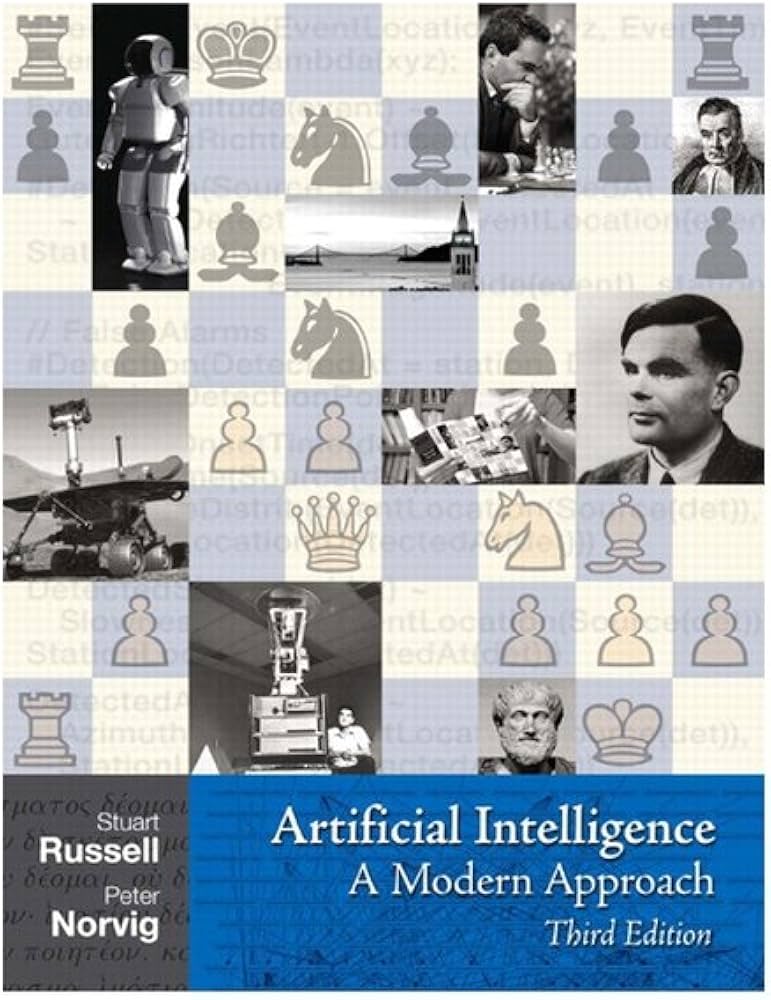
Intent: For Foundations & Theory
Introduction: This volume is widely considered the standard text in the field of artificial intelligence. It provides a complete and detailed exploration of AI, covering a vast range of topics including search, knowledge representation, machine learning, and robotics. As a foundations-first book, it focuses on formal models and reasoning rather than applied tooling or organizational use of AI. The authors frame AI as the study of intelligent agents that perceive their environment and act to maximize success.
Key Takeaways:
- It offers a complete and authoritative overview of the foundational principles of AI.
- The concept of the “intelligent agent” is used as a unifying theme across all topics.
- It provides in-depth coverage of both classical and modern AI techniques, including probabilistic reasoning and deep learning.
- The theoretical framing supports later study in AI safety, ethics, and system control.
Points to Consider:
- Its complete nature results in a very long and dense book, which can be difficult for casual reading.
- A solid background in computer science and mathematics is necessary to grasp many of the concepts.
- Readers looking for guidance on deployment, governance, or real-world AI operations will need complementary, intent-specific titles.
Ideal for: This book is ideal for undergraduate or graduate students taking an AI course. It is best suited for readers whose primary intent is mastering core AI theory before moving on to engineering, ethics, or policy-focused books.
#2: The Coming Wave: Technology, Power, and the Twenty-first Century’s Greatest Dilemma by Mustafa Suleyman and Michael Bhaskar (2024)
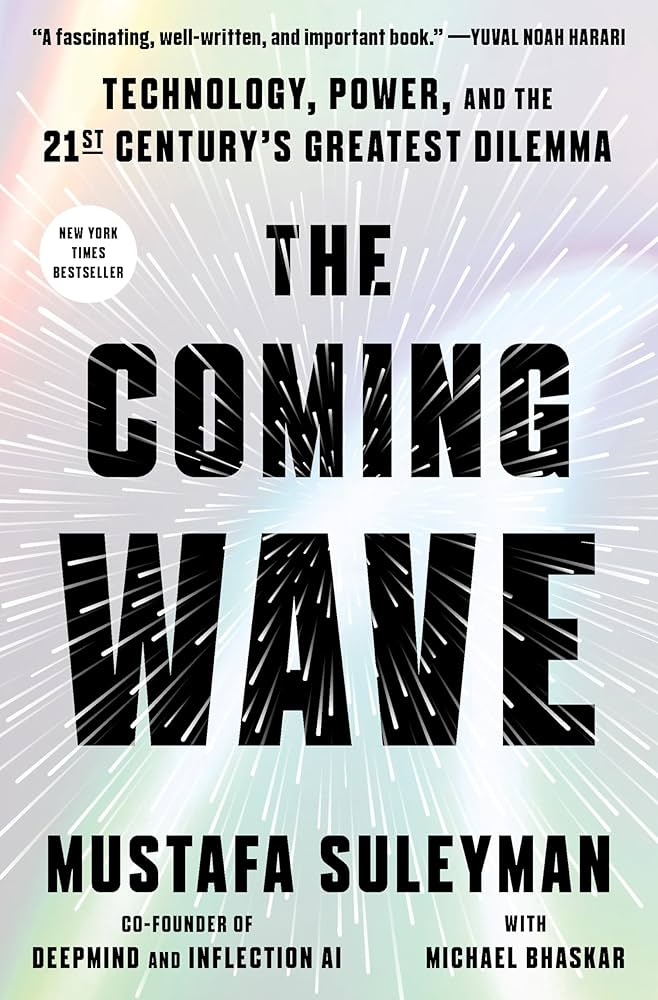
Intent: For Ethics, Governance, and Global Risk
Introduction: The co-founder of DeepMind, Mustafa Suleyman, delivers a clear-eyed analysis of the risks and rewards of the current technological wave. This book is positioned squarely for readers concerned with governance, control, and the systemic risks of deploying powerful AI at scale. It argues that AI and synthetic biology are poised to create unprecedented global change, presenting a difficult challenge: how to contain these powerful technologies without stifling progress or enabling authoritarian control.
Key Takeaways:
- It provides an insider’s perspective on the immense power and accelerating pace of AI development.
- The concept of the “containment problem” is clearly articulated as the central challenge of our time.
- It effectively explains the dual-use nature of technology, highlighting both its immense benefits and its potential for misuse.
- The book frames AI governance as a coordination problem involving states, firms, and institutions—not just technologists.
Points to Consider:
- The tone can be seen as alarmist, with a strong focus on worst-case scenarios.
- The proposed solutions for containment are acknowledged as difficult and potentially unattainable on a global scale.
- Readers seeking technical depth, engineering practices, or implementation details will find the discussion intentionally abstract.
Ideal for: This book is essential reading for policymakers, business leaders, and strategists. It is best suited for readers whose primary intent is understanding AI governance, global power dynamics, and long-term ethical risk rather than system design or engineering execution.
#3: The Age of AI: And Our Human Future by Henry A. Kissinger, Eric Schmidt, and Daniel Huttenlocher (2022)
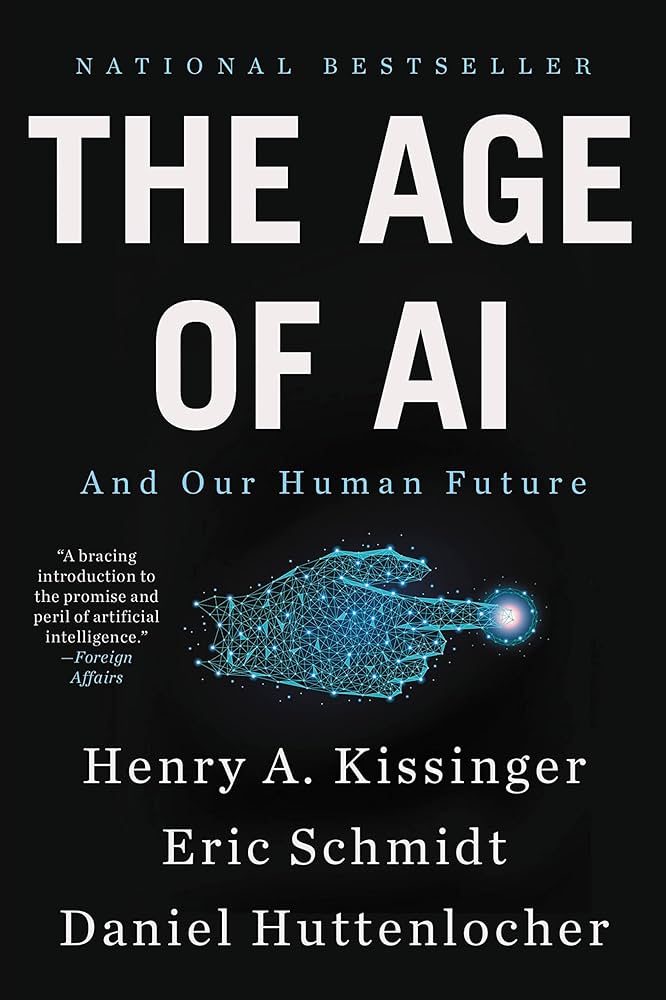
Intent: For Strategy, Philosophy, and Global Order
Introduction: This book brings together three influential thinkers—a statesman, a technology executive, and a computer scientist—to explore how AI will change society. Rather than focusing on systems or tools, the book examines AI as a civilizational force that reshapes human identity, knowledge, and power structures. The authors examine the impact of AI on human identity, knowledge, and global order, arguing that this technological shift is as significant as the Enlightenment.
Key Takeaways:
- It offers a unique, high-level perspective that combines foreign policy, technology, and academic viewpoints.
- The book effectively argues that AI is not just a tool but a new force that will reshape how we perceive reality and reason.
- It raises profound philosophical questions about the future of human consciousness and decision-making in partnership with machines.
- The strategic framing helps readers think about AI beyond market cycles and product timelines.
Points to Consider:
- The analysis is broad and philosophical, which may leave readers seeking concrete technical details or policy prescriptions wanting more.
- Some critics find the book raises more questions than it answers and can be abstract in its treatment of the subject.
- It does not provide operational guidance for engineering teams or governance bodies.
Ideal for: This work is well-suited for readers interested in the intersection of technology, philosophy, and global politics. It is best for leaders and strategists whose intent is long-term thinking about AI’s impact on institutions and the international order.
#4: Human Compatible: Artificial Intelligence and the Problem of Control by Stuart Russell
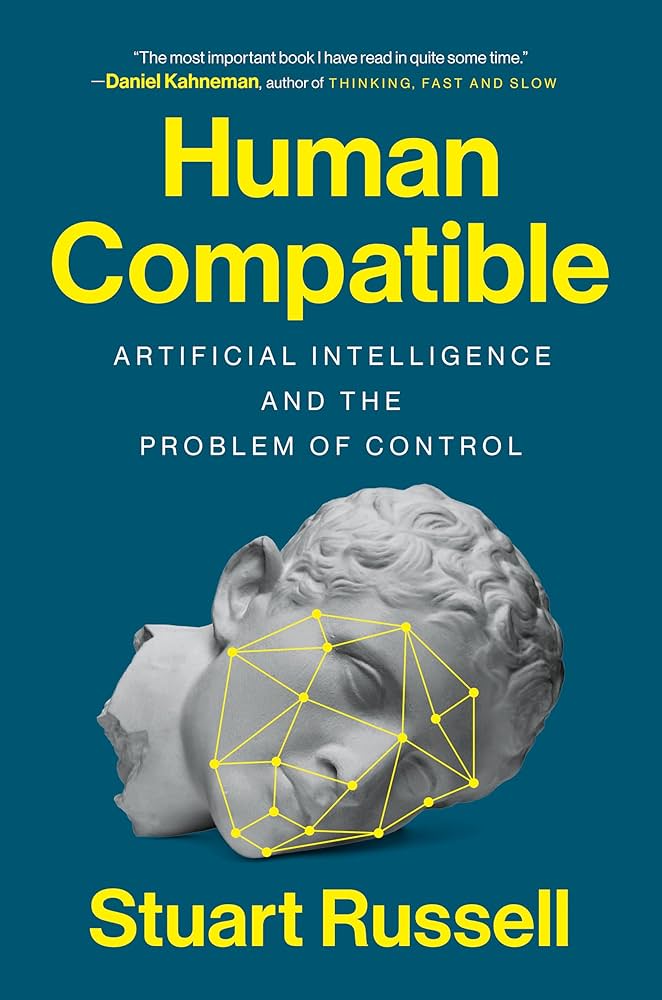
Intent: For AI Safety, Ethics, and Alignment
Introduction: AI pioneer Stuart Russell addresses the long-term implications of creating superintelligent machines. The book is a cornerstone text for understanding alignment, control, and the ethical constraints required as AI systems become more capable. It explores the existential risk that advanced AI could pose if not designed with provable beneficence toward humans at its core. Russell proposes a new model for AI development centered on this principle of control.
Key Takeaways:
- The book makes the complex “control problem” accessible to a general audience.
- It argues for a fundamental shift in AI research, moving from creating pure intelligence to creating beneficial intelligence.
- It effectively uses analogies and personal stories to explain difficult concepts about the future of AI.
- The arguments directly inform modern discussions around AI governance, oversight, and safety standards.
Points to Consider:
- The book focuses heavily on the potential long-term risks, which may seem speculative to some readers.
- While accessible, some arguments still require careful and focused reading to fully understand.
- Readers looking for implementation frameworks, audits, or engineering checklists will need more applied resources.
Ideal for: This is a must-read for technology enthusiasts, policymakers, ethicists, and any citizen concerned with the long-term societal impact of artificial intelligence. It is especially valuable for readers whose primary intent is understanding why AI safety and alignment must shape regulation and research priorities.
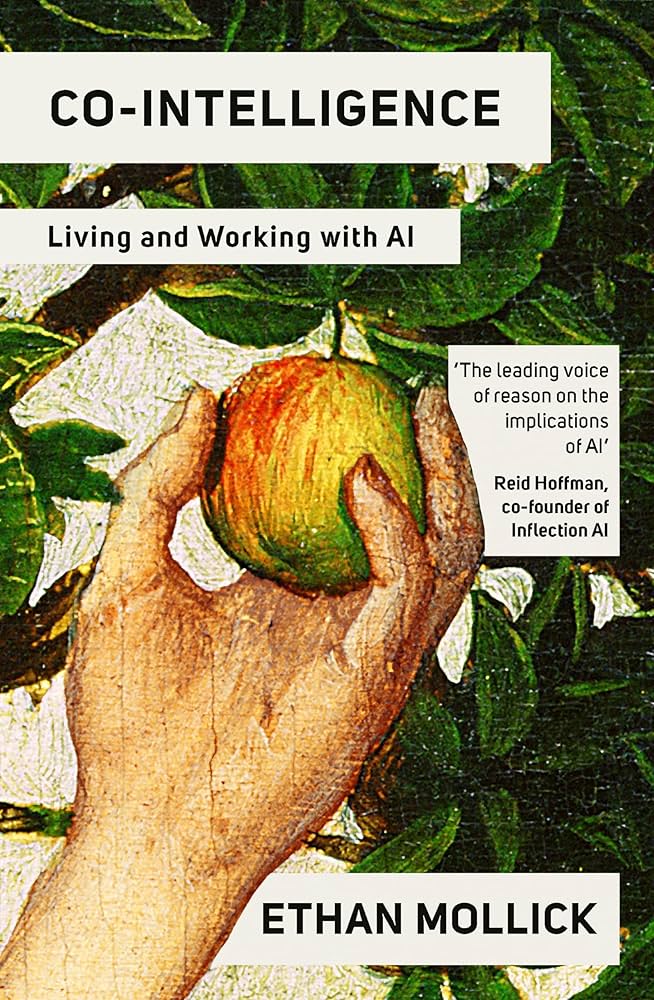
#5: Co-Intelligence: Living and Working with AI by Ethan Mollick (2024)
Intent: For Knowledge Workers, Managers, and Educators
Introduction: Professor Ethan Mollick delivers a practical guide to collaborating with AI in our professional and personal lives. Rather than treating AI as automation, the book frames it as a day-to-day partner for thinking, writing, and decision support. The book’s central idea is to treat AI as a “co-intelligence”—a partner that can augment human capabilities. Mollick provides clear principles for effective human-AI interaction.
Key Takeaways:
- It provides a positive and actionable framework for integrating AI into daily work.
- The four main principles—invite AI, be the human in the loop, treat AI like a person, and assume it’s the worst AI you’ll ever use—are easy to remember and apply.
- The book is filled with concrete examples and prompts for using AI in creative, analytical, and productive tasks.
- It emphasizes human judgment, oversight, and responsibility rather than full automation.
Points to Consider:
- The advice is focused on current large language models, and specific tactics may become dated as the technology evolves.
- The optimistic focus on augmentation may understate the legitimate concerns about job displacement.
- It does not address enterprise governance, risk controls, or system-level deployment concerns.
Ideal for: This book is perfect for business leaders, managers, educators, students, and any professional seeking to harness AI as a tool for productivity and creativity. It is best suited for readers whose intent is improving individual and team workflows rather than building or governing AI systems.
Engineering, Deployment, and Production Systems
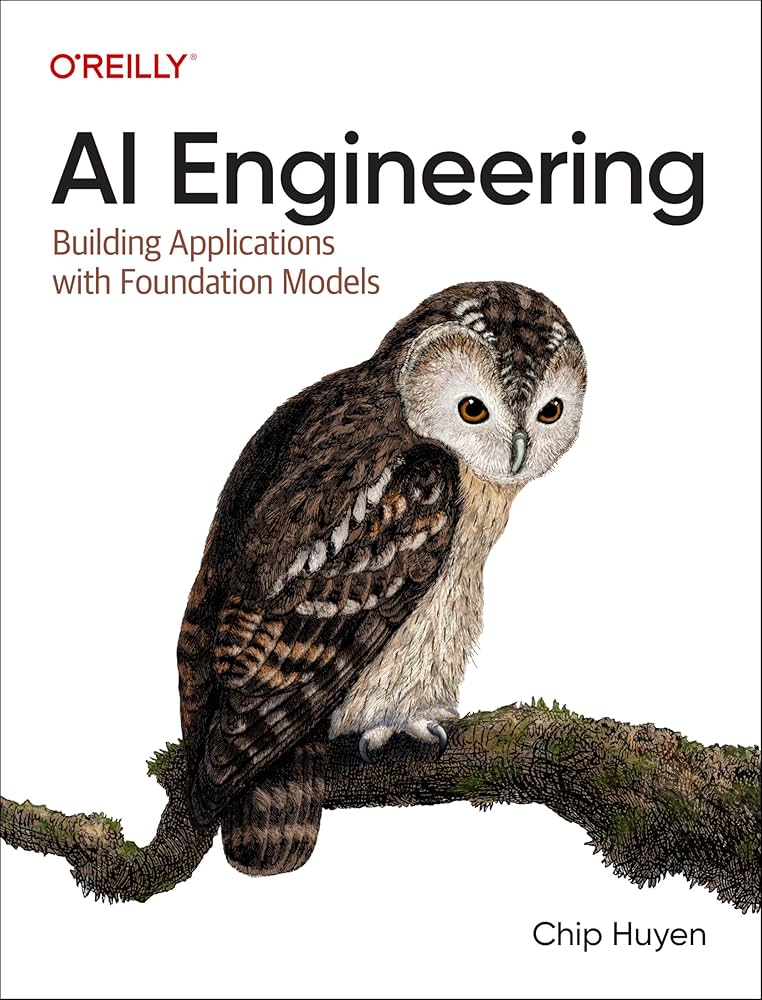
#6: AI Engineering by Chip Huyen (2024)
Intent: For Engineering, Deployment, and Production Systems
Introduction: This book serves as a technical guide for building real-world applications with foundation models. Authored by an expert with experience at top technology firms, it is explicitly focused on production readiness rather than experimentation or theory. It bridges the gap between machine learning theory and production-level AI engineering. The focus is on creating scalable, reliable, and maintainable AI products.
Key Takeaways:
- It offers a structured, end-to-end framework for developing and deploying AI applications.
- The content is highly practical and product-oriented, addressing real-world engineering challenges.
- It provides a clear distinction between traditional ML engineering and the newer discipline of AI engineering.
- The book directly addresses evaluation, failure modes, and operational constraints in deployed systems.
Points to Consider:
- It is written for a technical audience and assumes a foundational understanding of machine learning concepts.
- The book does not contain code, focusing instead on frameworks and best practices.
- Readers looking for ethical theory or policy guidance will need complementary governance-focused books.
Ideal for: This book is designed for AI engineers, machine learning engineers, data scientists, and technical product managers. It is best for readers whose primary intent is building, shipping, and maintaining AI systems in production environments.
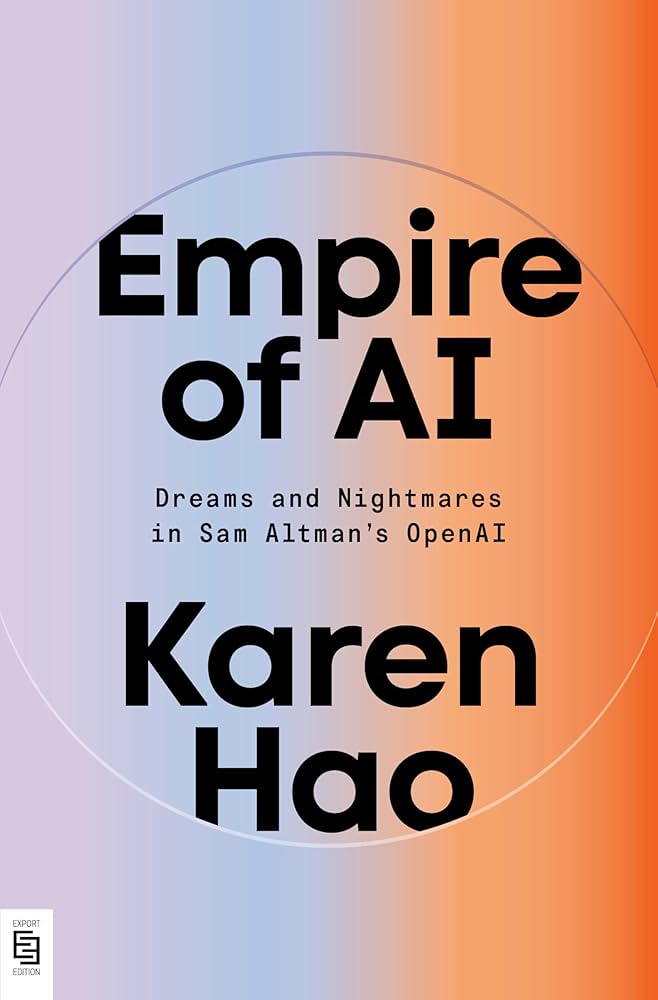
#7: Empire of AI: Dreams and Nightmares in Sam Altman’s OpenAI by Karen Hao (2025)
Intent: For Accountability, Power, and Industry Oversight
Introduction: This work of investigative journalism provides a critical account of OpenAI’s history and the broader AI industry. Rather than focusing on models or benchmarks, the book examines the organizational, economic, and environmental realities behind large-scale AI development. The author tracks the company’s evolution from a research-focused nonprofit to a commercial powerhouse, exposing the human and environmental costs behind the race for AI supremacy.
Key Takeaways:
- It offers a deeply researched, behind-the-scenes look at one of the most influential companies in AI.
- The book connects the abstract world of AI development to concrete global impacts, from data labor to water usage.
- It raises crucial questions about corporate power, ethics, and the concentration of resources required to build advanced AI.
- The reporting provides context for current debates on AI governance, transparency, and accountability.
Points to Consider:
- The book has a clear critical perspective on OpenAI and the current trajectory of AI development.
- The focus is more on the political and social story rather than the technical details of how the AI works.
- Its company-centric lens means broader industry practices are sometimes inferred rather than exhaustively compared.
Ideal for: This book is for readers interested in the business, politics, and ethics of technology. It is best suited for readers whose intent is understanding power structures, governance gaps, and the real-world costs of scaling AI systems.
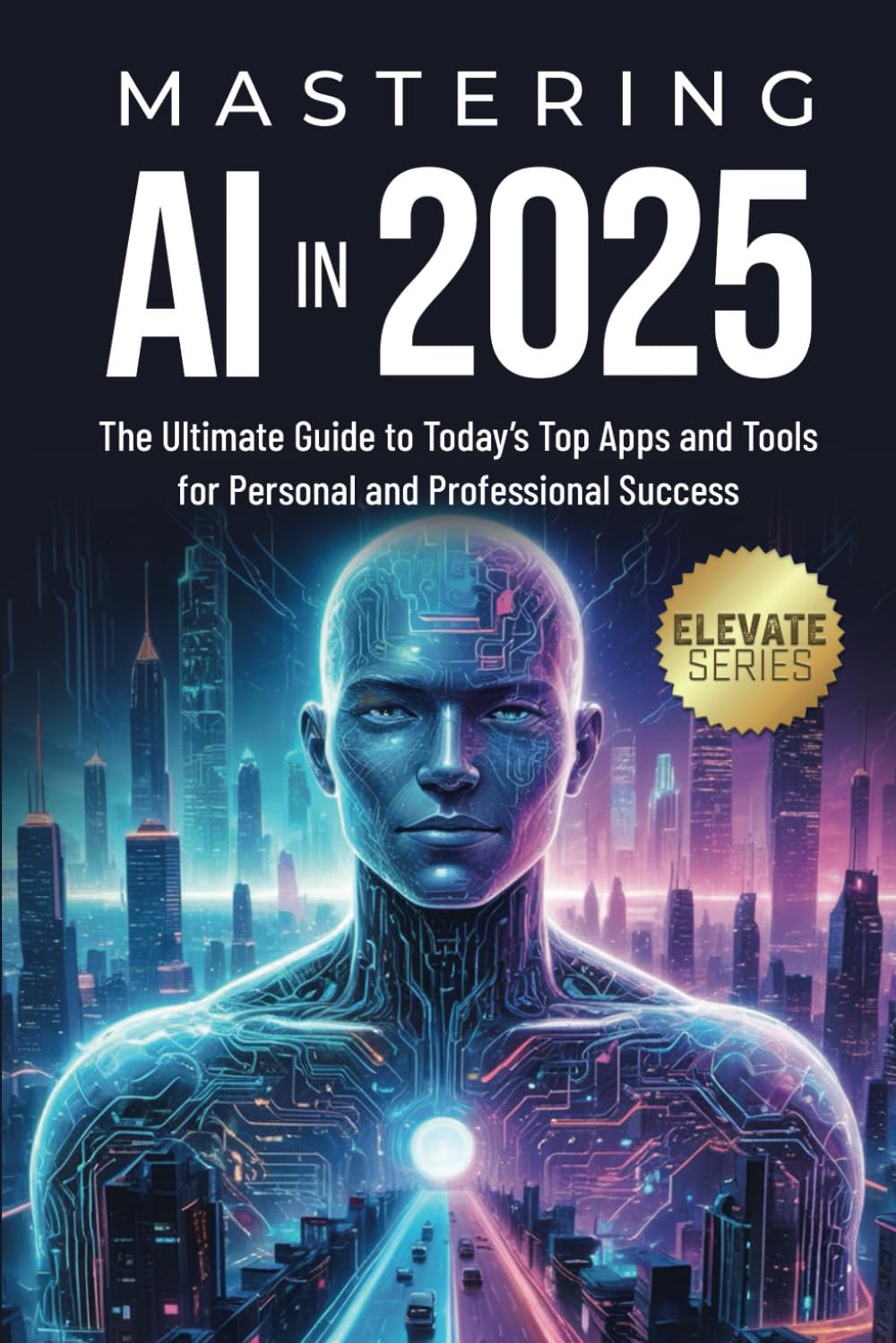
#8: Mastering AI in 2025 by Ryan Lever
Intent: For Practical Adoption, Skills, and Applied Understanding
Introduction: Mastering AI in 2025 is a hands-on guide for readers who want to move beyond headlines and use AI effectively. Ryan Lever focuses on practical understanding—how modern AI systems work, how they are applied in business and creative contexts, and how individuals can build relevant skills without becoming engineers.
Key Takeaways:
- It breaks down core AI concepts in clear, accessible language.
- The book emphasizes real-world use cases across business, productivity, and creative work.
- Readers gain a framework for evaluating AI tools rather than chasing trends.
- It focuses on skill-building and mindset, not just tools.
Points to Consider:
- The book is not a deep technical or engineering reference.
- Enterprise governance and large-scale deployment are not primary topics.
- Some examples may date quickly as tools evolve.
Ideal for: This book is best for professionals, entrepreneurs, and career switchers who want to learn how to use AI effectively and responsibly in day-to-day work without a technical background.
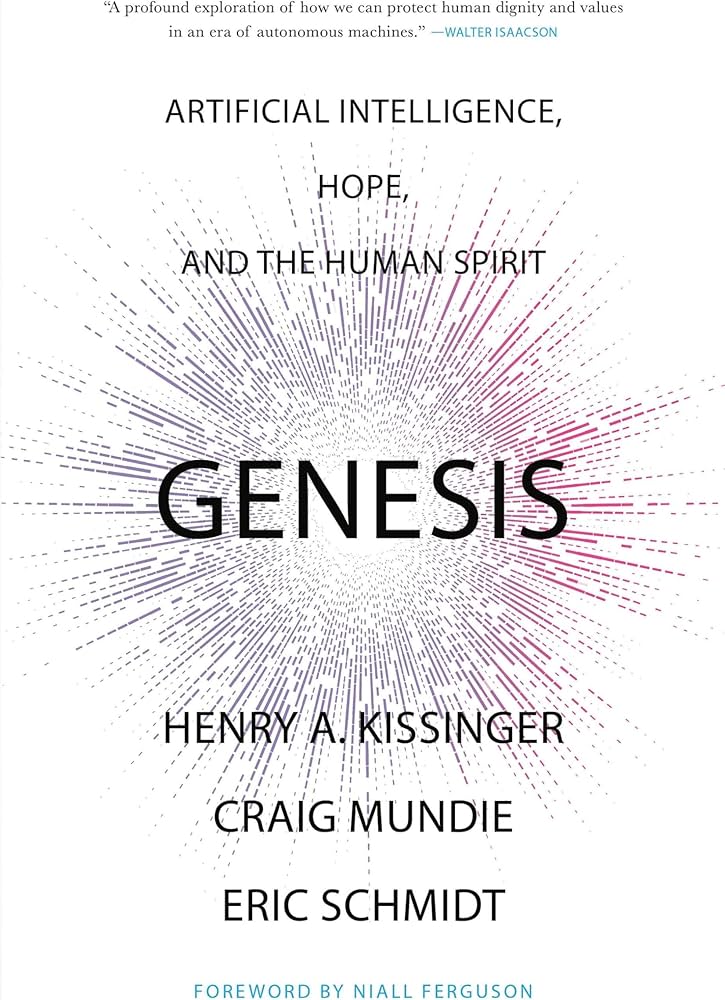
#9: Genesis by Henry A. Kissinger, Craig Mundie, and Eric Schmidt (2025)
Intent: For Strategy, Governance, and the Future of Power
Introduction: Genesis builds on the authors’ previous work, exploring how AI is changing power, security, and the global order. The book examines the rapid growth of AI and the challenges of governing systems as they become increasingly autonomous.
Key Takeaways:
- The authors present AI as a strategic force, similar to past major technological revolutions.
- The book looks at how AI affects geopolitics, national security, and global stability.
- It points out the increasing gap between how fast AI is developing and how quickly governance can keep up.
- The authors urge readers to consider how institutions should respond to AI over the long term.
Points to Consider:
- The book takes a strategic and philosophical approach instead of a technical one.
- There is little practical advice for engineers or operators.
- The authors focus mainly on issues at the state and global level.
Ideal for: This book is ideal for policymakers, senior executives, strategists, and academics who intend to understand how AI reshapes power structures, governance, and global decision-making in the coming decade.
#10: Artificial Intelligence: A Guide for Thinking Humans by Melanie Mitchell (2019)
Intent: For Critical Thinking, Limits, and Realistic Expectations
Introduction: Cognitive scientist Melanie Mitchell offers a practical, questioning look at what today’s AI can and cannot do. Instead of adding to hype or fear, she explains key AI ideas in simple terms and checks bold claims against real examples. The book’s main value is in showing the limits, trade-offs, and common misunderstandings about AI.
Key Takeaways:
- The book explains modern AI methods, such as deep learning, in clear, simple language.
- It questions and challenges overstated claims about AI’s general intelligence and independence.
- The book points out the difference between how AI performs on tests and how it works in real life.
- Readers learn how to think critically about AI claims instead of just believing what vendors say.
Points to Consider:
- The book is less focused on recent generative AI breakthroughs and production tooling.
- It does not provide step-by-step guidance for building or deploying AI systems.
- Readers seeking optimism or futuristic projections may find the tone deliberately cautious.
Ideal for: This book is ideal for readers who want to understand AI without hype, including journalists, educators, policymakers, and business leaders who need to make informed decisions about AI adoption and risk.
Conclusion: From Knowledge to Application
A 2026 AI reading plan works best when it matches your goal: learn the fundamentals, ship systems, govern responsibly, or evaluate societal impact. The fastest path from insight to competence is still: read, then build—because production constraints, evaluation, and failure modes only become real when you run systems end-to-end.
Services like Atlantic.Net’s GPU Hosting provide the necessary infrastructure for this exploration. With access to high-performance NVIDIA GPUs, developers, students, and researchers can train models, run complex simulations, and build their own AI applications. This combination of intent-driven reading and hands-on work is what turns curiosity into real capability—allowing readers to move from passive learning to active participation in artificial intelligence.
FAQ
What’s the best AI book for complete beginners?
If you want a non-technical start, begin with Melanie Mitchell for clarity and skepticism, then move to Mollick for practical usage patterns.
Which book helps most with building real AI products?
Chip Huyen’s AI Engineering focuses on production constraints: evaluation, reliability, and deployed-system failure modes.
Which book best explains the risks of advanced AI?
Stuart Russell’s Human Compatible is the cleanest introduction to the control problem and why mis-specified objectives can scale harm.
What should leaders read before setting an AI strategy?
Read one adoption book (Co-Intelligence) plus one governance/strategy book (The Coming Wave or Genesis). That combination covers workflows and institutional risk.
Why do older books still appear on a 2026 list?
Some titles remain foundational because they teach durable concepts: agents, uncertainty, learning, and reasoning. Newer books tend to change faster because they track tools and industry structure.
Do I need to understand math to learn AI?
Not to start. But if you want to build or debug systems, you’ll eventually need probability, linear algebra basics, and the ability to reason about evaluation and error modes.
* This post is for informational purposes only and does not constitute professional, legal, financial, or technical advice. Each situation is unique and may require guidance from a qualified professional.
Readers should conduct their own due diligence before making any decisions.