HIPAA LEMP Stack Guide
Best Practice for Creating a HIPAA-Compliant LEMP Stack
This whitepaper provides a comprehensive guide to securing a LEMP stack for HIPAA compliance. It offers practical advice and best practices for configuring each component of the stack (Linux, Nginx, MySQL, PHP) to support the confidentiality, integrity, and availability of protected health information (PHI).
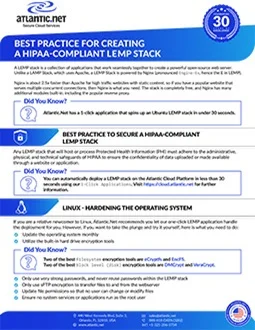
Key topics covered
- Hardening the Linux operating system: regularly updating the OS, using disk-encryption tools, enforcing strong passwords, and restricting file permissions.
- Nginx best-practice tips: regularly updating Nginx, obfuscating server information, enforcing HTTP Strict Transport Security (HSTS), disabling deprecated SSL standards and weak cipher suites, disabling unwanted modules, and enforcing cross-site scripting (XSS) protection.
- MySQL best practice: implementing data masking and de-identification routines, encrypting data at rest, enabling SELinux for access control, using plugins for authentication and access restriction, and enabling the MySQL Enterprise Audit plugin for monitoring and logging.
- PHP best practice: keeping PHP up to date, hashing and verifying passwords, enforcing a user registration system, and protecting against cross-site scripting (XSS) and cross-site request forgery (CSRF).
Download this helpful guide to:
- Understand the importance of HIPAA compliance for LEMP stacks.
- Learn practical steps to secure each component of your LEMP stack.
- Implement best practices for data protection and access control.
- Help ensure your web applications meet HIPAA requirements.
Get Your Free Guide
Enter your details to get instant access.