Get Started with AI Agents: Launch OpenClaw or Hermes Agent Instantly with One-Click Application Deployment.

OpenClaw vs. Hermes: Which AI Agent Should You Deploy?

Choose OpenClaw when the primary goal is to provide users with an always-available AI assistant via familiar messaging channels. Choose Hermes when the main job is giving an agent tools, schedules, memory, and reusable skills for multi-step work.

Deploy OpenClaw in One Click Launch Hermes in Minutes

Both products can cross that boundary once configured, so the decision follows the workflow you want to make the primary one.

OpenClaw organizes sessions, channels, model access, and tools behind a self-hosted Gateway. Hermes organizes its experience around a learning loop and tool-driven execution. That distinction describes the strongest starting point for each product, not a hard limit on what either one can do.

Atlantic.Net offers OpenClaw Hosting and Hermes Agent Hosting as one-click applications on the On-Demand Cloud platform. Both current images require credentials for an external model provider, and both leave user access, secrets, tools, and workload isolation under your control.

OpenClaw vs. Hermes at a Glance

OpenClaw and Hermes cover much of the same ground. Both accept messages, call external model providers, retain state, and use tools. The clearest distinction is the job each product organizes first. OpenClaw starts with access to an always-available assistant through messaging channels. Hermes starts with an agent that learns skills and performs multi-step tasks.

Area OpenClaw Hermes
Default operating model Messaging-first assistant Tool-driven task agent
Core design Self-hosted Gateway, channel routing, Control UI, sessions, and memory Learning loop, persistent memory and skills, scheduled work, and delegation
Messaging Broad channel support with pairing and routing controls More than 20 messaging platforms
Automation Tools, routing, and multi-agent options More than 60 tools across terminal, file, web, browser, memory, delegation, and cron toolsets
Runtime Supported Node.js runtime Python-based stack managed by the installer
Model providers OpenAI, Anthropic, OpenRouter, and other supported providers OpenAI, Anthropic, OpenRouter, Nous Portal, and compatible endpoints
Strongest starting point An assistant reached through familiar chat channels Bounded jobs that use tools, schedules, and repeatable skills

Atlantic.Net makes both applications available as one-click deployments on its On-Demand Cloud platform. One-click deployment prepares the server and application. You still supply a model provider, configure user access, add channel credentials, store secrets, and set the agent's security boundaries.

Which Agent Fits Your Work?

Choose OpenClaw for a Messaging-First Assistant

OpenClaw is the clearer starting point when chat is the front door. Its self-hosted Gateway connects messaging channels to an always-available AI assistant and manages routing, sessions, memory, and model access throughout the conversation.

That structure suits teams that want an assistant available from communication tools they already monitor. Pairing limits who reaches the Gateway, the Control UI exposes sessions and configuration, and multi-agent routing can separate assistants or contexts. OpenClaw also uses tools and automation, while keeping the messaging relationship at the center of the deployment.

The practical caveat is that a Gateway represents a trusted-operator boundary. A shared deployment should serve people who can operate within the same trust model. Separate teams with different credentials, data access, or risk limits may need separate Gateways.

Deploy OpenClaw in One Click

Choose Hermes for Tool-Driven Automation

Hermes is the stronger default when the agent's main job is to execute a sequence of actions. Its built-in learning loop can retain useful procedures as skills, while persistent memory carries relevant context into later work. Scheduled tasks allow jobs to continue without waiting for a person to open a conversation.

Its registry covers more than 60 tools across terminal, file, web, browser, memory, delegation, and cron toolsets. A scheduled reporting workflow, for example, can read an approved source, run a browser step, write to a dedicated directory, and retain the procedure as a skill. Container and remote execution backends help bound that work.

Hermes also supports messaging across more than 20 platforms. Persistent skills, schedules, and broad access to tools make it the better starting point when execution carries more weight than the conversational front end.

Launch Hermes in Minutes

Deploy on Atlantic.Net Cloud

One-click OpenClaw and Hermes Agent Hosting on the On-Demand Cloud platform.

Compare Setup, Models, and Resource Needs

Runtime and Initial Setup

OpenClaw uses a supported Node.js runtime. Its standard installation path prepares the application, configures the Gateway, and can register it as a daemon so the assistant remains available after the operator logs out.

Hermes uses a Python-based stack, with its installer handling environment setup. Atlantic.Net's one-click image setup removes much of the initial installation work for both products. You still enter provider credentials, approve users, connect messaging accounts, and test persistence and recovery.

Model Provider Support

Both products connect to OpenAI, Anthropic, or OpenRouter. The Hermes provider guide also documents Nous Portal and compatible endpoints, while OpenClaw provides provider selection and failover controls.

Atlantic.Net's current images require a customer-supplied external provider. The agent service and stored state run on your Atlantic.Net server, while that provider processes prompts under its own terms. External inference remains a separate data path to review.

Resource Planning

Resource needs follow the configured workload. A lightweight messaging Gateway that calls an external model can use far less CPU and memory than an agent running several browser sessions, container backends, concurrent jobs, or local inference.

Atlantic.Net's G3.4GB Linux plan provides 2 vCPU, 4 GB RAM, an 80 GB SSD, and 5 TB of transfer for $20 per month. It is a measurable test point for a light deployment, not a universal minimum. Browser automation, parallel tools, and retained logs can require more capacity. Local inference may call for Inference Cloud GPU capacity.

Start with the actual channels and tools the agent will use, then measure peak memory, CPU, storage growth, and concurrent sessions. This avoids publishing a universal minimum that fits a basic chat test and fails once automation begins.

Secure the Agent Before You Give It Work

An AI agent can act with every permission attached to its account, API keys, shell, browser session, and writable directory. Limit those permissions before adding tools or users.

  • Apply explicit user allowlists or pairing controls. Keep each OpenClaw Gateway within one trusted-operator boundary. For Hermes, restrict approved users and enable dangerous-command approval and write-safety controls where the workflow permits them.
  • Run each service under a dedicated non-root account. Keep model keys, messaging tokens, and service credentials outside prompts and writable workspaces. Give each tool the narrowest credential it can use.
  • Isolate shell, browser, and file workloads with the product's sandbox or container backend, or a separate VM. Keep dependencies updated, restrict inbound access, test backups, and review logs for leaked secrets.

These controls remain customer-owned after one-click deployment.

Can You Run OpenClaw and Hermes Together?

Yes. Some teams will find that the cleanest design gives each product a separate job. OpenClaw can own conversational access for approved users, while Hermes runs bounded automation with its learning loop, schedules, and tool registry.

Place OpenClaw on one VM with its channel credentials and Hermes on another with a dedicated output directory. Give each service its own non-root account, model key, backups, and firewall rules. If they exchange work, pass only the required fields through a narrow, authenticated interface and keep approval checks around high-impact actions.

Frequently Asked Questions

Hermes is the better default for scheduled, tool-driven work that benefits from persistent skills, delegation, and a broad tool registry. OpenClaw is the better default when users need an always-available assistant through messaging channels. Either product can move into the other's territory after configuration.

Yes. Both support OpenAI and Anthropic, along with OpenRouter. Atlantic.Net's current one-click images require customers to supply credentials for an external model provider.

Yes. Both can run on a cloud VPS with a supported operating environment, enough resources for the chosen tools, and persistent storage. Atlantic.Net offers both as one-click applications on its On-Demand Cloud platform.

The configured workload determines resource use. Browser sessions, concurrent jobs, container backends, growing workspaces, and local inference can outweigh the difference between the two applications. Test with the intended channels and tools, then size from measured CPU, memory, and storage demand.

Self-hosting keeps the agent service, configuration, memory, and stored state under your control. Prompts sent to OpenAI, Anthropic, OpenRouter, or another external provider remain subject to that provider's terms. Messaging platforms may also process channel traffic before it reaches the server.

Yes. OpenClaw can handle conversational access while Hermes runs bounded automation. Use separate service accounts, credentials, writable directories, and, preferably, separate containers or VMs so that one agent does not inherit the other's full access.

Deploy the Agent That Fits the Work

OpenClaw is the stronger first deployment for a messaging-led assistant. Hermes is the stronger choice for first deployment of recurring tool-driven work. Teams that need both operating models can separate them across servers and credentials, then connect only the narrow workflow that has to pass between them.

Atlantic.Net prepares the server and application through its one-click Cloud Portal images. Deploy OpenClaw in one click or launch Hermes in minutes, connect your model provider, and add permissions only after the first bounded workflow has been tested.

Deploy OpenClaw in One Click Launch Hermes in Minutes
Deploy OpenClaw or Hermes on Atlantic.Net Cloud

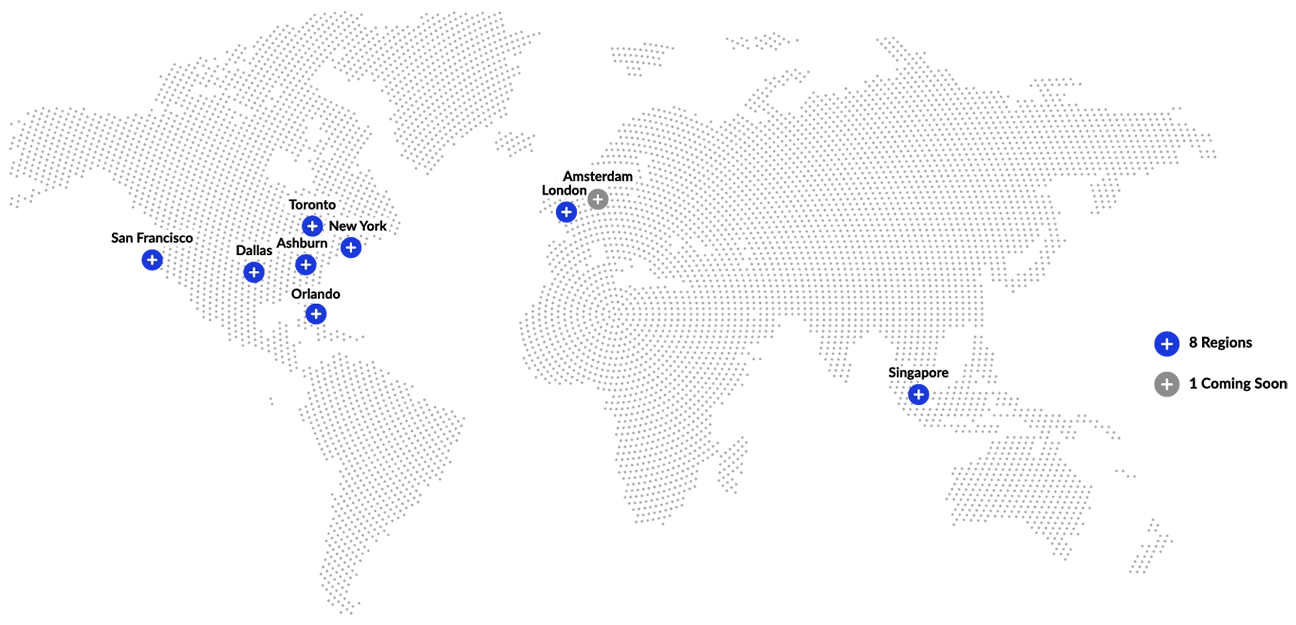
Cloud Availability in Multiple Global Regions

Award Winning Service Logo

Award-Winning Service

Award Winning Service

Dedicated to Your Success

Jason Coleman, VP of Information Technology at Orlando Magic

"After evaluating a range of managed hosting options to support our data operations, we chose Atlantic.Net because of their superior infrastructure and extensive technical knowledge."

Erin Chapple, General Manager for Windows Server at Microsoft Corp.

"Atlantic.Net's support for Windows Server Containers in their cloud platform brings additional choice and options for our joint customers in search of flexible and innovative cloud services."

Form Icon

Share Your Vision With Us

And We Will Develop a Hosting Environment Tailored to Your Needs!

Contact an advisor at 866-618-DATA (3282), email sales@atlantic.net, or fill out the form below.