







E-commerce
- DDoS Risk
- High, targeted during peak sales
- Why Protection Matters
- Downtime during sales events means direct, measurable revenue loss.
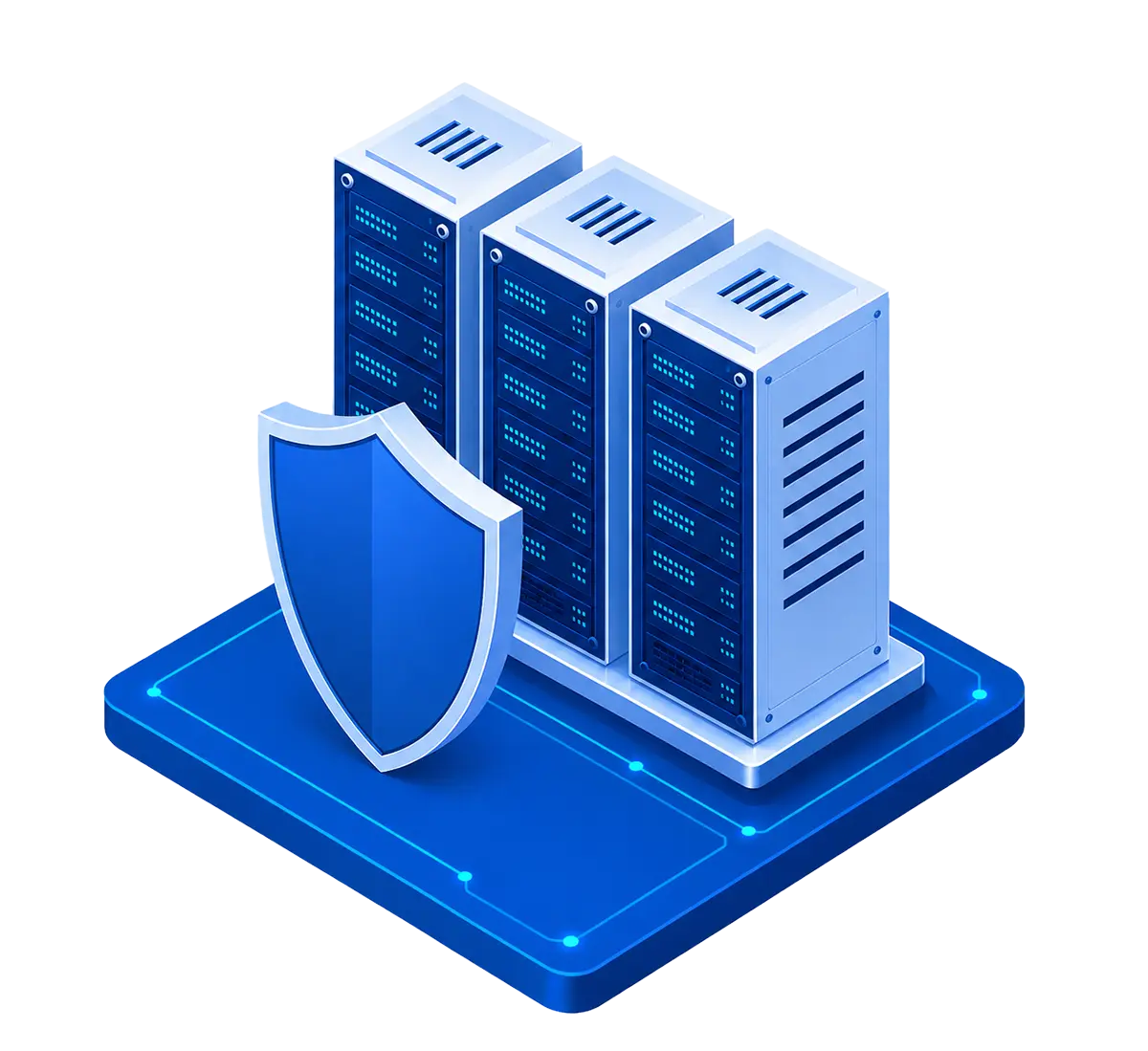
Add optional managed, network-level DDoS mitigation that analyzes, filters, and scrubs malicious traffic before it reaches your dedicated server, while legitimate users stay connected.
Uptime SLA
100%
SOC Monitoring
24/7/365
A distributed denial-of-service attack doesn’t announce itself. One moment, your site is running; the next, your server is buried under millions of requests from thousands of hijacked machines, and your customers are staring at a timeout error. Every minute offline means lost revenue, lost trust, and a brand reputation taking damage in real time. DDoS protection provides critical benefits for businesses by helping maintain uptime, reduce slow performance, and keep online services accessible during attacks.
Atlantic.Net offers DDoS protection for dedicated servers as an optional managed service. When added to your dedicated server environment, DDoS protection helps filter malicious traffic before it reaches your infrastructure, allowing legitimate users to stay connected while your business remains online.
Dedicated servers do not include DDoS protection by default. The service requires additional setup and configuration, allowing Atlantic.Net to align mitigation with your server environment, traffic profile, and security requirements.
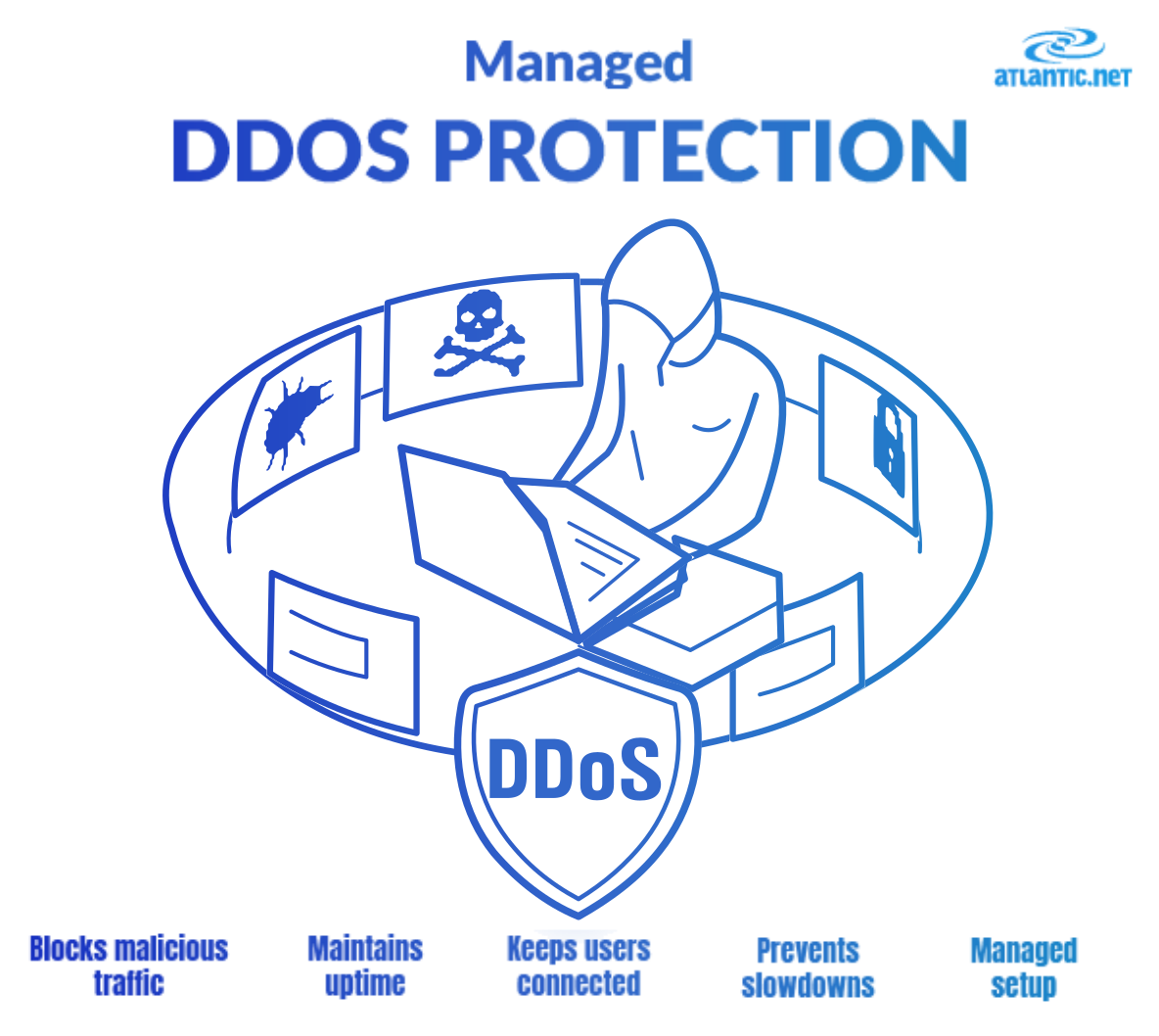
A distributed denial-of-service (DDoS) attack floods your server or network with traffic it cannot process. Unlike a hack, the goal isn’t to steal data. It’s to make your services unavailable to customers, partners, and your own team.
DDoS protection refers to the set of security measures designed to identify and filter out malicious traffic, defending your infrastructure against these attacks and helping maintain service availability.
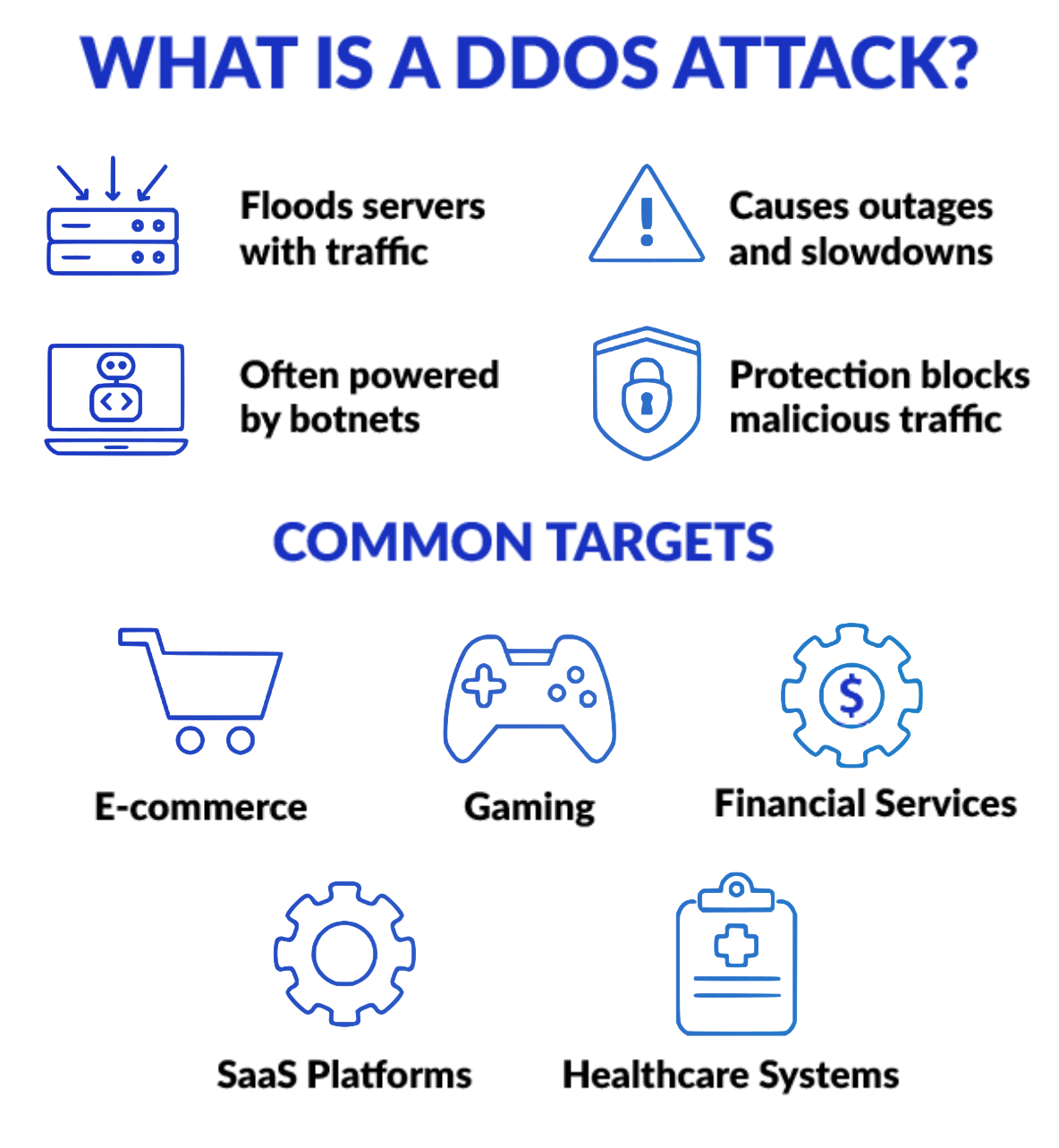
Attackers rent botnets made up of thousands of compromised machines and direct them at a single target. The traffic volume overwhelms the server’s resources: bandwidth saturates, CPU spikes, connections queue up and time out, and the site goes down. This is a volumetric attack.
More sophisticated attacks go after specific weaknesses in application layers, connection state tables, or DNS resolution. These attacks may be smaller in volume but harder to distinguish from legitimate traffic.
Any online service can be a target, but some are particularly vulnerable to DDoS attacks:
Effective DDoS protection intercepts malicious traffic before it reaches your server. Dedicated DDoS protection solutions are essential for mitigating large-scale attacks, especially as threats become more sophisticated. For customers who add the managed DDoS protection service to their dedicated server environment, Atlantic.Net can configure network-level mitigation designed to help identify, filter, and absorb malicious traffic before it impacts the server.
All incoming traffic passes through monitoring systems that analyze packets in real time. Normal traffic patterns are established as a baseline. Detection and analysis of traffic anomalies are conducted using behavioral analysis and AI-driven algorithms. When traffic deviates from this baseline, sudden spikes, unusual source distributions, protocol anomalies, the system flags it.
All incoming traffic passes through monitoring systems that analyze packets in real time. Normal traffic patterns are established as a baseline. Detection and analysis of traffic anomalies are conducted using behavioral analysis and AI-driven algorithms. When traffic deviates from this baseline, sudden spikes, unusual source distributions, protocol anomalies, the system flags it.
Malicious traffic is identified and filtered at the network level. Rate limiting drops requests from suspicious sources. Comprehensive Packet Inspection analyzes incoming network traffic, inspecting each data packet for malicious characteristics. Packet inspection separates legitimate requests from volumetric floods. Only clean traffic reaches your server.
Malicious traffic is identified and filtered at the network level. Rate limiting drops requests from suspicious sources. Comprehensive Packet Inspection analyzes incoming network traffic, inspecting each data packet for malicious characteristics. Packet inspection separates legitimate requests from volumetric floods. Only clean traffic reaches your server.
During a large-scale attack, traffic is rerouted through scrubbing centers, where it is inspected in bulk. Global Anycast routing distributes incoming traffic across multiple data centers, limiting the impact of large scale attacks. Malicious packets are dropped. Legitimate traffic is forwarded to your server with minimal added latency.
During a large-scale attack, traffic is rerouted through scrubbing centers, where it is inspected in bulk. Global Anycast routing distributes incoming traffic across multiple data centers, limiting the impact of large scale attacks. Malicious packets are dropped. Legitimate traffic is forwarded to your server with minimal added latency.
Atlantic.Net’s protection systems learn from attack patterns over time. Advanced DDoS mitigation systems employ AI and machine learning to differentiate between legitimate traffic and bots. Emerging attack signatures are incorporated into filtering rules. The system adapts as attackers change tactics, maintaining protection against sophisticated DDoS attacks without requiring manual intervention.
Atlantic.Net’s protection systems learn from attack patterns over time. Advanced DDoS mitigation systems employ AI and machine learning to differentiate between legitimate traffic and bots. Emerging attack signatures are incorporated into filtering rules. The system adapts as attackers change tactics, maintaining protection against sophisticated DDoS attacks without requiring manual intervention.
The result: your server sees legitimate traffic. Attackers see their requests going nowhere, thanks to robust measures for mitigating attacks and continuous monitoring for suspicious activity.
DDoS protection is available as an optional managed service for Atlantic.Net dedicated servers. It is not enabled by default and requires additional setup so traffic routing, mitigation policies, and response procedures are aligned with your environment. Once configured, the service can provide continuous monitoring and mitigation support when suspicious or attack-level traffic is detected.
DDoS protection is available as an optional managed service for Atlantic.Net dedicated servers. It is not enabled by default and requires additional setup so traffic routing, mitigation policies, and response procedures are aligned with your environment. Once configured, the service can provide continuous monitoring and mitigation support when suspicious or attack-level traffic is detected.
When the managed DDoS protection service is added to your dedicated server, mitigation operates upstream of the server. Malicious traffic can be identified and filtered before it consumes server CPU, memory, or bandwidth. This helps your server continue serving legitimate users during an attack instead of being overwhelmed by unwanted traffic.
When the managed DDoS protection service is added to your dedicated server, mitigation operates upstream of the server. Malicious traffic can be identified and filtered before it consumes server CPU, memory, or bandwidth. This helps your server continue serving legitimate users during an attack instead of being overwhelmed by unwanted traffic.
Atlantic.Net's managed services include Content Delivery Network (CDN) options that distribute your traffic across multiple points of presence. Distributing traffic across a global network reduces the attack surface for volumetric floods while simultaneously improving load times for legitimate users. DDoS protection and performance optimization work together.
Atlantic.Net's managed services include Content Delivery Network (CDN) options that distribute your traffic across multiple points of presence. Distributing traffic across a global network reduces the attack surface for volumetric floods while simultaneously improving load times for legitimate users. DDoS protection and performance optimization work together.
DDoS protection runs transparently at the network edge. It does not change how you access or manage your dedicated server. You retain full root access, complete control over your operating system and software stack, and the same management interfaces you use every day.
DDoS protection runs transparently at the network edge. It does not change how you access or manage your dedicated server. You retain full root access, complete control over your operating system and software stack, and the same management interfaces you use every day.
For businesses that need a more comprehensive security posture, Atlantic.Net offers managed firewall configuration and Intrusion Detection System (IDS) services as add-ons to DDoS-protected dedicated servers. These services layer application-level filtering and anomaly detection on top of the network-level DDoS mitigation.
For businesses that need a more comprehensive security posture, Atlantic.Net offers managed firewall configuration and Intrusion Detection System (IDS) services as add-ons to DDoS-protected dedicated servers. These services layer application-level filtering and anomaly detection on top of the network-level DDoS mitigation.
Atlantic.Net's security team monitors infrastructure around the clock. During an active DDoS attack, our engineers can escalate mitigation, adjust filtering rules, and communicate status directly with your team. You are not left watching dashboards alone while attackers drain your uptime.
Atlantic.Net's security team monitors infrastructure around the clock. During an active DDoS attack, our engineers can escalate mitigation, adjust filtering rules, and communicate status directly with your team. You are not left watching dashboards alone while attackers drain your uptime.
Atlantic.Net guarantees 100% uptime on the network, hardware, and infrastructure. Our DDoS protection is part of this commitment. An attack on your server does not void your SLA. If our network-level protection fails to keep your services available during an attack, the SLA applies.
Atlantic.Net guarantees 100% uptime on the network, hardware, and infrastructure. Our DDoS protection is part of this commitment. An attack on your server does not void your SLA. If our network-level protection fails to keep your services available during an attack, the SLA applies.
Atlantic.Net data centers are independently audited for SOC 2 Type II, SOC 3 Type II, HIPAA, HITECH, PCI-DSS, and NIST 800-53. DDoS protection is part of a security infrastructure that meets these standards, not bolted on afterward. For businesses in regulated industries, this means your server's security posture can be cited in audit documentation.
Atlantic.Net data centers are independently audited for SOC 2 Type II, SOC 3 Type II, HIPAA, HITECH, PCI-DSS, and NIST 800-53. DDoS protection is part of a security infrastructure that meets these standards, not bolted on afterward. For businesses in regulated industries, this means your server's security posture can be cited in audit documentation.
Every minute of downtime costs money. E-commerce sites lose sales. SaaS platforms face SLA penalties. Internal tools taken offline cost employee productivity. The average DDoS attack lasts between hours and days. Recovery costs, engineering time, emergency support, lost contracts, add up beyond the direct revenue impact.
Every minute of downtime costs money. E-commerce sites lose sales. SaaS platforms face SLA penalties. Internal tools taken offline cost employee productivity. The average DDoS attack lasts between hours and days. Recovery costs, engineering time, emergency support, lost contracts, add up beyond the direct revenue impact.
Customers notice when your service goes down. Repeat outages erode confidence in your platform. A DDoS attack that takes your site offline during a product launch, a sales peak, or a critical client demonstration is damage that survives well beyond the attack itself. DDoS protection guards the reputation your business has spent years building.
Customers notice when your service goes down. Repeat outages erode confidence in your platform. A DDoS attack that takes your site offline during a product launch, a sales peak, or a critical client demonstration is damage that survives well beyond the attack itself. DDoS protection guards the reputation your business has spent years building.
Businesses with DDoS-protected infrastructure maintain service continuity when competitors on unprotected hosting go dark. For services with regulatory uptime requirements, such as healthcare platforms, financial services, and critical infrastructure, continuity is not optional. It is a contractual and compliance obligation.
Businesses with DDoS-protected infrastructure maintain service continuity when competitors on unprotected hosting go dark. For services with regulatory uptime requirements, such as healthcare platforms, financial services, and critical infrastructure, continuity is not optional. It is a contractual and compliance obligation.
DDoS attacks are growing in scale and sophistication. Attack volumes measured in terabits per second are now documented in public threat reports. Attacks increasingly combine volumetric floods with application-layer techniques to bypass basic protection. Protecting your server today means investing in a system that keeps pace with how attacks evolve.
DDoS attacks are growing in scale and sophistication. Attack volumes measured in terabits per second are now documented in public threat reports. Attacks increasingly combine volumetric floods with application-layer techniques to bypass basic protection. Protecting your server today means investing in a system that keeps pace with how attacks evolve.
| Business Type | DDoS Risk | Why Protection Matters |
|---|---|---|
| E-commerce | High, targeted during peak sales | Downtime during sales events means direct, measurable revenue loss. |
| Gaming platforms | Very high, frequently targeted | Players abandon servers that drop, and competitors benefit immediately. |
| Financial services | High, targeted for disruption and fraud concealment | Regulatory uptime requirements apply, and attacks may be used to mask fraudulent activity. |
| Healthcare platforms | High, critical service availability required | Patient safety and HIPAA compliance require continuous uptime. |
| SaaS applications | Medium-high, any paying customer SLA is at risk | SLA penalties and customer churn can follow repeated outages. |
| Media and content | Medium, traffic spikes can mask attacks | CDN and DDoS protection work together to handle both legitimate traffic surges and malicious attacks. |
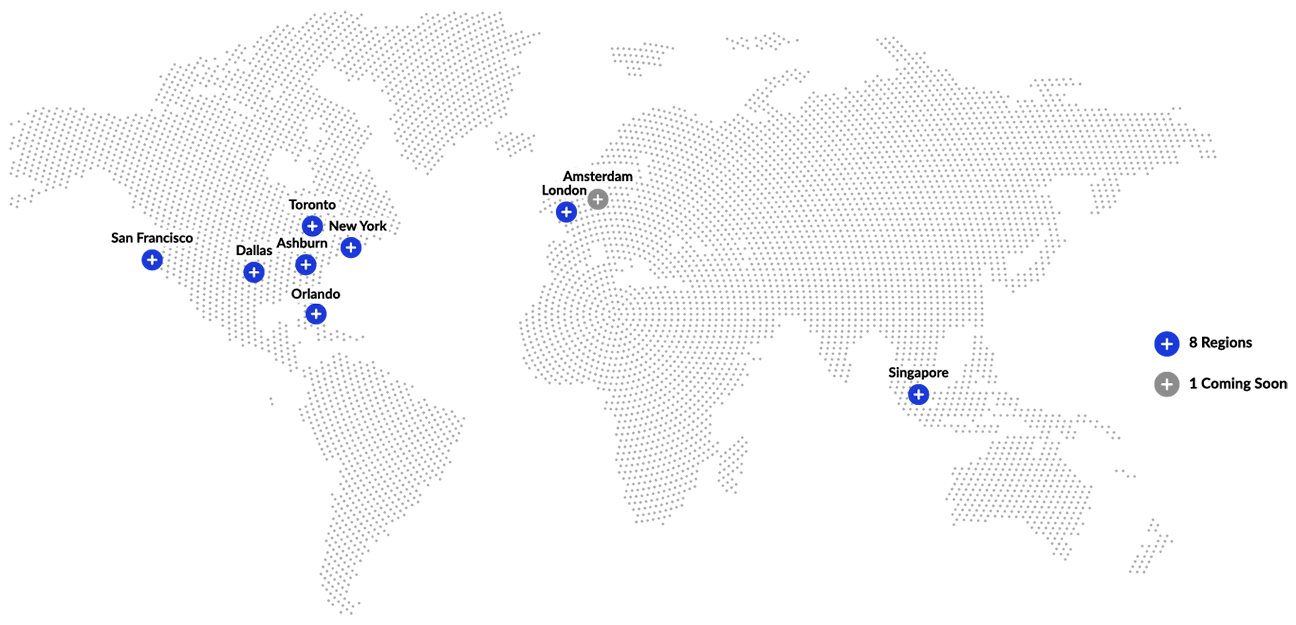
Deploy close to your users from eight international data centers worldwide, with new regions on the way.

Jason Coleman
VP of Information Technology, Orlando Magic
"After evaluating a range of managed hosting options to support our data operations, we chose Atlantic.Net because of their superior infrastructure and extensive technical knowledge."

Joseph Nompleggi
VP of Product Development, Complete Healthcare Solutions
"As our reliable Healthcare IT compliance partner for the past ten years, Atlantic.Net continues to deliver advanced IT architectural design and security guidance and support to CHS. With their flexible, customized solutions and high touch approach, we look forward to continuing to grow and work with this distinguished team of professionals."

Gilad Shainer
Senior Vice President of Networking, NVIDIA
(Formerly Vice President of Market Development at Mellanox Technologies)
"Leveraging InfiniBand's performance, efficiency and scalability capabilities, Atlantic.Net is able to provide its customers with a high-performance, reliable and scalable on-demand public cloud hosting platform."

Erin Chapple
General Manager for Windows Server, Microsoft Corp.
"Atlantic.Net's support for Windows Server Containers in their cloud platform brings additional choice and options for our joint customers in search of flexible and innovative cloud services."

From single servers to fully managed clusters, we'll help you build the ideal infrastructure for your business.
Call or email us now.
Contact an advisor at 866-618-DATA (3282), email sales@atlantic.net, or fill out the form below to get started.

Recognized with the 2026 Excellence in Customer Service Award from the Business Intelligence Group, Atlantic.Net is committed to delivering industry-leading support and an exceptional customer experience.