Recurring research and reporting
- What a persistent Hermes environment adds
- Combine approved web, browser, memory, and file tools in a repeatable procedure with a defined output
Launch Hermes Agent in one click on Atlantic.Net Cloud and give repeatable AI workflows a persistent place to run. Connect your preferred model provider, choose the tools the agent may use, and keep its memory, skills, schedules, and outputs under your control.
Built-In Tools
60+
Messaging Platforms
20+
Hermes Agent Hosting moves the Hermes agent to an Atlantic.Net Cloud Server, where approved tool use, scheduled jobs, memory, learned procedures, and messaging connections can continue from a stable environment.
Atlantic.Net prepares the server and the Hermes application via one-click deployment. You connect a supported model provider, select the capabilities the workflow needs, and define the users, credentials, files, and services the agent may reach. This removes much of the base installation work while keeping the agent self-hosted and under your account.
Hermes Agent is the open-source, self-improving AI agent built by Nous Research. It combines conversation with a broad tool registry, persistent memory, a built-in learning loop, reusable skills, delegation, and scheduled automation.
Hermes Agent Hosting runs that application on a persistent Atlantic.Net Cloud Server. The server provides the agent with a single operating environment for its configuration, memory, skills, tool backends, schedules, messaging gateway, and logs. The work is no longer tied to a local shell session or a user's device.
The current one-click image requires a customer-supplied model provider. Connect OpenAI, Anthropic, OpenRouter, Nous Portal, or another compatible option documented by Hermes, and manage model usage separately from the Cloud Server. The host, the model, and any external services remain visible as distinct parts of the workflow.
Hermes can capture useful procedures as skills and improve them during later use. Persistent storage gives those procedures a stable home, so the agent can reuse them across sessions instead of starting from a blank prompt each time.
Hermes can capture useful procedures as skills and improve them during later use. Persistent storage gives those procedures a stable home, so the agent can reuse them across sessions instead of starting from a blank prompt each time.
Built-in cron support lets approved jobs run when a workstation is offline. Recurring research, summaries, file processing, and operational checks can start from the same controlled environment on a defined schedule.
Built-in cron support lets approved jobs run when a workstation is offline. Recurring research, summaries, file processing, and operational checks can start from the same controlled environment on a defined schedule.
Hermes can work with the terminal, files, the web, browsers, code, memory, delegation, and integrations. Hosting those capabilities on a dedicated server makes it easier to isolate projects, restrict access to credentials, monitor resource usage, and choose local, Docker, SSH, or other supported execution backends.
Hermes can work with the terminal, files, the web, browsers, code, memory, delegation, and integrations. Hosting those capabilities on a dedicated server makes it easier to isolate projects, restrict access to credentials, monitor resource usage, and choose local, Docker, SSH, or other supported execution backends.
Bring your own provider and change models as requirements evolve. The Cloud Server remains the stable home for skills, schedules, tools, and outputs while provider cost and performance can be evaluated independently.
Bring your own provider and change models as requirements evolve. The Cloud Server remains the stable home for skills, schedules, tools, and outputs while provider cost and performance can be evaluated independently.
Select Hermes in the Atlantic.Net Cloud Portal, choose a Cloud Server plan and region, and launch a prepared application image. Begin with a consistent server and Hermes installation instead of building the base Python environment manually.
Select Hermes in the Atlantic.Net Cloud Portal, choose a Cloud Server plan and region, and launch a prepared application image. Begin with a consistent server and Hermes installation instead of building the base Python environment manually.
Retain relevant context across sessions and create procedural skills from experience. Reviewable skills reduce the need for repeated prompting and provide recurring workflows with a clearer, reusable method.
Retain relevant context across sessions and create procedural skills from experience. Reviewable skills reduce the need for repeated prompting and provide recurring workflows with a clearer, reusable method.
Hermes documents more than 60 built-in tools across web search, browser automation, terminal execution, file editing, memory, delegation, scheduled tasks, messaging, code execution, and integrations. Enable toolsets per workflow so each deployment carries only the capabilities it needs.
Hermes documents more than 60 built-in tools across web search, browser automation, terminal execution, file editing, memory, delegation, scheduled tasks, messaging, code execution, and integrations. Enable toolsets per workflow so each deployment carries only the capabilities it needs.
Create, run, pause, resume, and remove scheduled jobs through Hermes' cron tooling. A persistent server supports ongoing work and background processes without requiring an open laptop session.
Create, run, pause, resume, and remove scheduled jobs through Hermes' cron tooling. A persistent server supports ongoing work and background processes without requiring an open laptop session.
Make approved workflows available through Telegram, Discord, Slack, WhatsApp, Signal, Microsoft Teams, Google Chat, Matrix, and other supported services. Configure bot credentials and user authorization before opening a workflow to a team.
Make approved workflows available through Telegram, Discord, Slack, WhatsApp, Signal, Microsoft Teams, Google Chat, Matrix, and other supported services. Configure bot credentials and user authorization before opening a workflow to a team.
Connect a supported model provider and keep the model decision separate from the host. Compare capability, latency, and cost without moving the agent's skills, schedules, or working files.
Connect a supported model provider and keep the model decision separate from the host. Compare capability, latency, and cost without moving the agent's skills, schedules, or working files.
Choose the execution model that best fits the task's risk. Docker and other sandboxed backends can add filesystem and resource boundaries; SSH can keep an agent from modifying its own installation; local execution suits trusted, carefully scoped work.
Choose the execution model that best fits the task's risk. Docker and other sandboxed backends can add filesystem and resource boundaries; SSH can keep an agent from modifying its own installation; local execution suits trusted, carefully scoped work.
Control network access, operating-system policy, storage, monitoring, and backups at the Cloud Server level. Atlantic.Net supports the infrastructure underneath the deployment while you control Hermes, its tools, credentials, and workflows.
Control network access, operating-system policy, storage, monitoring, and backups at the Cloud Server level. Atlantic.Net supports the infrastructure underneath the deployment while you control Hermes, its tools, credentials, and workflows.
Select the application, server plan, and deployment region.
Select the application, server plan, and deployment region.
Authenticate a provider supported by Hermes and verify a basic conversation.
Authenticate a provider supported by Hermes and verify a basic conversation.
Enable only the required toolsets, use low-privilege credentials, and assign the workflow dedicated input and output locations.
Enable only the required toolsets, use low-privilege credentials, and assign the workflow dedicated input and output locations.
Review the result, logs, learned skill, error behavior, and recovery path before adding cron, more users, or broader tool access.
Review the result, logs, learned skill, error behavior, and recovery path before adding cron, more users, or broader tool access.
| Use case | What a persistent Hermes environment adds |
|---|---|
| Recurring research and reporting | Combine approved web, browser, memory, and file tools in a repeatable procedure with a defined output |
| Operations checks | Run scheduled checks, preserve logs, and deliver results through an approved messaging service |
| Development and DevOps workflows | Give terminal, file, code, and delegation tools a dedicated host with explicit credentials and boundaries |
| Content operations | Reuse documented research, transformation, QA, and handoff procedures without recreating every prompt |
| Agency or client work | Separate deployments, service accounts, skills, and data by client or project |
| Internal agent prototypes | Test models, tools, memory, schedules, and container limits under full server control before wider adoption |
| Atlantic.Net provides | You configure and manage |
|---|---|
| Cloud Server infrastructure and one-click application image | Hermes onboarding, updates, and application health |
| Root-level server access and networking controls | Model-provider credentials and usage charges |
| Cloud storage, snapshots, and backup options | Tools, skills, schedules, users, and messaging integrations |
| 24/7/365 infrastructure support | Execution backends, approval policy, logs, and recovery tests |
| A 100% uptime SLA for eligible infrastructure commitments | Availability of Hermes, connected services, and external model providers |
Self-hosting gives you control of the agent environment; it does not make every connected service local. Prompts sent to a model provider, data opened in a browser, and messages delivered through a chat platform remain subject to those services' terms and security controls.
An agent can act with every permission attached to its shell, API keys, browser sessions, integrations, and writable directories. Run Hermes under a dedicated non-root account, limit credentials to the specific job, enable only required toolsets, and keep secrets out of prompts and general-purpose workspaces.
Use command approval and write-safety controls where the workflow allows them. Put higher-risk terminal, browser, and code execution in an isolated backend with CPU, memory, storage, and filesystem limits. Keep the application and host updated, monitor logs, test backups, and review learned skills before scheduling them without supervision.
Separate projects that do not share a trust boundary. A dedicated Cloud Server gives each environment its own users, credentials, tools, skills, outputs, and recovery path.
Atlantic.Net has operated cloud and hosting infrastructure since 1994. Hermes runs on a Cloud Server with a predictable infrastructure price, full administrative control, multiple global deployment regions, and direct access to the team responsible for the host beneath it.
Hermes is the stronger starting point for tool-driven, scheduled work that benefits from memory, a learning loop, and reusable skills. OpenClaw is the stronger starting point for an always-available assistant reached through familiar messaging channels. Their capabilities overlap, and some teams run both in separate environments.
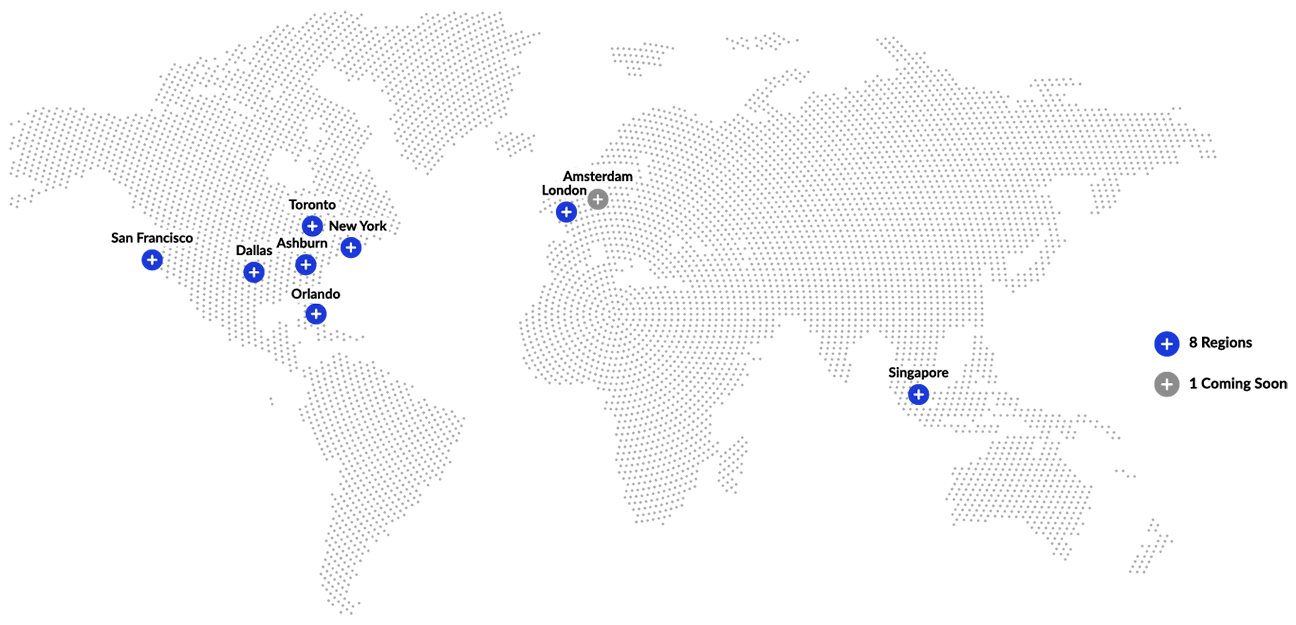
Deploy close to your users from eight international data centers worldwide, with new regions on the way.

Jason Coleman
VP of Information Technology, Orlando Magic
"After evaluating a range of managed hosting options to support our data operations, we chose Atlantic.Net because of their superior infrastructure and extensive technical knowledge."

Joseph Nompleggi
VP of Product Development, Complete Healthcare Solutions
"As our reliable Healthcare IT compliance partner for the past ten years, Atlantic.Net continues to deliver advanced IT architectural design and security guidance and support to CHS. With their flexible, customized solutions and high touch approach, we look forward to continuing to grow and work with this distinguished team of professionals."

Gilad Shainer
Senior Vice President of Networking, NVIDIA
(Formerly Vice President of Market Development at Mellanox Technologies)
"Leveraging InfiniBand's performance, efficiency and scalability capabilities, Atlantic.Net is able to provide its customers with a high-performance, reliable and scalable on-demand public cloud hosting platform."

Erin Chapple
General Manager for Windows Server, Microsoft Corp.
"Atlantic.Net's support for Windows Server Containers in their cloud platform brings additional choice and options for our joint customers in search of flexible and innovative cloud services."

From single servers to fully managed clusters, we'll help you build the ideal infrastructure for your business.
Call or email us now.
Contact an advisor at 866-618-DATA (3282), email sales@atlantic.net, or fill out the form below to get started.
Recognized with the 2026 Excellence in Customer Service Award from the Business Intelligence Group, Atlantic.Net is committed to delivering industry-leading support and an exceptional customer experience.