HIPAA Python Applications Guide
Building HIPAA-Compliant Python Applications: A Best-Practice Guide
Python, a popular and versatile programming language, is widely used for application development. However, when it comes to healthcare applications dealing with protected health information (PHI), HIPAA compliance is crucial. This whitepaper provides essential guidance on building HIPAA-compliant Python applications.
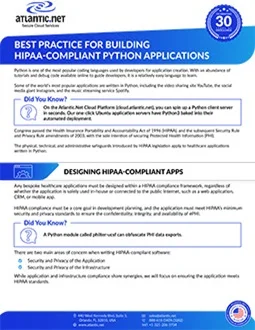
Key areas covered include:
- Designing HIPAA-compliant apps: understanding the importance of incorporating HIPAA compliance into the design and development process.
- Five key design requirements: implementing essential features such as user controls, access and authorisation controls, backup and restore capabilities, software-defined disaster recovery, and automatic logout.
- User controls: restricting access to authorised personnel and implementing administrative controls to manage user access and permissions.
- Access & authorisation controls: integrating access and authorisation controls to prevent unauthorised access to confidential information.
- Backing up and restoring data: implementing backup and restore functions to support data availability and integrity.
- Software-defined disaster recovery: leveraging Python functions to create highly available applications and support business continuity.
Download this informative resource to:
- Gain insights into building secure and compliant healthcare applications.
- Learn about best practices for protecting PHI in Python applications.
- Help ensure your applications meet HIPAA requirements.
Get Your Free Guide
Enter your details to get instant access.