
Updated: July 2026
Bare metal hosting is single-tenant physical hardware you rent from a provider, no shared neighbors and no hypervisor overhead. It’s the right fit when you need consistent latency, dedicated I/O, strict isolation for compliance, or direct access to hardware for demanding databases and compute workloads.
For mission-critical workloads in 2026, bare metal hosting remains the superior choice over standard virtualization. By giving you direct access to single-tenant hardware, bare metal eliminates resource contention, ensuring consistent latency for AI and database applications, and simplifies compliance with strict standards like HIPAA and PCI-DSS.
The best bare metal hosting services for 2026 are Atlantic.Net (Best for Compliance & Support), PhoenixNAP (Best for API-Driven DevOps), IONOS (Best for Enterprise Value), Hetzner (Best for Budget), and AWS (Best for Hyperscale )
Compare Top Bare Metal Providers
| Atlantic.Net | Compliance (HIPAA) | Dedicated (Monthly) | SLA-backed; config-dependent | Multi-Region (US/Global) | Managed or Unmanaged |
| PhoenixNAP | DevOps & Automation | Bare Metal Cloud (Hourly) | 20 Gbps / API-driven | Global (US/EU/Asia) | Support + Self-Service |
| IONOS | EU/UK Enterprise | Bare Metal Servers | Unlimited traffic options | UK + Global | Self-Managed + Tooling |
| Hetzner | Budget / Value | Dedicated (Monthly/Auction) | Unmetered 1 Gbit/s | EU (DE/FI) + US | Unmanaged (Hardware only) |
| AWS (EC2 Metal) | Hybrid / Scalability | On-Demand (Hourly) | Egress fees apply | Global AWS Regions | Managed Cloud Service |
| Oracle (OCI) | HPC & AI Workloads | Cloud Bare Metal | High bandwidth; HPC-focused | Global OCI Regions | Managed Cloud Service |
| OpenMetal | Private Clouds | OpenStack Private Cloud | Included private networking | Multi-Region | Provider-Assisted |
| IBM Cloud | Custom Configs | Hourly or Monthly | Free private network traffic | 60+ Data Centers | Cloud-Managed |
| InterServer | Budget / Unmanaged | Dedicated Hardware | Clear bandwidth/port options | US-Focused | Unmanaged |
Why bare metal hosting still matters in 2026
Bare metal is not a “bigger VM.” It’s single-tenant physical hardware reserved for your use, unlike a virtual server that shares host capacity; here, you get exclusive physical resources. That matters when you need:
- Predictable performance: dedicated performance without shared-resource contention, so workloads aren’t affected by other users or other tenants.
- Isolation: simpler segmentation for sensitive workloads.
- Hardware control: direct access to CPU, memory, and storage behavior, with full control over the software stack and server administration choices (useful for certain databases, virtualization stacks, and low-level tooling).
1. Atlantic.Net
Best for: Compliance-First Workloads (HIPAA/PCI) & Managed Support
Atlantic.Net continues to lead the market in 2026 for organizations that cannot afford compliance risks. Unlike providers that offer “raw” hardware and walk away, Atlantic.Net specializes in secure, audited environments tailored for healthcare, fintech, and contractors. Their bare metal solutions are designed to meet strict regulatory frameworks (HIPAA, HITECH, PCI-DSS, SOC 2/3) out of the box.
Below is Atlantic.Net’s cloud control panel interface used to deploy and manage dedicated and GPU servers.
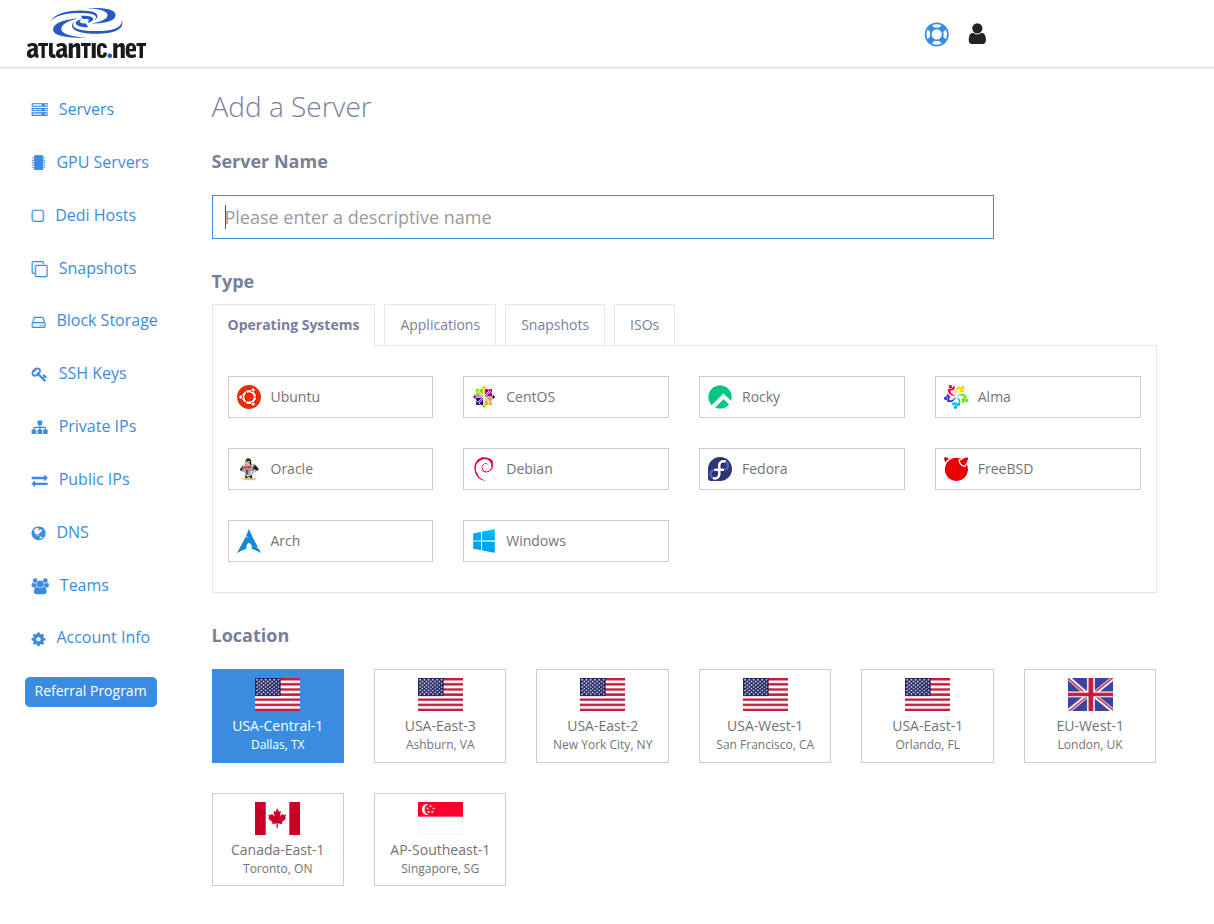
Image Source: Atlantic.Net
- Compliance Ready: All infrastructure is audited for HIPAA and SOC standards, making it the safest choice for processing ePHI or sensitive financial data.
- High-Performance Specs: Configurations support up to 128 vCPU threads, 1 TB+ RAM, and redundant NVMe storage, ideal for high-throughput databases.
- Human-First Support: Includes 24/7/365 US-based support that acts as an extension of your IT team, critical for preventing downtime in regulated sectors.
- Flexible Deployment: Offers both unmanaged options for total control and fully managed hosting where the provider handles OS updates, security patches, and firewalls.
What stands out
- Dedicated hosting plans are published with example configurations and pricing (useful for budgeting).
- Dedicated server service level guarantee language is clearly stated (network/infrastructure components).
- Compliance hosting positioning is front and center for regulated workloads.
Who should choose Atlantic.Net? Healthcare providers, fintech companies, SaaS teams undergoing audits, and anyone who needs a vendor that can support security and compliance conversations (not just sell hardware).
2. PhoenixNAP
Best for: DevOps, Automation, and “Bare Metal Cloud“
PhoenixNAP has bridged the gap between dedicated hardware and cloud agility. Their “Bare Metal Cloud” platform allows developers to provision physical servers in minutes via API, CLI, or Terraform, rather than the days-long provisioning cycles of traditional hosts. This makes them a top choice for CI/CD pipelines and agile teams in 2026.
PhoenixNAP’s Bare Metal Cloud dashboard interface is used to deploy and manage dedicated servers, Kubernetes clusters, billing, and infrastructure resources.
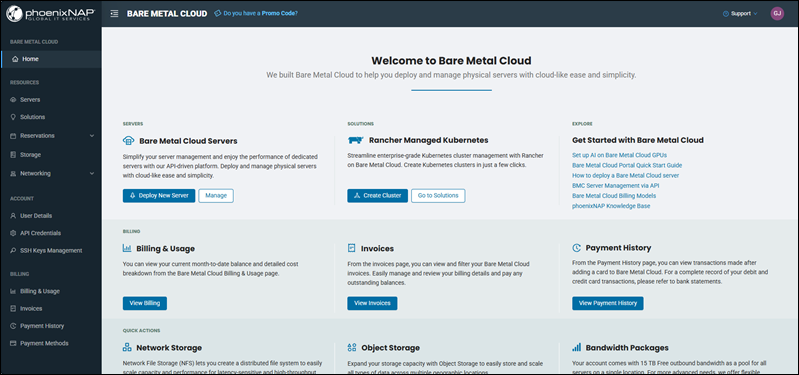
Image Source: PhoenixNAP
What stands out
- API-First Architecture: fully compatible with Terraform, Ansible, and Pulumi for “Infrastructure as Code” deployments.
- Hourly Billing: One of the few bare metal providers offering true hourly billing, allowing you to spin up high-power instances for short-term rendering or compilation tasks.
- Global Footprint: Strong presence across the US, Europe, and Asia, ensuring low latency for globally distributed applications.
Who should choose PhoenixNAP? DevOps engineers, SaaS platforms needing automated scaling, and teams who want to treat physical servers like ephemeral cloud instances.
3. IONOS
Best for: Enterprise Value & European Presence
IONOS (formerly 1&1) remains a powerhouse for businesses seeking reliable enterprise-grade hardware without the hyperscaler price tag. They are particularly strong in the European market but have a good US presence. Their commitment to sustainability, running data centers on renewable energy, is a key differentiator for ESG-focused companies in 2026.
Look at the IONOS Cloud control panel showing server image management, infrastructure configuration, and US data center deployment options.
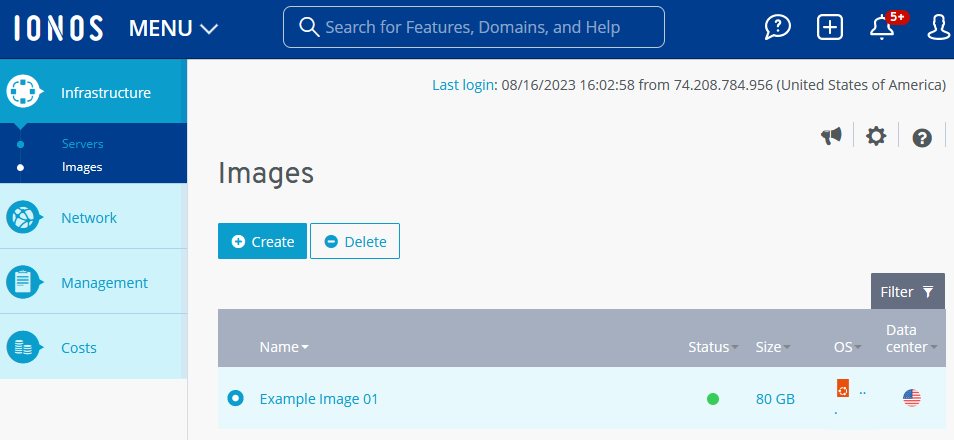
Image Source: IONOS
- Predictable Pricing: Offers transparent monthly contracts that avoid the unpredictable egress fees common with larger public clouds.
- Modern Hardware: Extensive inventory of Intel Xeon and AMD EPYC processors with unlimited traffic options on 1 Gbit/s ports.
- Security Standard: ISO 27001-certified data centers with built-in SIEM and DDoS protection included in most enterprise plans.
What stands out
- Sustainability: Data centers are powered largely by renewable energy.
- Traffic Policy: Unlimited traffic on many configurations eliminates egress anxiety.
- Pay-as-you-go: Offers hourly billing options alongside monthly contracts.
Who should choose IONOS? Companies doing business in the UK/EU, or US enterprises looking for a secondary provider with predictable monthly billing.
4. Hetzner
Best for: Budget & Raw Performance Value
For technical teams who are comfortable managing their own infrastructure, Hetzner offers the best price-to-performance ratio in the industry. While they offer minimal hand-holding (support is strictly hardware-focused), their pricing for high-core AMD Ryzen and EPYC servers is very good.
View the Hetzner dashboard interface designed to deploy cloud servers, configure networking, and monitor activities across global locations.
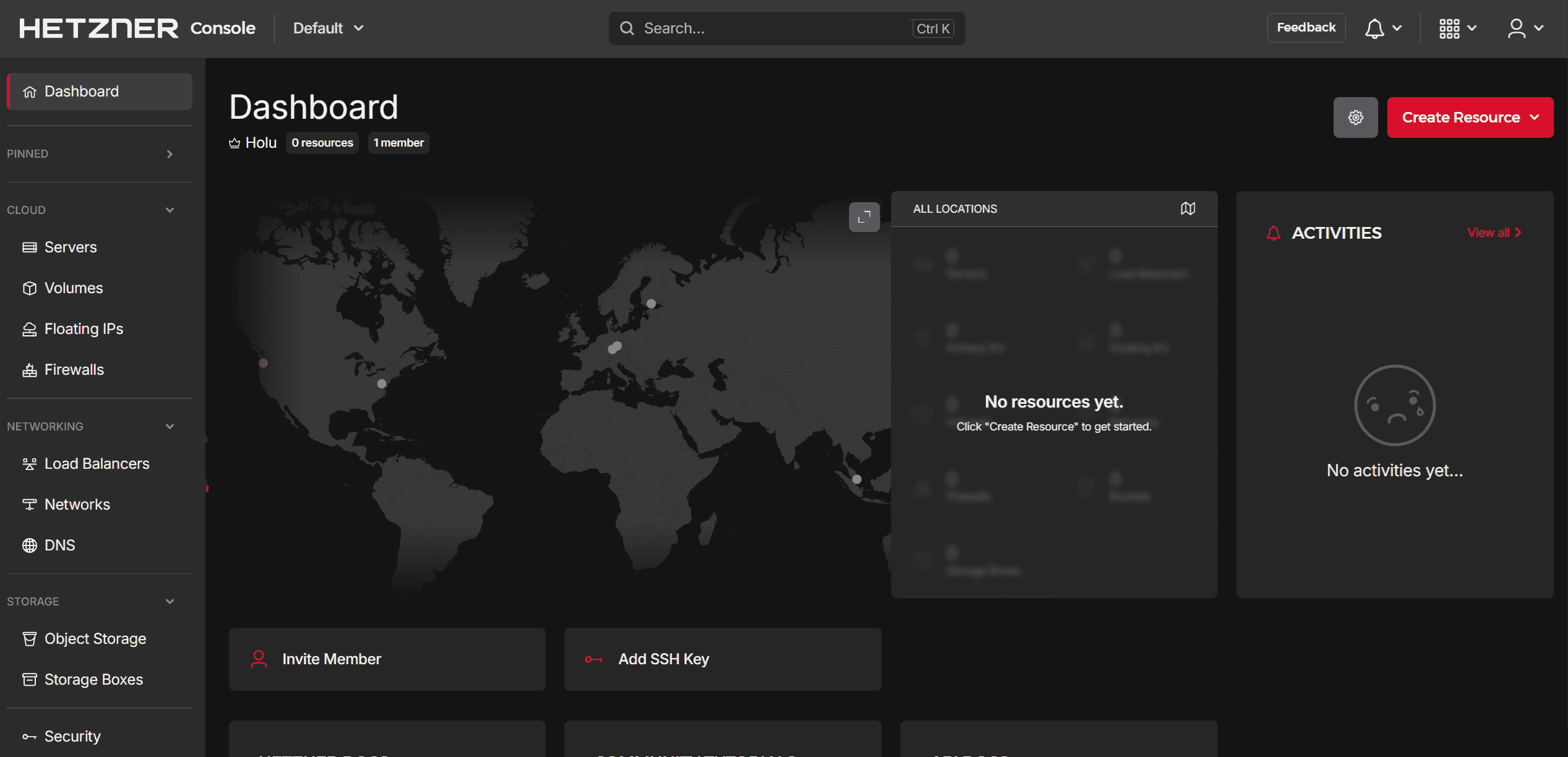
Image Source: Hetzner
- Unbeatable Value: High-performance servers often start at a fraction of the cost of major US competitors.
- Hetzner Cloud: Ability to mix bare metal servers with their cloud VPS offerings via private networks (vSwitch).
- Auction Server Market: Unique “Server Auction” allows users to bid on older, fully functional hardware for non-critical workloads at rock-bottom prices.
What stands out
- No Contracts: Most servers are available on a month-to-month basis with no long-term commitment.
Who should choose Hetzner? Bootstrapped startups, media streaming services, and technical teams who are comfortable managing their own Linux stack and want to minimize infrastructure costs.
5. AWS (Amazon EC2 Metal)
Best for: Hybrid Cloud & Hyperscale Scalability
Amazon Web Services offers “Bare Metal” instances (e.g., i3.metal, m5.metal) that allow applications to run directly on the underlying hardware while still integrating with the broader AWS ecosystem. While significantly more expensive than standalone providers, this option is for enterprises that need to run legacy applications (like VMware stacks) inside their existing AWS VPCs.
Here is the AWS EC2 dashboard, where you can control instances, monitor status, and configure settings.
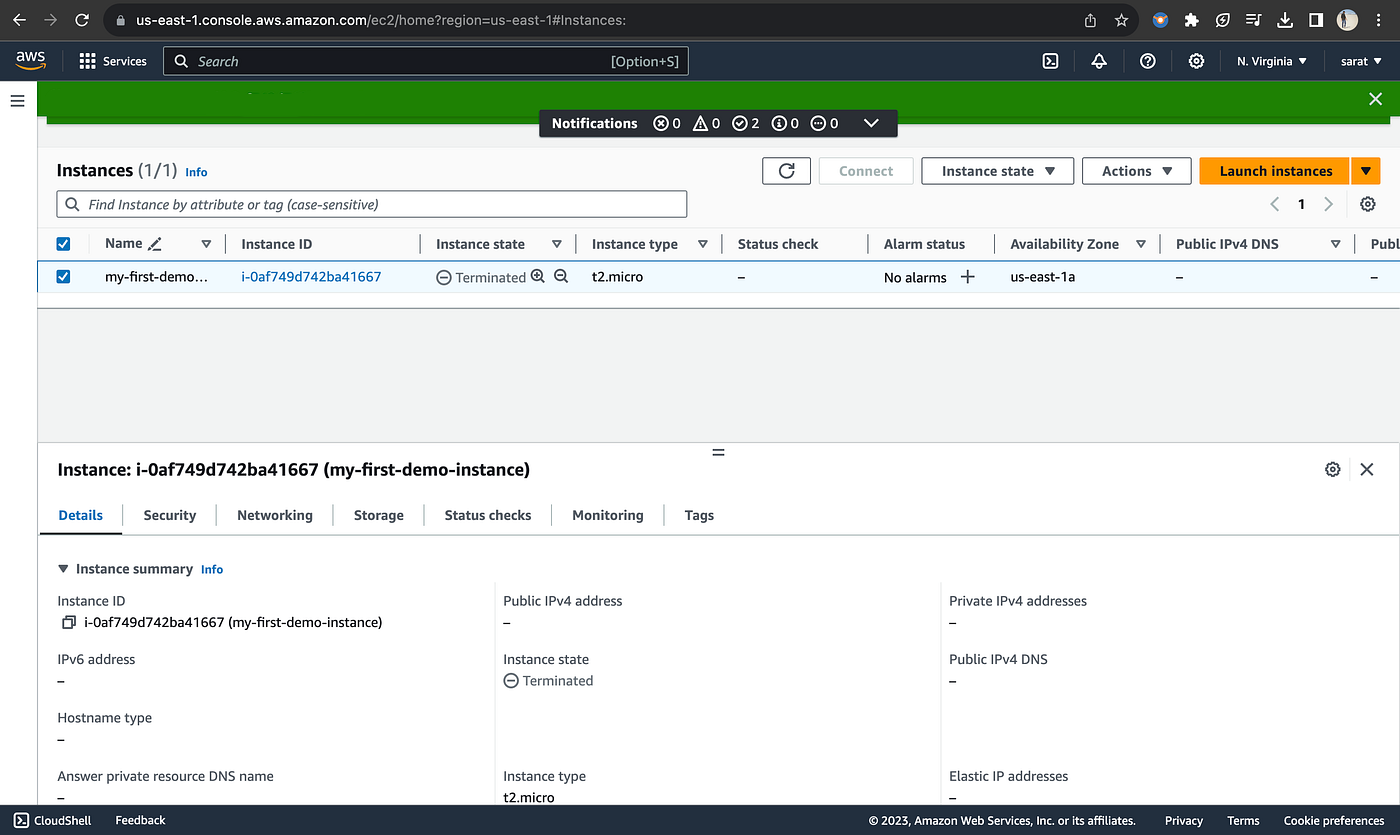
Image Source: AWS
- Deep Bare metal instances sit inside your Virtual Private Cloud (VPC) and work seamlessly with AWS storage (EBS/S3) and security groups.
- Legacy Support: The only viable way to run legacy virtualization stacks that require direct hardware access within a public cloud environment.
- Elasticity: While it is physical hardware, it can be provisioned and terminated with the same ease as a virtual EC2 instance.
What stands out
- Global reach: Available in virtually every AWS region worldwide.
Who should choose AWS? Cloud-native teams needing temporary raw power, or enterprises migrating legacy applications that require direct hardware access but must live inside an AWS VPC.
6. Oracle Cloud Infrastructure (OCI)
Best for: HPC & AI Workloads
Oracle has aggressively targeted the high-performance market in 2026. Their bare metal instances are designed for massive throughput, supporting clustered networking that is ideal for AI model training and complex simulations. They offer some of the highest core-count configurations available publicly.
Take a look at the Oracle Cloud dashboard, where you can set up load balancers, manage billing, and deploy resources from a single panel.
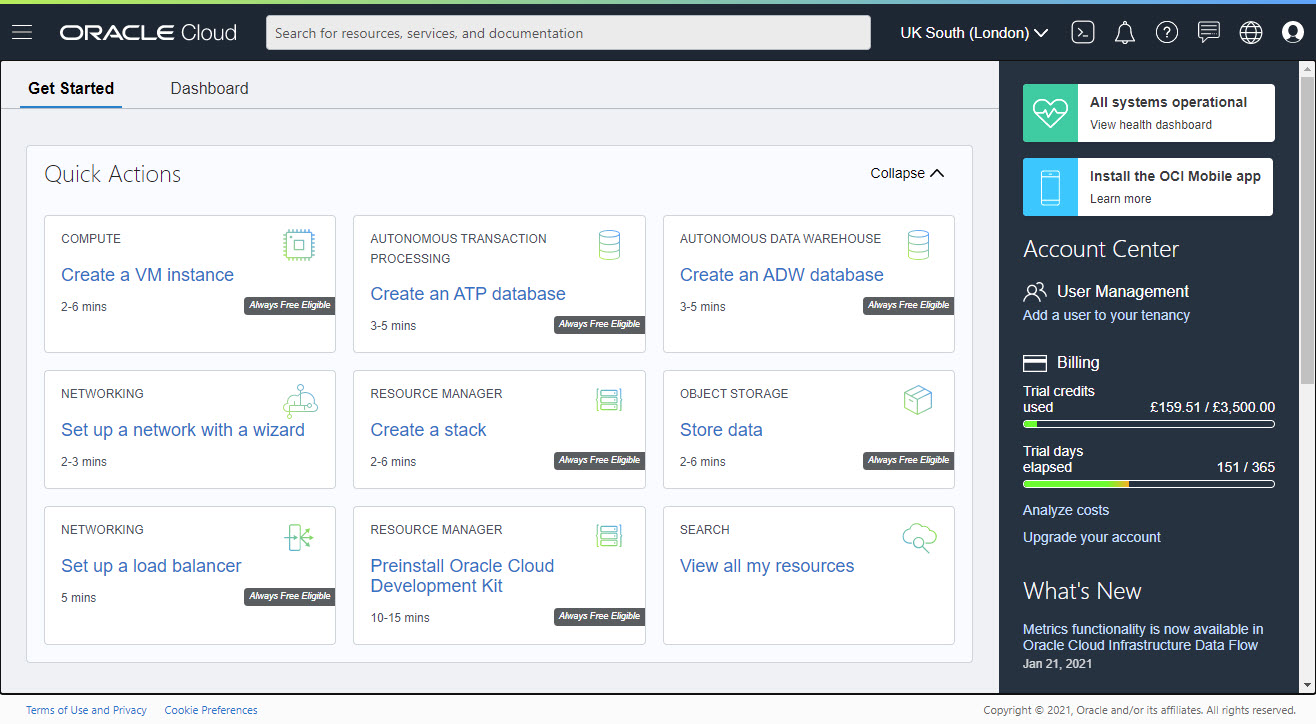
Image Source: Oracle Cloud
- Key Specs: Up to 192 cores (AMD EPYC), 2TB+ RAM, NVIDIA GPU clusters.
- Compliance: Complete global and regional compliance certifications.
- Support: Oracle Cloud Support (included with paid accounts).
- Verdict: If your primary metric is raw compute performance per dollar, specifically for AI or database workloads, OCI is the heavy hitter.
What stands out
- Cluster Networking: Provides low-latency connectivity between bare metal instances, critical for HPC.
- Aggressive pricing: Outbound data transfer costs are often significantly lower than AWS or Azure.
- Specific hardware focus: Configurations are explicitly designed for Oracle Database and high-load scenarios.
Who should choose Oracle OCI? Data scientists, research institutions, and enterprises running massive Oracle Databases or training large language models (LLMs).
7. OpenMetal

Best for: Private Cloud & OpenStack
OpenMetal disrupts the standard “rent a server” model by providing a private cloud core. Instead of a single standalone server, you typically deploy a cluster of three bare metal servers pre-configured with OpenStack. This gives you the autonomy of single-tenant hardware with the flexibility to create your own virtual machines.
Here is the OpenMetal dashboard, where you can manage hardware assets, monitor servers, and configure infrastructure resources.
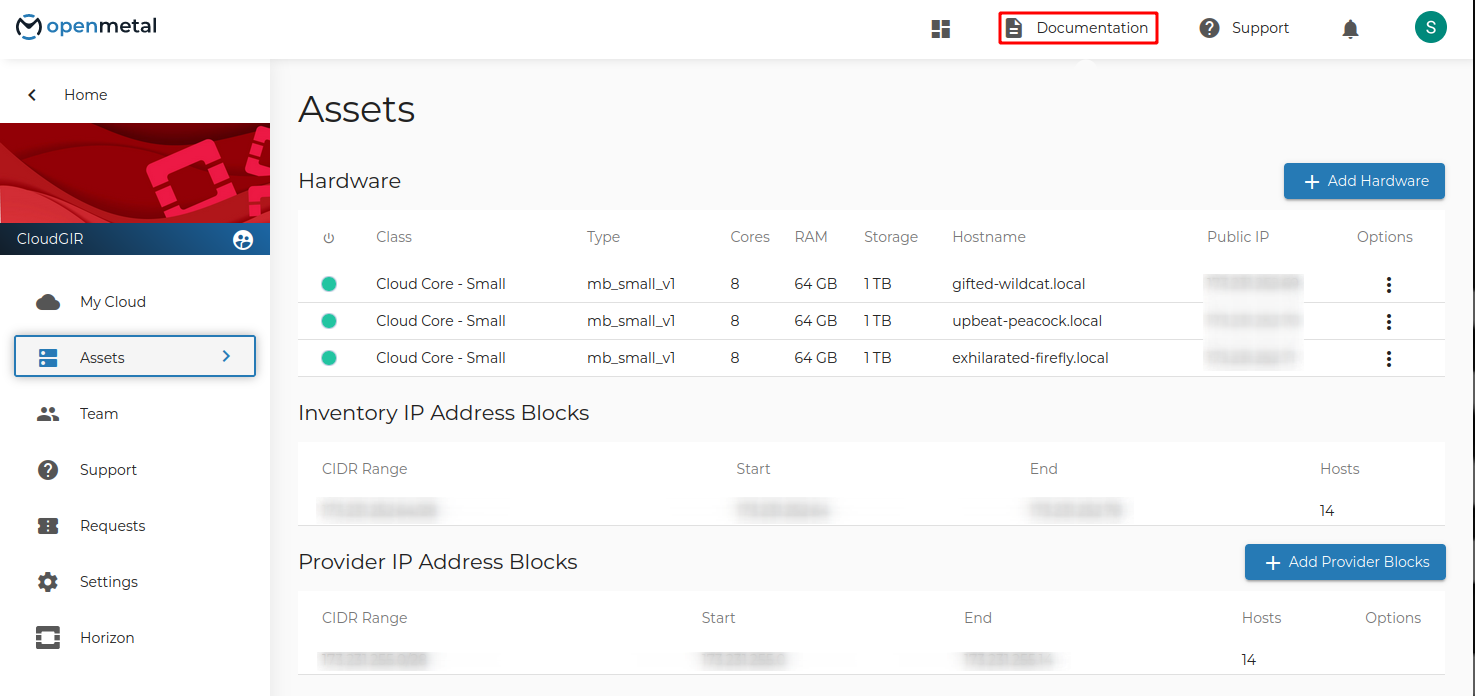
Image Source: OpenMetal
- Key Specs: Converged usage (Compute + Storage), Ceph storage, OpenStack control plane.
- Compliance: ISO 27001 certified data centers; hardware isolation aids compliance.
- Support: Provider-assisted; engineering support for OpenStack.
- Verdict: The best middle ground for teams who want the features of a public cloud (APIs, VM spinning) but want to own the underlying hardware physically.
What stands out
- Open Source focus: No vendor lock-in; you are using standard OpenStack.
- Speed: Deploys a full private cloud cluster in roughly 45 minutes.
- Transparency: Clear pricing on hardware versus software/support costs.
Who should choose OpenMetal? SaaS providers and DevOps teams who want to build their own internal cloud infrastructure without paying hyperscaler margins.
8. IBM Cloud
Best for: Custom Enterprise Configurations
IBM Cloud differentiates itself with granular customization. While other clouds offer “T-shirt sizes” (Small, Medium, Large), IBM allows you to configure over 11 million combinations of processor, RAM, and drive types. It is built for complex, hybrid enterprise architectures.
Let’s see the IBM Cloud interface for creating resources, managing applications, and monitoring storage and services across your environment.
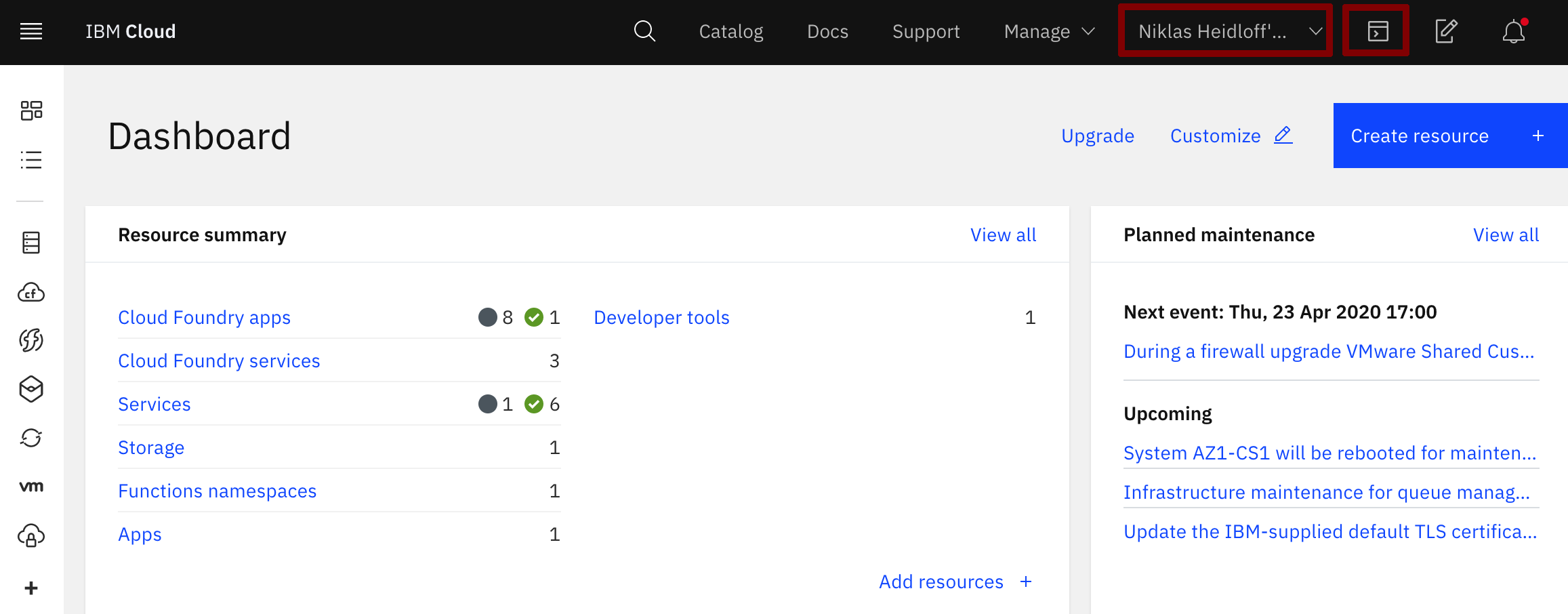
Image Source: IBM Cloud
- Key Specs: SAP-certified servers, extensive NVIDIA GPU options, and Intel/AMD custom builds.
- Compliance: FFIEC, HIPAA-ready options, rigorous enterprise standards.
- Support: Enterprise-grade support structures tailored for Fortune 500s.
- Verdict: The go-to choice for complex legacy migrations where the hardware must match specific vendor requirements exactly.
What stands out
- Global Private Network: Free data transfer between your IBM servers across different data centers.
- Customizability: You can pick the exact drive model and RAM speed you need.
- Satellite: Ability to extend IBM cloud services to your own on-prem infrastructure.
Who should choose IBM Cloud? Large financial institutions, SAP users, and enterprises that need exact hardware specifications to meet vendor software requirements.
9. InterServer
Best for: Budget & Unmanaged Power
InterServer focuses on delivering raw power at an accessible price point. They strip away the “managed services” overhead to offer high-bandwidth dedicated servers for technical users. Their “Price Lock Guarantee” ensures your hosting costs won’t creep up over time.
Look at the InterServer client dashboard for managing dedicated servers, bandwidth configurations, and service provisioning.
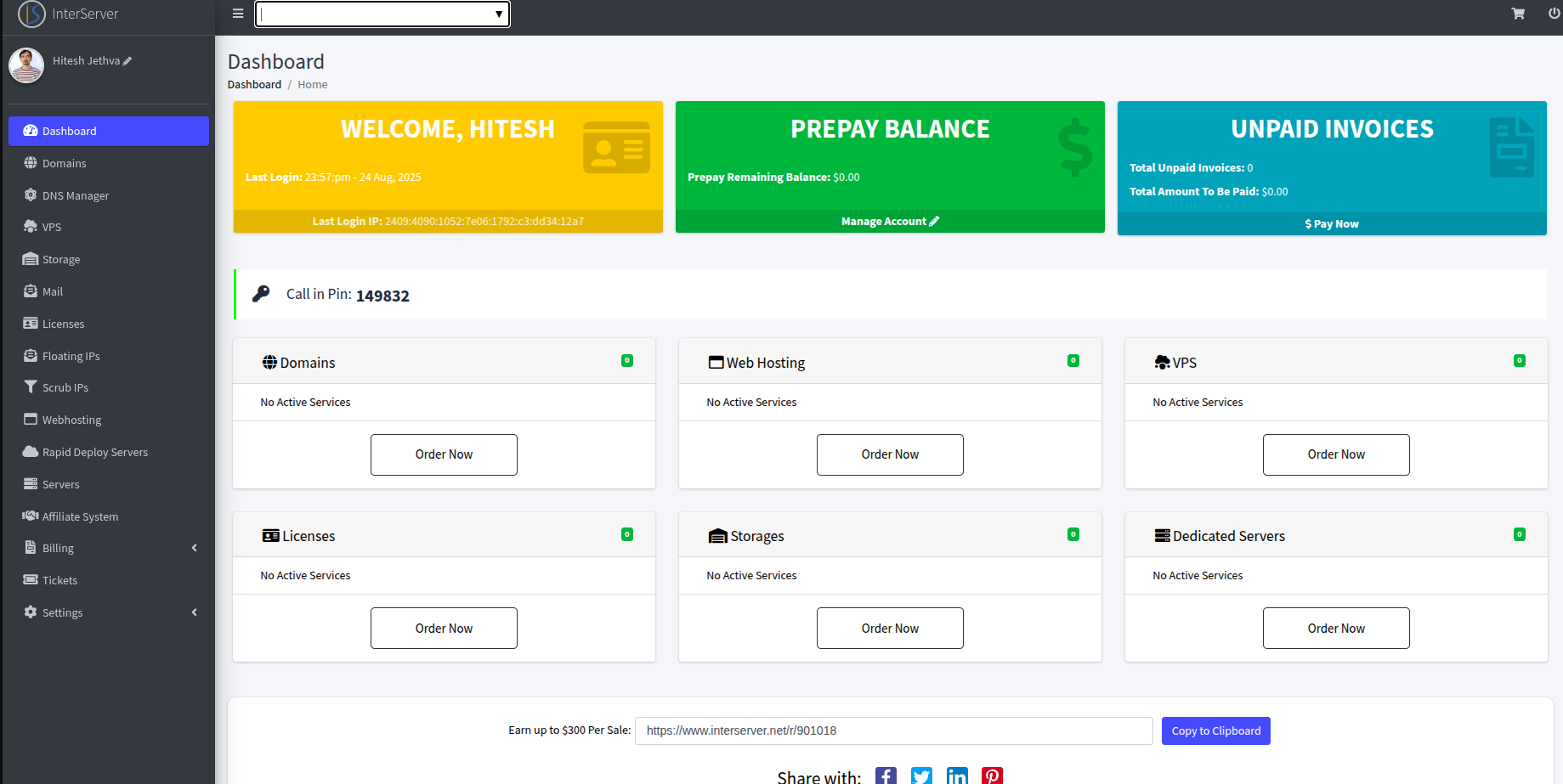
Image Source: InterServer
- Key Specs: 10Gbps port options, huge bandwidth allocations, Rapid Deploy servers.
- Compliance: Standard data center security (tier 3/4).
- Support: 24/7 ticket/phone, but scope is limited to hardware/network uptime.
- Verdict: Excellent value for users who are comfortable managing their own OS and security stack.
What stands out
- High Bandwidth: One of the most generous bandwidth policies for the price.
- No Setup Fees: Frequently waives setup fees on rapid deploy servers.
- Simplicity: A straightforward “you rent the box, you run the box” model.
Who should choose InterServer? Sysadmins, media streaming startups, and budget-conscious projects that need bandwidth without the enterprise markup.
Bare Metal Servers vs Dedicated Servers vs Cloud VMs
In practice, “bare metal” and “dedicated server” often describe the same outcome: one tenant, one machine, unlike shared hosting where multiple customers use pooled resources on the same platform. The difference is usually the purchase experience:
- Dedicated server hosts tend to be monthly, hardware-catalog driven, and offer hands-on support options.
- Cloud bare metal (AWS/OCI/IBM) is provisioned like cloud infrastructure, often with on-demand billing and API-first workflows, so it can feel similar to cloud solutions operationally even though it still runs on physical hardware.
At the infrastructure level, bare metal technology gives you exclusive physical resources, unlike a virtual server that shares capacity.
If you need burst capacity and are tight on managed cloud services, bare-metal cloud often wins. If you need a provider-led compliance posture and predictable monthly operations, dedicated hosts are often simpler to run.
2026 watch-out: Equinix Metal shutdown (migration planning)
If you’re currently on Equinix Metal, plan a migration now. Equinix states the Equinix Metal service will sunset on June 30, 2026.
A practical path is first to map your current server shapes, networking requirements, and automation dependencies (Terraform, image pipelines, IP allocations), then decide whether you want:
- Cloud bare metal (Atlantic.Net/AWS/OCI/IBM) for API-first provisioning, or
- Dedicated hosts/private cloud (Atlantic.Net/OpenMetal/IONOS-type options) for steadier monthly operations.
How to choose a bare metal provider (2026 checklist)
- Define the workload clearly. CPU model preference, RAM, storage type (NVMe vs SATA), and whether you need RAID. NVMe is the safe default for high-performance databases and I/O-heavy workloads; SATA still makes sense for bulk and object storage tiers.
- Decide on management responsibility. Unmanaged saves money and gives you full control, but patching, monitoring, and incident response stay on your side.
- Model bandwidth costs. Look for published port speeds, including transfer, or a clear overage method.
- Pick locations for latency. Shorter physical distance still matters for user experience and replication. Latency-sensitive workloads such as trading platforms and multiplayer game servers benefit most from bare-metal dedicated servers here: dedicated resources and uncontended I/O, plus a data center close to users, keep response times flat under load. Providers with global data centers make it easier to place capacity near each user base.
- Validate security/compliance fit. Ask what the provider covers vs what you must configure (shared responsibility). Confirm whether anti-DDoS protection is included in the plan or sold as an add-on, and at what mitigation scope. Single-tenant resource isolation simplifies audits, but the network edge still needs defending.
- Check provisioning speed. A bare metal cloud server can be live in minutes via API, and some platforms let you deploy with just a few clicks; a traditional custom build can take days. If your business relies on automation or short-lived capacity, instant provisioning and Terraform support belong on the requirements list.
- Confirm which operating systems are supported. Verify the provider’s image list covers the operating systems your stack requires, and whether custom OS installs are possible via IPMI access or a mounted ISO. If recovery workflows matter, also check whether the provider includes full IPMI access. Windows licensing and unusual distributions are the common friction points.
- Plan for hybrid-cloud. If your business runs bare metal dedicated servers alongside cloud VMs or object storage, confirm a private network connects the two (Hetzner’s vSwitch, AWS VPC placement, IBM’s global network) so replication and internal traffic stay off the public internet.
- Run a short trial. Benchmark your real workload, not synthetic tests. Enterprise buyers should also verify published availability rates, especially when providers claim figures above 99.99%.
Key Terms
- Bare metal: a single-tenant physical server rented from a provider, with no hypervisor layer between your software and the hardware resources. Unlike a virtual server, it gives you exclusive physical resources rather than shared capacity on the same host. Sold either as monthly bare-metal dedicated servers or as an hourly bare-metal cloud solution.
- Single-tenant: infrastructure reserved for one customer only; no other organization’s workloads run on the same physical machine, which gives you full resource isolation.
- Hypervisor: the software layer that divides one physical server’s hardware resources into multiple virtual machines. Bare metal removes it, which removes its overhead and its shared-tenancy risks.
- Colocation: renting rack space, power, cooling, and network connectivity for server hardware you own; the provider houses and powers the equipment, your business manages it.
- NVMe: a storage protocol that connects SSDs directly over PCIe, delivering lower latency and higher throughput than SATA. The default choice for high-performance database workloads.
- IPMI: an out-of-band management interface that lets you power-cycle, monitor, and reinstall a server even when its operating system is unresponsive. Some providers also include full IPMI access for remote hardware control and deeper maintenance tasks.
Frequently Asked Questions
What is bare metal hosting and how does it differ from virtualized cloud hosting?
Bare metal hosting rents you a single-tenant physical server with dedicated resources and no hypervisor between your workload and the hardware. In virtualized cloud hosting, a hypervisor splits one physical machine between multiple customers, so “noisy neighbors” can impact your speed. A virtual server shares hardware with other users, while bare metal avoids interference from other tenants. Bare metal guarantees 100% of the CPU, RAM, and I/O resources belong to you, which is critical for databases, AI training, and real-time processing. Note that “ dedicated hosting” traditionally refers to renting a physical server on a monthly contract. At the same time, “Bare Metal Cloud” describes physical servers that can be provisioned and automated instantly (often hourly) like virtual cloud servers, a model often chosen for dedicated performance and full control.
Is bare metal necessary for HIPAA compliance?
It is often preferred. While you can achieve HIPAA compliance in a shared cloud, single-tenant bare metal servers drastically reduce risk. Physical isolation eliminates the risk of data leakage between tenants and simplifies the auditing process required for handling ePHI.
Can I scale a bare metal server?
Scaling bare metal is “vertical” (upgrading RAM/Disk) and usually requires downtime. Modern providers like Atlantic.Net and PhoenixNAP allow you to deploy additional servers quickly, enabling “horizontal” scaling by distributing workloads across multiple physical machines.
Should I choose a managed or unmanaged plan?
If your team has strong Linux/Windows administration skills and can handle server administration, unmanaged is cheaper. If you need guaranteed uptime and help with security patching, firewalls, compliance audits, and maintaining the software stack, a Managed Service provider (like Atlantic.Net) is highly recommended to reduce operational risk.
What is the typical provisioning time for a bare metal server?
Provisioning time depends on the deployment model. A bare metal cloud solution such as PhoenixNAP provisions physical servers in minutes through an API, CLI, or Terraform; OpenMetal deploys a full private cloud cluster in roughly 45 minutes. Traditional bare metal dedicated servers built to order can take hours to several days, particularly for unusual hardware combinations. If deployment speed matters for your business, confirm whether the provider keeps pre-racked, rapid-deploy inventory, ships operating systems as ready-made images, and offers automated provisioning across its global network of data centers.
What are the benefits of using bare metal servers for databases?
Bare metal dedicated servers give a database full, uncontended access to the machine’s hardware resources, which keeps query latency predictable under load. There is no hypervisor overhead, and resource isolation means no neighboring tenant can compete for disk throughput during peak periods. Direct access to NVMe storage also lets you tune the kernel, filesystem, and RAID layout for the specific database engine, which virtualized environments limit. This is why high-performance transactional databases and large analytics workloads are among the most common business use cases for bare metal.
What is the difference between bare metal hosting and colocation?
With colocation, you buy and own the server hardware and rent rack space, power, cooling, and network connectivity in someone else’s data center. With bare metal hosting, the provider owns and maintains the dedicated servers and rents them to your business on a monthly or hourly basis. Bare metal shifts hardware procurement, replacement, and lifecycle management onto the provider, while colocation gives you total control over the equipment at the cost of capital expense and hands-on maintenance. Most businesses choose bare metal unless they already own hardware or have unusual equipment requirements.
How do you achieve high availability in a bare metal hosting environment?
High availability on bare metal comes from deploying multiple servers and removing single points of failure, since one physical machine cannot be live-migrated the way a virtual machine can, and true resilience depends on both server redundancy and network quality. Common patterns include load balancers in front of two or more application servers, database replication with automatic failover, and distributing servers across global data centers for geographic redundancy. A private network between servers keeps replication traffic isolated, anti-DDoS protection at the network edge stops a volumetric attack from taking every node down at once, and replicated object storage protects backups. Bare-metal cloud servers with API provisioning also make it faster to replace a failed node, which helps maintain consistent performance across the environment.

Written by
Dr. Assad Abbas holds a Ph.D. from North Dakota State University, USA, and is an Assistant Professor of Computer Science at East Central University, USA. He previously served as a Tenured Associate Professor at COMSATS University Islamabad, Pakistan. His research focuses on cloud, fog, and edge computing, big data analytics, the Internet of Things (IoT), artificial intelligence, cybersecurity, and smart healthcare. Dr. Abbas has published extensively in leading journals, conferences, and edited books.