
Choosing the right GPU hosting provider for GPU server hosting or dedicated GPU servers is a key decision that directly affects data processing, AI training, and compute-intensive tasks. The market continues to expand in 2026, with providers offering high-performance GPU instances, flexible pricing, and optimized environments for demanding AI workloads.
GPU Cloud Providers
We review five GPU Hosting Service providers, with a detailed breakdown to help you compare their offerings.

#1 Atlantic.Net
Atlantic.Net is a well-established hosting provider with over three decades of experience, offering cloud hosting, dedicated server hosting, and colocation services.
Atlantic.Net has developed a strong GPU hosting solution, featuring powerful NVIDIA GPU instances. The platform now supports advanced workloads such as AI inference, deep learning, computer vision, and big data analysis, powered by modern tensor cores for maximum performance. The service is engineered for demanding applications such as AI model training, deep learning, high-performance computing (HPC), professional graphics rendering, and intensive video encoding tasks.
Below is Atlantic.Net’s cloud control panel interface for deploying and managing dedicated and GPU servers.
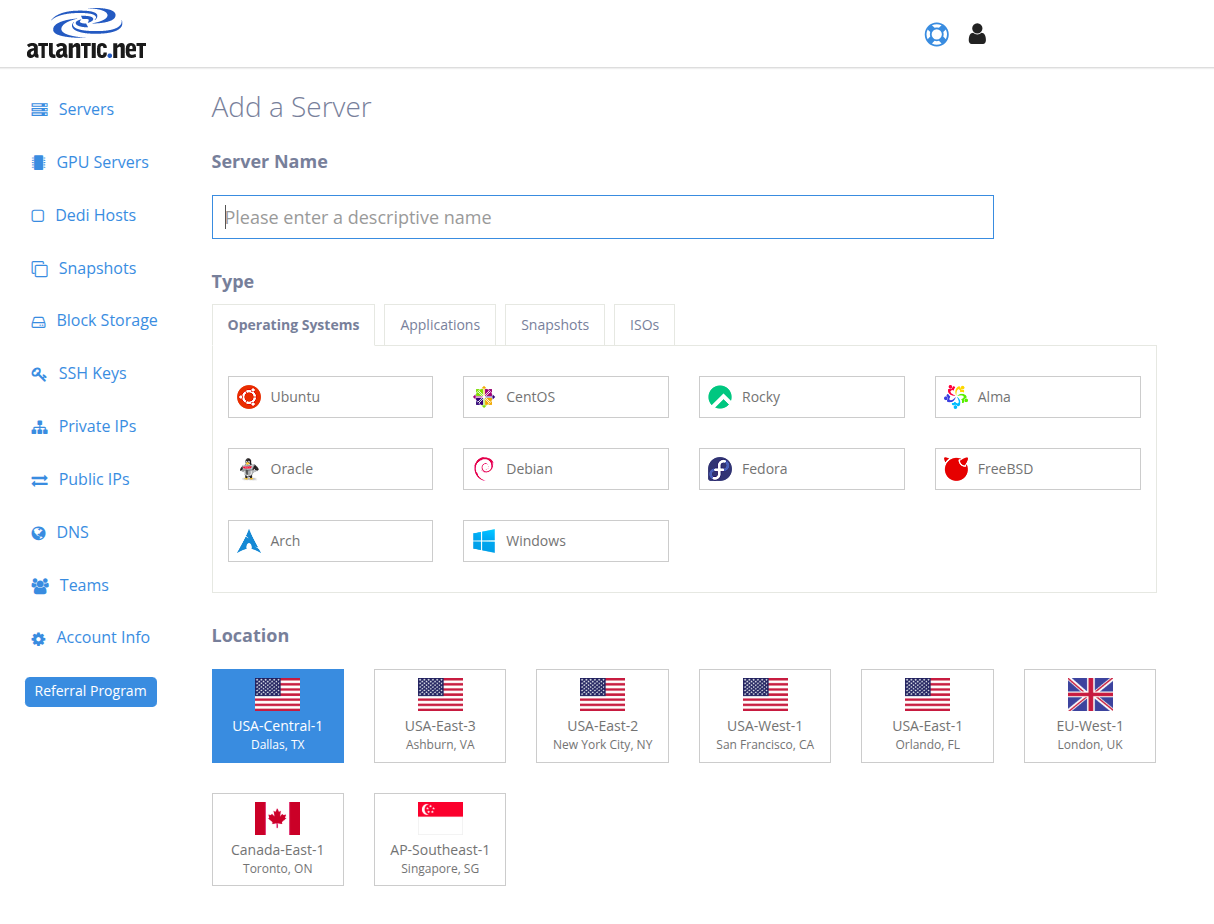
Image Source: Atlantic.Net
Pros:
- Extensive Experience: Over 30 years in the hosting industry, indicating stability and a deep understanding of infrastructure needs.
- High-Performance Hardware: NVIDIA options include the A2 with 16 GB of GPU memory for lighter inference, the L40S for AI and graphics workloads, and the H100 NVL for more demanding model training, inference, and scientific computing.
- Optimized Infrastructure: Combines powerful GPUs with fast NVMe storage and high-bandwidth networking to prevent bottlenecks and maximize throughput for AI workloads.
- Security and Compliance Focus: Strong emphasis on security, with data centers and services meeting compliance standards such as HIPAA, PCI DSS, and SOC 2/3, which is beneficial for handling sensitive data.
- Reliability: Known for a dependable platform with a 100% uptime Service Level Agreement for its cloud services.
- Comprehensive Support: Offers 24/7/365 customer and technical support from an experienced team based in the United States.
- User-Friendly Platform: Features an intuitive control panel to manage GPU instances and other cloud resources in your account.
- To manage businesses and organizations that need highly secure GPU instances for critical AI/ML projects.
- Teams running neural networks, image recognition models, and data analytics workflows.
- Users who need access to the latest NVIDIA GPU technology, like the NVIDIA H100, for compute-intensive training of deep learning models or large-scale simulations.
- Companies in regulated industries (e.g., healthcare, finance) require a hosting provider with a strong compliance posture.
- Developers and researchers looking for a stable platform with strong support for both short-term projects and long-running, demanding applications.
- Those who appreciate a provider with a long track record and a commitment to hardware quality and network performance.
#2 Lambda Labs
Lambda Labs has gained recognition in the Artificial Intelligence and Machine Learning communities by providing cloud services and physical hardware specifically for training AI workloads. The platform is tailored for AI inference and building development environments for large-scale models.
Let’s see the Lambda interface for analyzing resource usage, managing filesystems, and monitoring spending across projects.
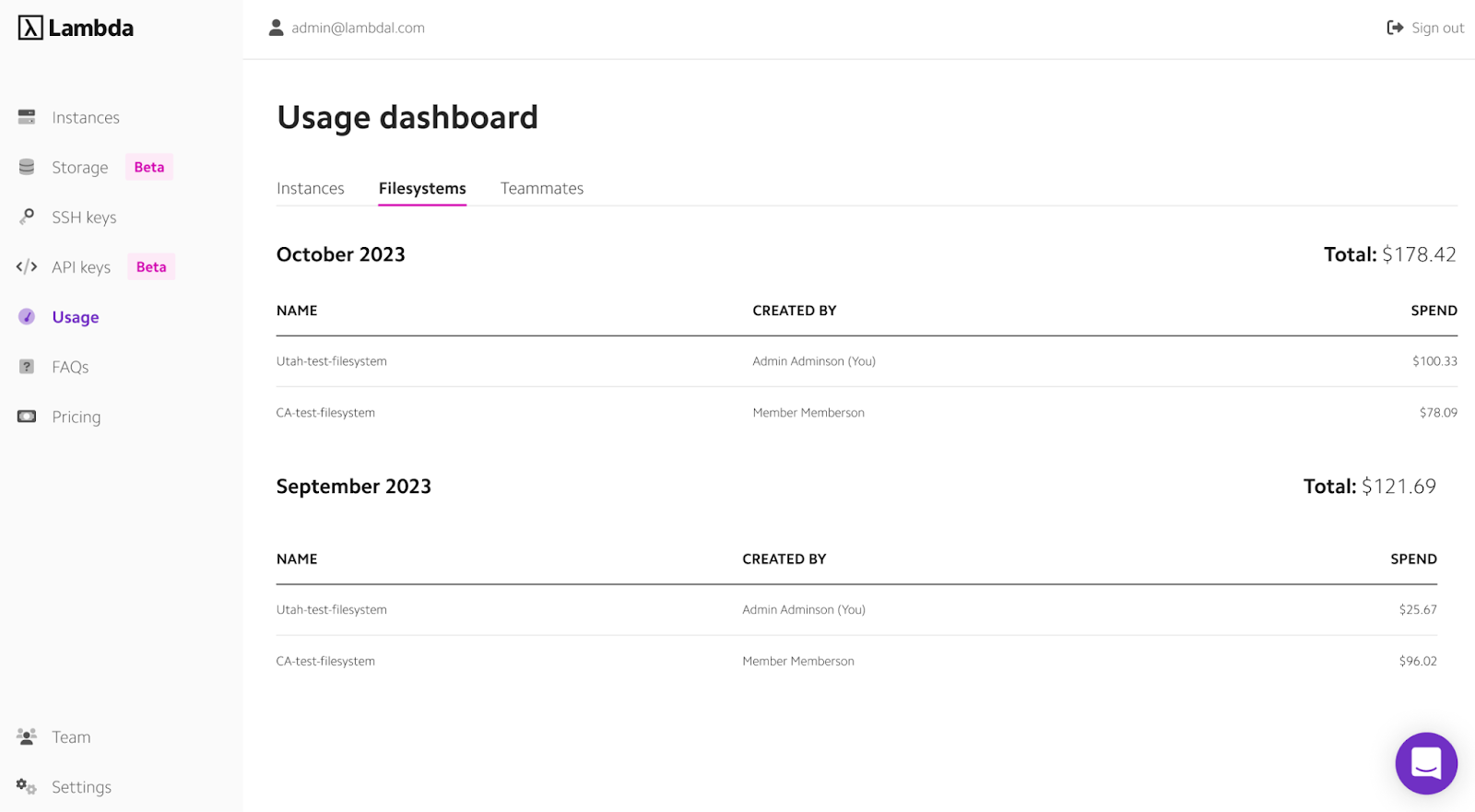
Image Source: Lambda
Pros:.
- Powerful NVIDIA GPUs: Access a range of high-end NVIDIA GPUs, including the A100 and H100.
- Le Cluster Capabilities: Known for GPU clusters equipped with high-speed InfiniBand interconnects, which are useful for large-scale deep learning model training.
- Colocation Services: Offers colocation options for companies that want to host their own AI infrastructure. Offers:
- Pricing: On-demand rates for those who want to host may be higher than those of more budget-oriented providers.
- Regional Availability: The number of self-service regions for its GPU cloud may be more limited than what hyperscale cloud providers offer.
- Free Cmays/Trials: May have fewer trial programs than some larger competitors.
Ideal for:
- AI startups and enterprises that need robust multi-GPU instances and cluster capabilities for training very large or complex models.
- Projects that require a combination of Cloud and on-premises hardware solutions.
- Users who prioritize ACML-configured, high-performance N-V-I clusters over the lowest possible cost.
#3 CoreWeave
CoreWeave has rapidly established itself as a specialized GPU cloud provider. It delivers large-scale GPU compute capacity using an extensive inventory of DIA GPUs. It is optimized for the massive computing power required in video rendering, video transcoding, and advanced AI projects.
The CoreWeave Cloud dashboard lets you deploy GPU-powered virtual servers, manage storage, and monitor high-performance workloads.
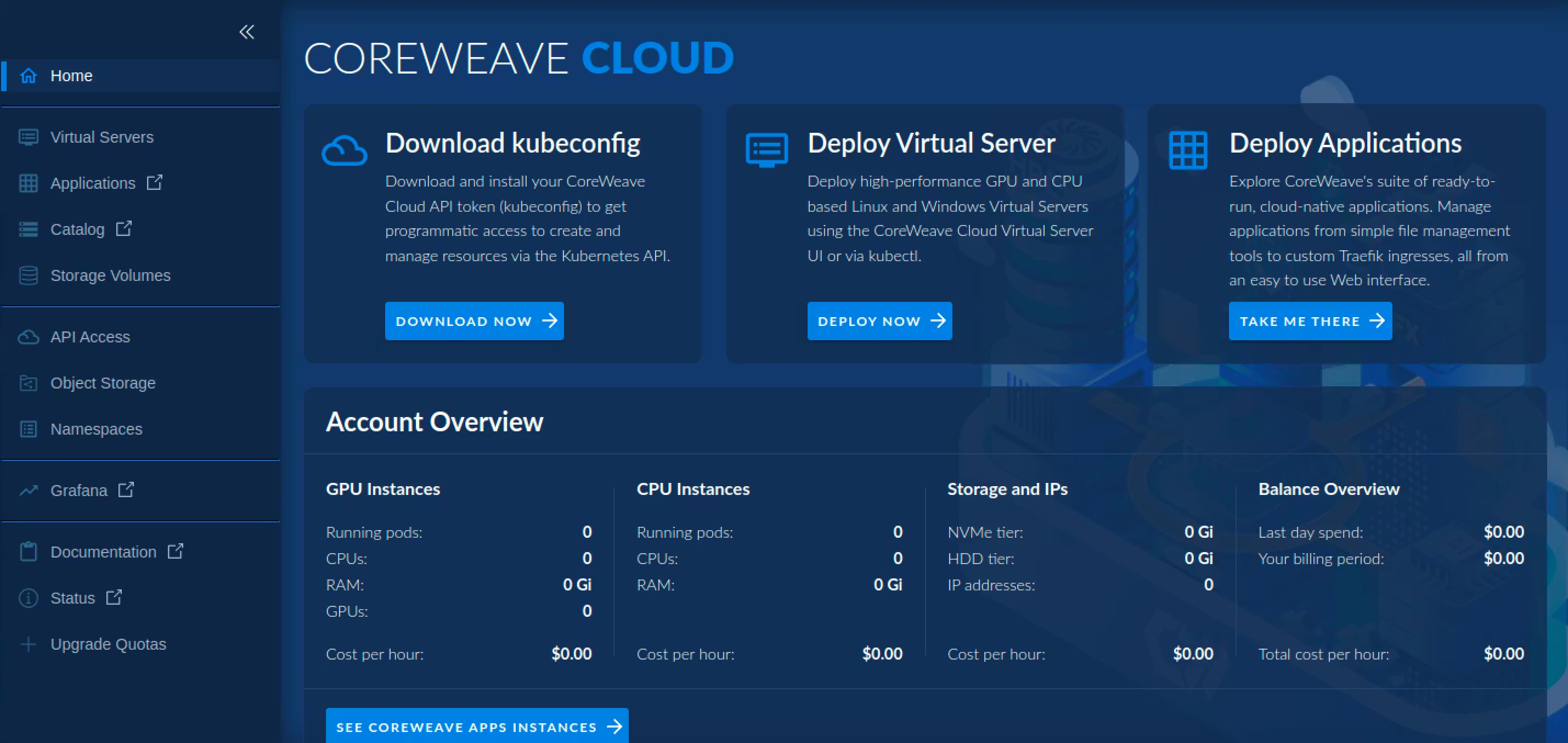
Image Source: CoreWeave Cloud
Pros:
- Performance-Tuned Infrastructure: Their platform is purpose-built and optimized for high-performance GPU workloads, especially AI/ML and rendering, and is designed to handle large-scale training and inference effectively.
- Strong NVIDIA Partnership: A close relationship with NVIDIA may help ensure a consistent supply of the latest GPU hardware.
Cons:
- Niche Focus: Primarily concentrates on high-end, large-scale GPU compute, so it might not offer the same breadth of general cloud services as major cloud providers.
- Complexity for Smaller Users: The platform and pricing may be geared toward large organizations rather than individual developers or small-scale projects with intermittent needs. Structure: While potentially cost-effective for large volumes, pricing for smaller deployments might be less competitive at smaller scales.
Ideal for:
- AI-first companies and large enterprises with substantial and continuous demand for GPU computing power.
- Organizations undertaking very large-scale AI model training, particularly for generative AI and large language models.
- Visual effects studios and rendering farms that require massive parallel processing capabilities.
- Users who need access to the latest NVIDIA GPU technology at scale.
#4 Scaleway
offers a variety of cloud computing services. These include standard compute instances, bare metal servers, and AI-ready GPU instances. They often highlight their transparent pricing structure and a strong commitment to European data sovereignty, including GDPR compliance. Their GPU VPS and bare metal options offer flexible GPU configurations for data analysis, scientific computing, and virtual desktop infrastructure (VDI).
Explore the Scaleway GPU hosting panel designed for managing GPU workloads, deploying coScaleway’s scaling compute infrastructure management. 
Image Sodeployleway
Pros:
- Transparent and Competitive Pricing: Known for clear, competitive pricing models, especially for users in their target market.
- European Data Sovereignty: Strong focus on GDPR compliance with data centers located exclusively in Europe (e.g., Paris, Amsterdam, Warsaw), appealing to customers with specific data residency needs.
- Modern GPU Selection: Provides access to current NVIDIA GPUs, including the H100, L40S, and L4, suitable for various AI workloads.
- Sly: A startup program that can provide credits and support, making it attractive for new ventures.
- Sustainability Focus: Actively works on sustainable infrastructure, focusing on power usage efficiency (PUE).
Cons:
- Limited Global Reach: Data center operations are primarily concentrated in Europe, which may not be optimal for applications that require low latency for users elsewhere.
- Fewer Managed Services: The range of managed services, particularly for advanced AI or database solutions, may be less extensive than that of hyperscale cloud providers.
- Ecosystem Maturity: Their marketplace and integrations might be less developed than those of larger, global providers.
- No HIPAA Compliance: Not suitable for U.S. healthcare applications that require HIPAA compliance.
Ideal for:
- European startups and businesses that prioritize GDPR compliance and data sovereignty.
- Users looking for cost-effective GPU instances with transparent pricing for AI model training and other GPU-accelerated tasks.
- Development teams that value a clean user interface and easy onboarding.
- Organizations that prefer a European hosting provider may benefit from their startup programs.

#5 Microsoft Azure
Microsoft Azure is a comprehensive cloud computing platform that provides a wide range of services, including powerful GPU instances optimized for AI/ML workloads. Azure offers a robust infrastructure, extensive integrations with other Microsoft services, and a broad global presence. Azure supports a wide range of GPU workloads, including natural language processing (human language models), computer vision, and large-scale data processing.
Explore the Azure dashboard to organize resource groups, track usage, and manage cloud services from a centralized platform.
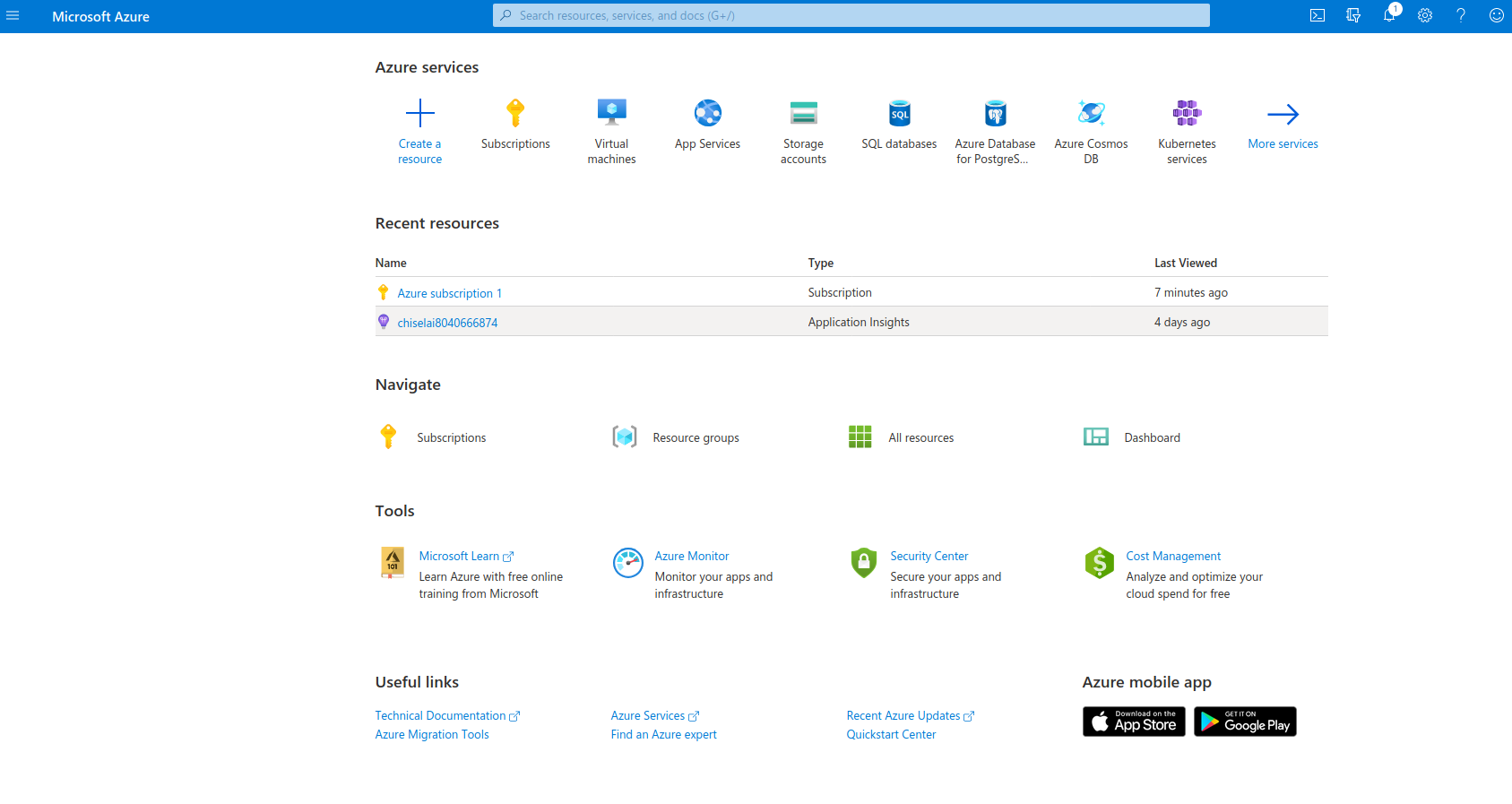
Image Source: Azure
Pros:
- Extensive Global Infrastructure: Azure has data centers in numerous regions worldwide, offering low-latency access for users globally.
- Wide Range of GPU Options: Azure provides low-latency NVIDIA GPUs, from entry-level to high-performance models like the NVIDIA A100 and H100, to meet different workload needs.
- Deep Integration with Microsoft Ecosystem: Seamless integration with Microsoft products and services such as Visual Studio, .NET, and Azure Machine Learning.
- Azure Machine Learning Service: Offers a comprehensive platform for building, training, and deploying machine learning models at scale.
- Enterprise-Grade Security and Compliance: Azure meets numerous compliance standards and offers advanced security features, beneficial for regulated industries.
Cons:
- Complexity for Beginners: The vast array of services and options can overwhelm users new to cloud computing.
- Cost Management: Optimizing costs can be overwhelming because of complex pricing models and the variety of services available.
- Learning Curve for Microsoft-Specific Tools: Users unfamiliar with Microsoft tools and technologies may need time to adapt.
Ideal for:
- Enterprises already invested in the Microsoft ecosystem and seeking seamless integration with Azure services.
- Organizations that need a global presence and low-latency access for their applications.
- Teams that are already using Azure for low-latency training and deployment of AI/ML models at scale.
- Users who need a wide variety of GPU options to match different workload requirements and budgets.
Dedicated Server vs. Cloud GPUs: Making the Right Choice
Now let’s look at the different types of GPU hosting available. You’ll need to decide between exclusive access to a physical dedicated server) or virtualized resources from a shared pool (cloud GPUs).
-
- Core Differences:
- Resource Allocation: Dedicated offers exclusive hardware; Cloud uses shared, virtualized resources.
- Performance: Dedicated provides predictable raw performance; Cloud offers excellent performance but can vary slightly.
- Control: Dedicated gives full hardware/software control; Cloud offers more flexibility for fine-tuned configurations.
- Scalability: Dedicated scaling takes longer; Cloud scales quickly and easily.
- Cost: Dedicated is often more expensive monthly (better for constant, predictable workloads), while Cloud is pay-as-you-go (flexible for variable needs).
- When a Dedicated GPU Server Makes Sense: For consistent heavy workloads, highly performance-sensitive applications, maximum control and customization, or stringent security/compliance that requires data isolation.
- The Flexibility of Cloud Providers: Cloud GPUs offer on-demand availability, rapid experimentation, variable workload management, no hardware lock-in, access to diverse instance types, and geographic distribution.
- Core Differences:
- One Cloud for Diverse Needs: Major cloud providers allow management of GPU instances alongside other cloud services (databases, storage) under a single account, simplifying IT management.
- Multi-GPU Instances: For very demanding applications, cloud providers offer instances with multiple GPUs or clustering capabilities, dramatically reducing training times and enabling larger models.
Practical Considerations for GPU Hosting Success
Ready to take advantage of GPU Hosting? Take some time to consider these important considerations:
- Selecting the Right GPU Models and Instance Types: Match the GPU to your workload to balance performance and cost, avoiding overspending or underperformance.
- Finding the Best Balance of Performance and Cost: Benchmark your workloads, understand GPU generations (newer often means better performance per watt; older can be cost-effective), consider VRAM needs, and don’t neglect CPU/syste; RAM. Spot instances can offer large savings for fault-tolerant workloads, while reserved instances provide discounts for long-term needs. Continuously monitor GPU usage.
- Refine Your Code: Ensure your code is set up to take full advantage of the GPU’s parallel processing capabilities.
- Pre-Configured Templates for Quick Deployment: These accelerate deployment by providing instances with pre-installed OS, drivers, and frameworks, reducing setup errors and speeding time to productivity.
By carefully considering these aspects, you can make informed decisions and get the most from GPU hosting services.
Atlantic.Net: Cost-Effective GPU Cloud Built for AI Workloads
GPU hosting services have become essential, transforming how organizations approach computationally intensive workloads. In 2026, businesses rely on GPU server hosting to power AI projects, big data analysis, and real-time AI inference at scale. A well-designed GPU cloud with one or more GPUs is Indispensable for tackling multiple tasks efficiently, from demanding ML model training and complex deep learning to scientific research and natural language processing.
This level of access lets users innovate faster, but choosing the right provider is key to avoiding hidden fees.
For those deploying machine learning models or accelerating other GPU-dependent projects, Atlantic.Net offers a robust, reliable solution. Our platform supports the entire lifecycle, from development with tools like NVIDIA CUDA and cuDNN to final deployment.
Atlantic.Net provides the high-performance NVIDIA GPUs and expert support needed for your most critical applications. Explore Atlantic.Net’s GPU hosting services and visit our website to discuss and meet your GPU hosting needs.

Written by
Richard Bailey brings over two decades of IT expertise, from traditional data centers to cutting-edge cloud solutions. As the founder of turbogeek.co.uk and a seasoned writer, he focuses on delivering authoritative content on our hosting services, HIPAA compliance, and related topics.