
Modern privacy needs call for protocols strong enough to handle the rise of quantum computing. By 2026, secure VPNs are expected to offer more than just AES encryption. They should also provide post-quantum protection and proven no-logs policies. This guide reviews leading VPN services, focusing on connection speed, transparency through audits, and how well they keep data safe across worldwide networks.
Virtual Private Networks (VPNs) have become an essential part of the digital world. Once viewed mainly as advanced security tools, they are now used widely in everyday life. People use VPNs to secure public Wi-Fi, reduce online tracking, access content restricted by location, and protect sensitive data while communicating online.
In 2026, the VPN market is defined less by basic encryption claims and more by measurable security standards such as independently verified no-logs audits and early adoption of post-quantum encryption frameworks. Many services are available, each with different features that balance security, speed, and ease of use. With so many choices, selecting the right option depends on understanding what VPNs are meant for and which features are most important.
This guide explains VPN basics, their uses, and key factors for choosing a service, and compares leading providers on security, privacy, speed, protocol transparency, encryption standards, streaming, torrenting, and pricing.
What Is a VPN?
A VPN is a service that ensures the confidentiality of Internet activity by encrypting transmitted data and masking the user’s IP address. This reduces the ability of websites, Internet service providers, and third parties to monitor or profile online behavior. The VPN establishes an encrypted tunnel between a user’s device and a remote server, and all traffic passes through this tunnel before reaching its destination.
In 2026, leading VPNs are evaluated not only on AES-256 encryption but also on their readiness for post-quantum cryptography and independently verified no-logs infrastructure. Modern VPN services use secure protocols such as WireGuard and OpenVPN to protect data while maintaining speed. Some providers are beginning to integrate quantum-resistant key exchange mechanisms to future-proof encrypted connections. When a VPN connection is established, websites see the server’s IP address instead of the user’s actual address, and encryption protects data even on public Wi-Fi networks.
Benefits of Using a VPN
A VPN provides several benefits that improve both security and everyday Internet use.
Access to Global Content
VPNs allow connections through servers in different regions to access websites, applications, and streaming services that may be location-restricted.
Protection Against Data Leaks
Advanced VPNs include DNS leak protection, kill switches, and private DNS. These features prevent exposure if the VPN connection drops. Leading providers now combine these tools with verified no-logs systems to ensure activity data is not stored or retrievable.
Consistent Performance for Streaming and Gaming
Some Internet providers slow down high-bandwidth activities. VPNs can reduce throttling, improving video playback and gaming stability.
Secure Online Transactions
VPNs add protection to financial activity, securing payment details and login credentials on public networks. Stronger protocol implementations also protect session keys against future cryptographic threats.
Support for Remote Work and Collaboration
VPNs secure remote access to business systems. Enterprise-focused services now prioritize scalable infrastructure and audited encryption frameworks to support distributed teams.
Greater Anonymity in Daily Use
VPNs reduce profiling and targeted advertising by masking browsing patterns. Providers with transparent audit reports offer stronger assurances that user data is not retained.
Choosing the Best VPN
Selecting a VPN depends on several important factors. Each of these affects the level of security, performance, and convenience a service can provide. In 2026, evaluation standards increasingly prioritize post-quantum readiness and independently verified no-logs audits alongside traditional performance metrics. Typically, the following factors help select the best VPN service.
Server Network and Locations
A broad and well-distributed server network improves both access and connection quality. Servers located closer to the user generally reduce delays. In addition, overall performance also depends on server load and the quality of connection routes.
No-Logs Policy and Transparency
Clear data handling policies are essential when selecting a VPN. Providers with independent audits and verified no-logs practices offer stronger privacy. Search visibility and trust signals now favor VPNs that publish third-party audit reports and regular transparency updates. Advanced measures such as RAM-only servers and private DNS further reduce the risk of storing or exposing user information.
Encryption and Protocols
Strong encryption is a core element of VPN security. AES-256 is widely regarded as a reliable standard. Similarly, modern protocols like WireGuard and OpenVPN combine strong protection with stable performance, while lighter options such as Lightway may improve speed on weaker connections. Some providers are also integrating hybrid or post-quantum key exchange mechanisms to strengthen long-term cryptographic resilience.
Post-Quantum Security Readiness
As quantum computing technology advances, some VPN providers are adopting quantum-resistant cryptographic algorithms or hybrid key-exchange methods. These steps help protect encrypted data from future decryption and support long-term privacy.
Additional Security Features
Some VPNs provide extra tools that strengthen protection. For example, a kill switch blocks data leaks if the connection drops. Similarly, split tunneling permits certain apps to use VPN while others connect directly. In addition, features such as multi-hop routing, stealth modes, and ad blocking provide additional safety in restricted or unsafe networks. Emerging implementations also include quantum-resistant handshake layers for future-proof protection.
Price and Connection Limits
Cost is another important factor. Long-term plans are usually more economical, while monthly subscriptions provide flexibility. Users should also check the number of devices that can connect at once. Some providers allow unlimited connections or offer dedicated IP addresses for an additional cost.
Device Support and Ease of Use
A good VPN should work across all major platforms, including Windows, macOS, iOS, Android, and Linux. Similarly, browser extensions and router support add flexibility for different use cases. In addition, an easy interface, auto-connect options, and clear access to advanced settings make the service more practical for everyday use.
Independent Reviews and User Feedback
Independent audits, transparency reports, and technical tests are useful for checking the accuracy of provider claims. Similarly, user reviews provide practical insights by highlighting issues such as regional speed differences, service reliability, or problems with specific internet providers. Priority should be given to providers with publicly verifiable audit histories rather than marketing claims alone.
Audit Frequency and Verification Standards
When you compare services, check how often they are audited and whether the audits cover infrastructure, no-logs policies, and protocol use. Ongoing, independent security audits are more valuable than one-time certifications.
Top VPN Services in 2026
Below are five leading VPN providers. Each is strong in different areas, from speed and streaming to privacy and security. This list prioritizes providers that demonstrate verified no-logs audits and measurable progress toward post-quantum encryption readiness.

1. ExpressVPN
ExpressVPN is positioned as a premium provider in 2026, with a focus on independently verified no-logs audits and protocol-level security enhancements designed for long-term cryptographic resilience.
Best for: streaming geo-restricted content, gaming, secure and private browsing, and bypassing censorship
Take a look at the ExpressVPN dashboard, where you can connect to secure VPN servers and manage your privacy settings in one place.
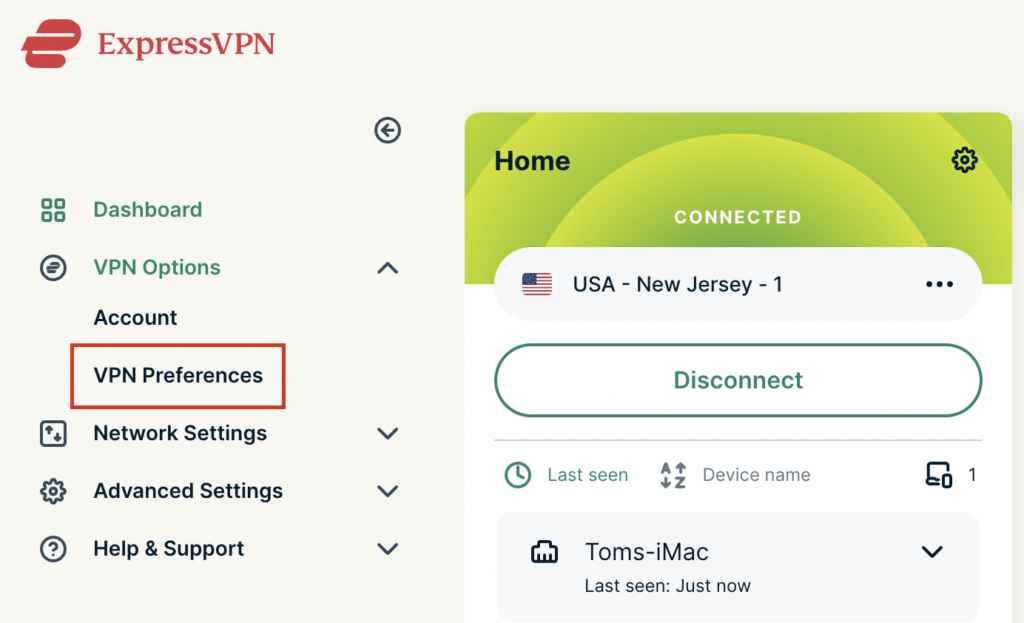
Image Source: ExpressVPN
Why you should choose it: ExpressVPN offers fast connections in 105 countries. It works reliably with Netflix, Disney+, Hulu, and BBC iPlayer. Its Lightway protocol is optimized for performance and designed to support future cryptographic upgrades.
Security and privacy: AES-256 encryption, secure protocols, password manager, kill switch, split tunneling, private DNS, and an independently audited no-logs policy. The provider emphasizes third-party audit verification and infrastructure transparency, aligning with 2026 search priorities around verified no-logs compliance.
Everyday use: Easy-to-use app that performs well on computers, phones, and routers. Good choice if you want a simple and reliable VPN.
Trade-offs: Higher cost than many competitors. Limited to 8 devices at the same time.
2. Private Internet Access (PIA)
Private Internet Access is known for its transparency-first approach, offering open-source apps and publicly documented privacy practices. It appeals to users who prioritize verifiable no-logs policies and granular control over encryption settings.
Best for: Transparency, advanced controls, and secure torrenting.
Discover the Private Internet Access interface designed to adjust general preferences, configure network settings, and enhance online security.
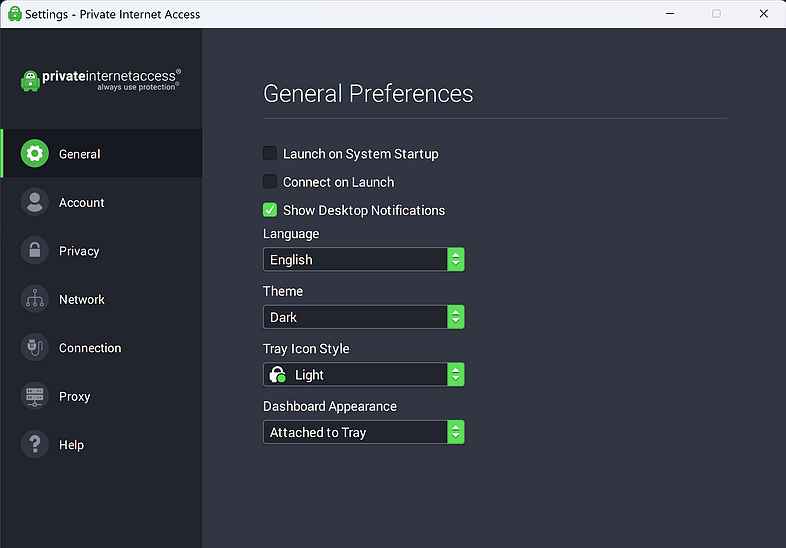
Image Source: Private Internet Access
Why you should choose it: PIA has one of the largest server networks, covering 91 countries and all 50 U.S. states. It gives advanced settings and port forwarding for P2P use. Its open-source applications allow public inspection of code, strengthening transparency and trust signals.
Security and privacy: AES-128/256 encryption, WireGuard and OpenVPN protocols, kill switch, open-source apps, and a no-logs policy proven in court. The provider emphasizes verifiable no-logs documentation and configurable encryption settings, appealing to users focused on audit-backed privacy standards.
Everyday use: Flexible and customizable, ideal for power users. Affordable on long-term plans.
Trade-offs: May appear complex for beginners. Streaming is possible, but sometimes it needs switching between servers.

3. Surfshark VPN
Surfshark is a value-focused VPN that offers many features, including unlimited device connections and no-logs claims that have been independently audited. It is a good choice for people who want to cover their entire household without sacrificing privacy controls.
Best for: Households and multi-device streaming.
This screen shows the Surfshark dashboard, where you can secure your internet connection, monitor personal data safety, and manage your cybersecurity tools.
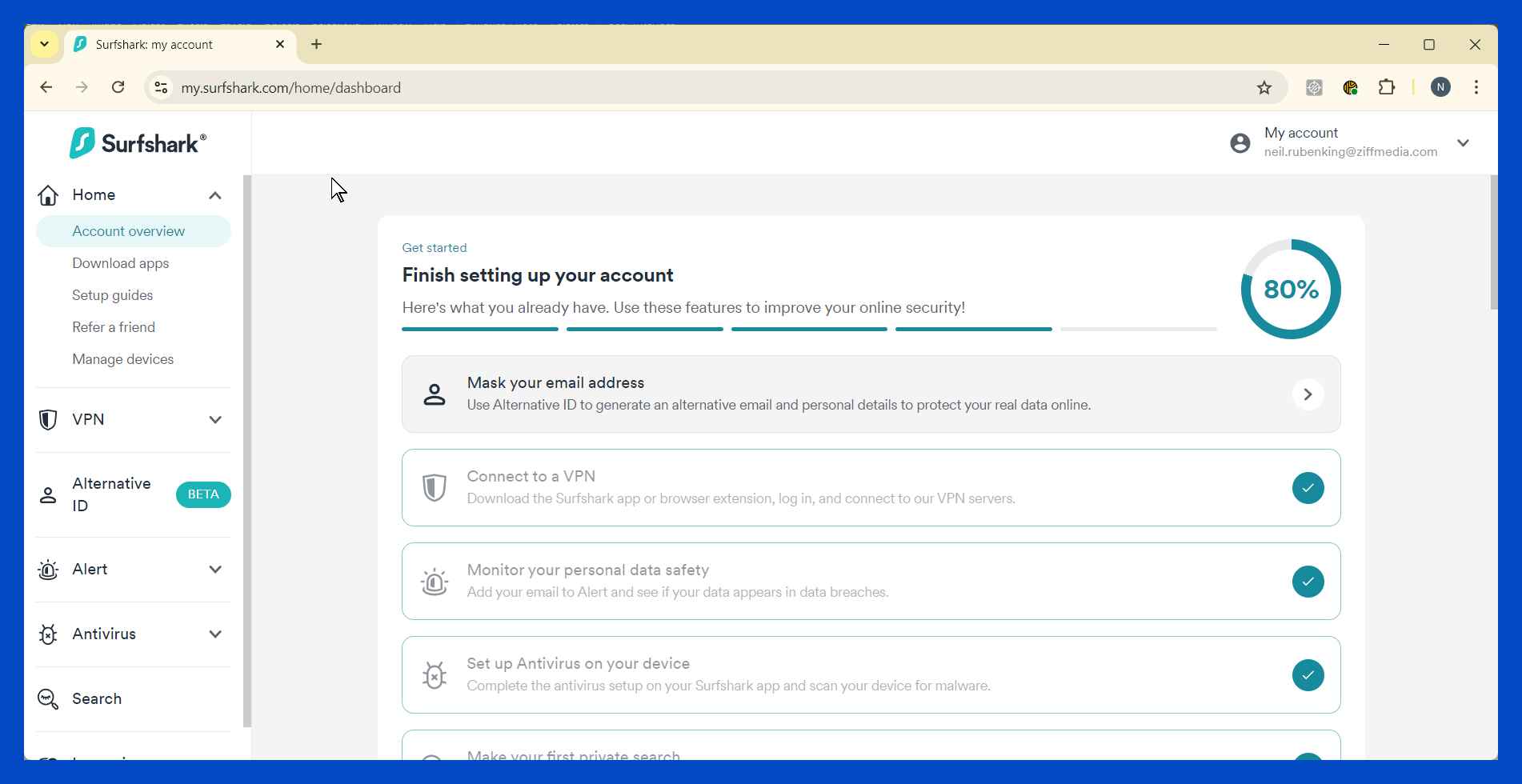
Image Source: Surfshark
Why you should choose it: Surfshark offers unlimited device connections with one subscription. It also provides fast speeds and good streaming access. Its infrastructure supports modern protocols optimized for both performance and encryption integrity.
Security and privacy: AES-256 encryption, WireGuard/OpenVPN/IKEv2 protocols, kill switch, MultiHop, ad/tracker blocking, and optional static IP. The provider highlights third-party audit verification and advanced routing features designed to strengthen data confidentiality.
Everyday use: Excellent value, particularly for households. Easy to set up and run on many devices.
Trade-offs: Operates under the jurisdiction of the Netherlands (14 Eyes alliance). Renewal cost is higher than in the first term.
4. Proton VPN
Proton VPN focuses on transparency and privacy, offering open-source apps and infrastructure that have been independently reviewed. People often choose it if they care about strong privacy laws and clear audit records.
Best for: Privacy-focused users, researchers, and those looking to bypass restrictions.
Take a closer look at the Proton VPN interface designed to control protocols, enable kill switch protection, and customize advanced networking options.
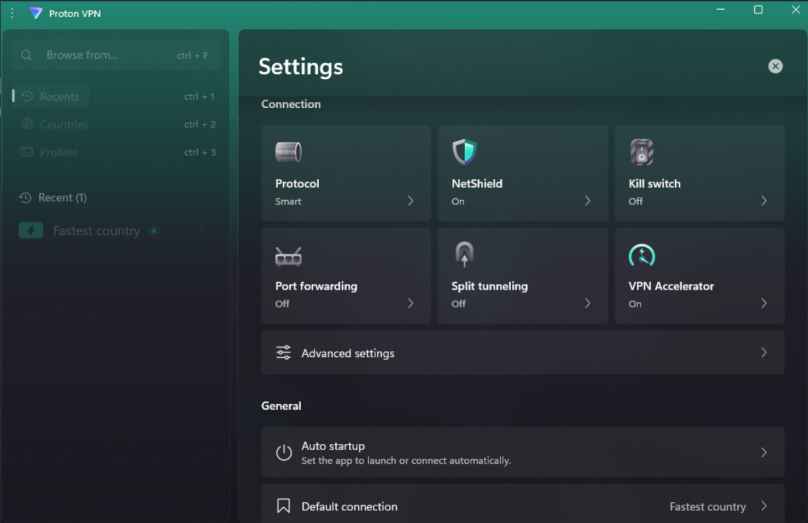
Image Source: Proton VPN
Why choose it: Based in Switzerland with strong privacy laws, open-source apps, independent audits, and Secure Core routing through privacy-friendly countries. Its Secure Core architecture routes traffic through hardened data centers, reducing exposure to network-based attacks.
Security & privacy: AES-256 encryption, WireGuard/OpenVPN protocols, kill switch, NetShield malware/tracker filtering, and transparency reports. The provider emphasizes verified no-logs audits and publishes regular transparency updates to support its privacy claims.
Everyday use: Paid plans deliver excellent speeds and streaming access; free plan offers unlimited data but fewer servers and slower speeds.
Trade-offs: Paid plans are mid- to high-priced; Secure Core routing can reduce speed due to a multi-hop design.

5. Mullvad VPN
Mullvad is known for allowing users to create accounts anonymously using random numeric IDs instead of personal information. This helps keep your identity separate from the start.
Best for: Maximum anonymity and minimal user data collection.
Here is the Mullvad account panel, which lets you manage devices, download VPN clients, and maintain complete control over your privacy setup.
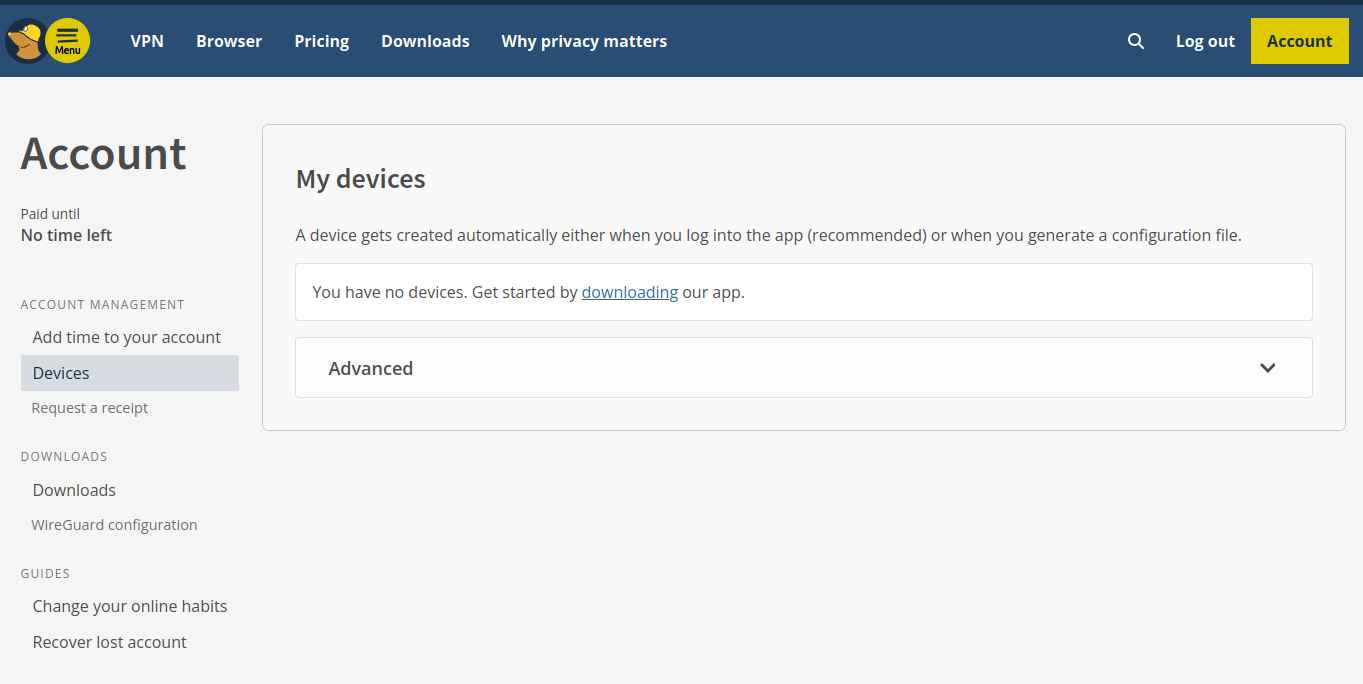
Image Source: Mullvad VPN
Why choose it: No personal information required; accounts are generated via random numbers. Accepts cash and cryptocurrency payments. Its account model is designed specifically for users who want to avoid email registration or identity-based billing records.
Security and privacy: AES-256 encryption, WireGuard/OpenVPN protocols, kill switch, multi-hop, RAM-only servers, traffic obfuscation (DAITA), and quantum-resistant tunnels. The service documents its cryptographic approach and highlights post-quantum key exchange experimentation for long-term data protection.
Everyday use: Lightweight, fast apps; strong torrenting privacy with port forwarding support.
Trade-offs: Smaller network (~695 servers in 49 countries); limited streaming access compared to competitors.

6. NordLayer
NordLayer is a VPN made for businesses that need to grow and manage remote teams. It offers centralized management, secure remote access, and helps organizations control users and segment their networks with encryption.
Best for: Companies that want to scale, keep remote teams secure, and control their enterprise networks.
See the NordLayer control panel, which lets you manage gateways, monitor server status, and organize user access across locations.
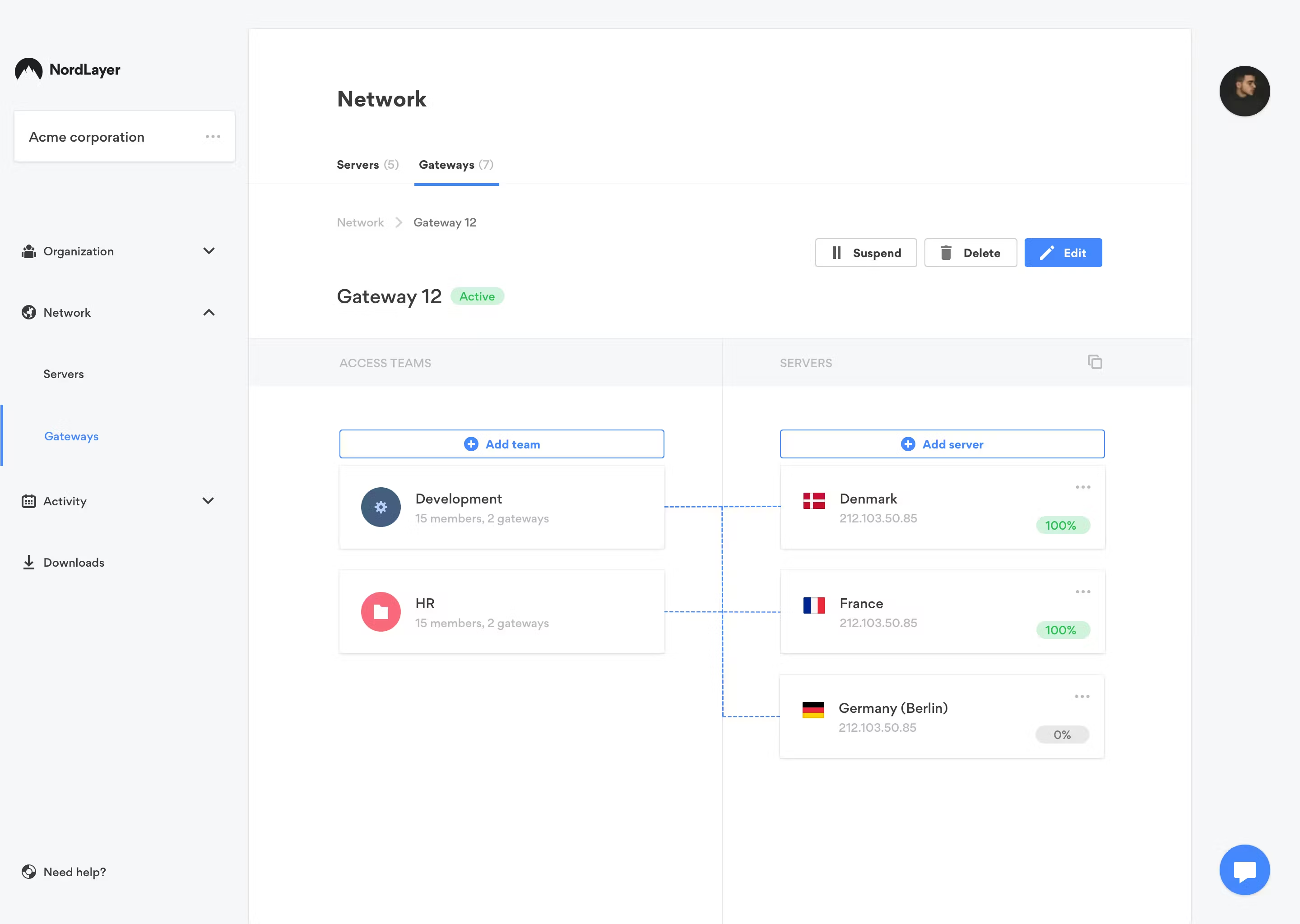
Image Source: NordLayer
Why choose it: NordLayer is built for organizations and offers cloud deployment, dedicated gateways, and team access controls. It makes user management easy to scale, making it well-suited for companies with hybrid or remote teams.
Security and privacy: NordLayer uses AES-256 encryption, supports WireGuard, and offers zero-trust access controls and multi-factor authentication. Its security practices are audited, and it adheres to strict logging policies and encryption standards to meet compliance requirements.
Everyday use: IT admins get a central dashboard, onboarding employees is simple, and the platform works across different devices.
Trade-offs: NordLayer is not meant for personal streaming or individual use. Its pricing is designed for businesses, not individual users.
7. CyberGhost VPN
CyberGhost is a privacy-focused VPN with a wide range of servers and clear transparency practices. It’s a good choice for people who want ready-made profiles for streaming, torrenting, and secure browsing, without needing to set things up themselves.
Best for: People who want easy streaming, beginners, and anyone looking for lots of server options.
Here is the CyberGhost control panel, which lets you manage privacy tools, update security settings, and keep your device protected from threats.
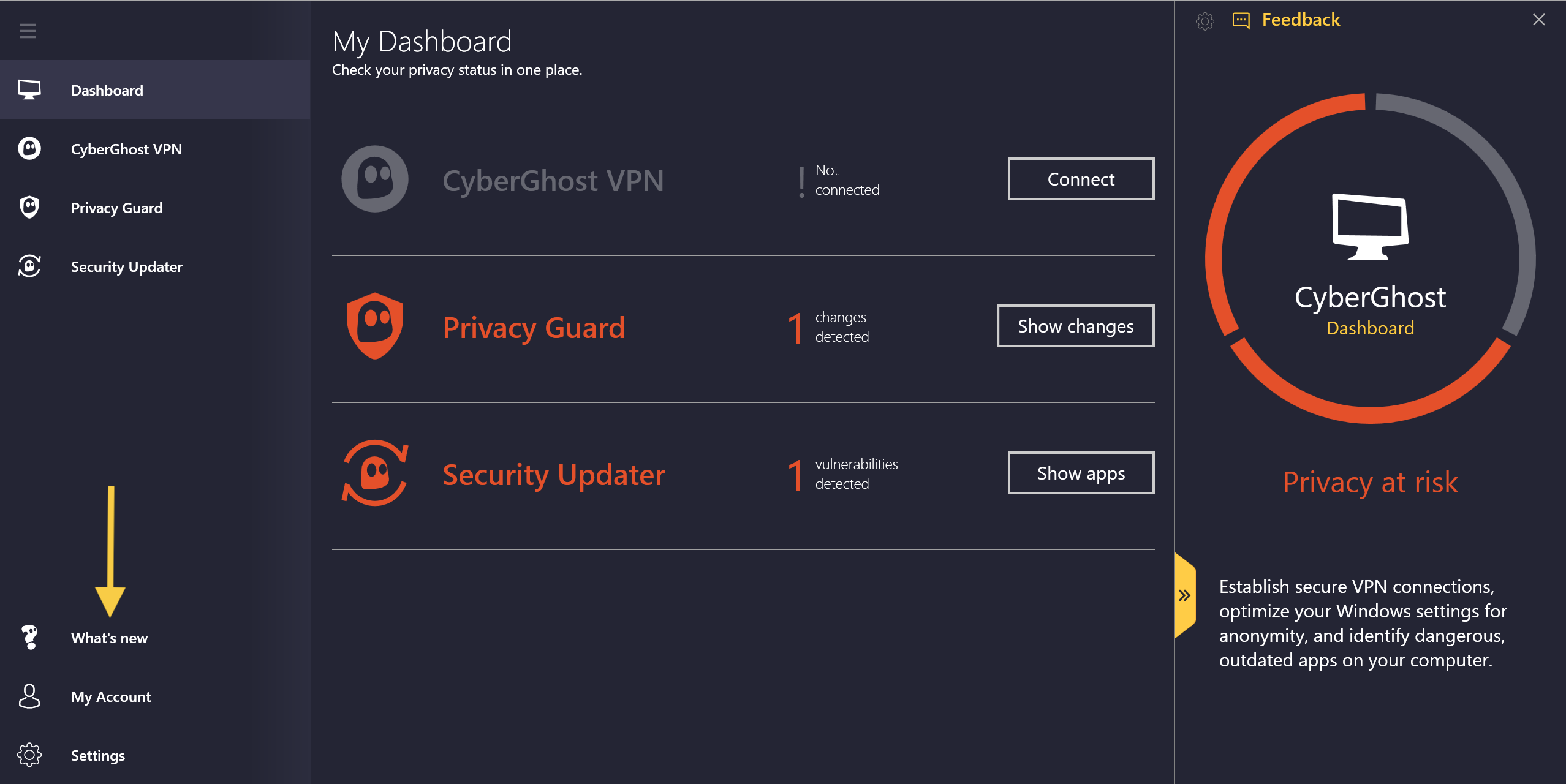
Image Source: CyberGhost
Why choose it: CyberGhost has thousands of servers in many countries and offers special profiles for streaming and torrenting in its apps. The organized server categories make it easy to find what you need, while still keeping up-to-date security standards.
Security and privacy: CyberGhost uses AES-256 encryption, supports WireGuard, OpenVPN, and IKEv2 protocols, and includes a kill switch and DNS leak protection. It also publishes independent transparency reports and has passed no-logs audits and infrastructure reviews, demonstrating that it handles data responsibly.
Everyday use: The interface is easy to use, with clearly marked streaming and P2P servers. It’s a good fit for people who like having guided setup options.
Trade-offs: You get better value with longer-term plans, while monthly prices are higher. There are fewer advanced customization options than those available in VPNs aimed at developers.

8. IVPN
IVPN collects very little data, undergoes independent audits, and is open about its operations. The service uses strong privacy controls and offers simple subscription plans.
Best for: People who care deeply about privacy and want a VPN with proven no-logs policies.
Here’s the IVPN app dashboard, where you can manage server selection, enable privacy tools, and ensure a fast and secure browsing experience.
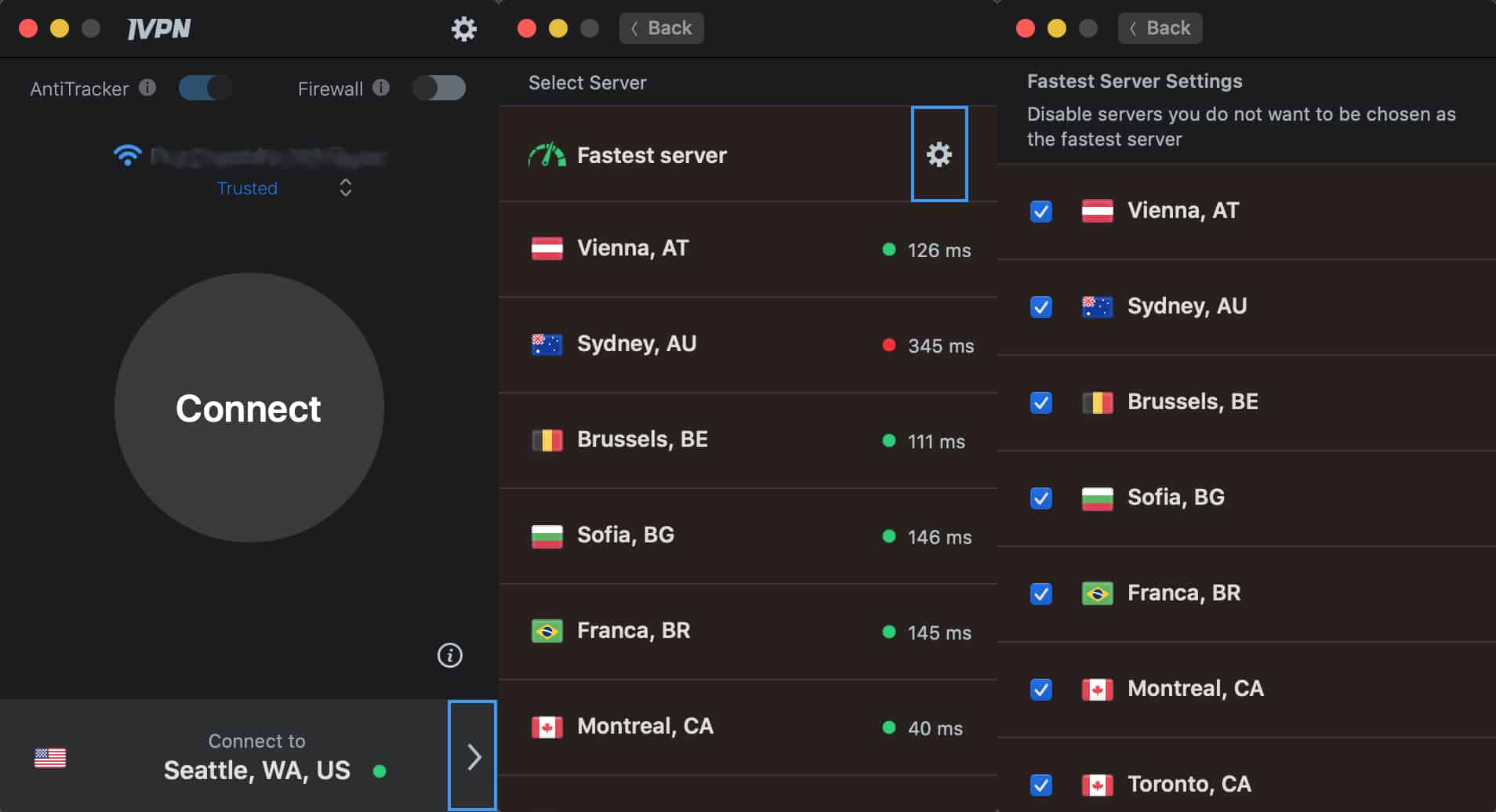
Image Source: IVPN
Why choose it: IVPN has a clear no-logs policy, openly shares its security documentation, and offers multi-hop routing. Its system is built to keep metadata to a minimum and protect your privacy at every connection point.
Security and privacy: IVPN uses AES-256 encryption, supports WireGuard and OpenVPN, and includes a kill switch, multi-hop routing, and anti-tracker tools. Third-party audits verify its no-logs policy. IVPN also explains how its encryption works and how it plans to keep data secure in the future.
Everyday use: IVPN has a simple, easy-to-use interface and works on different devices. It is designed for privacy, not for streaming services.
Trade-offs: IVPN has fewer servers than some larger VPNs and does not prioritize streaming access.
Comparison of Leading VPN Services (Security, Performance, Coverage)
| Provider | Security & Privacy | Speed & Performance | Streaming Access | Torrenting Support | Pricing | Server Coverage |
| ExpressVPN | AES-256, Lightway/WireGuard/OpenVPN, kill switch, split tunneling, private DNS, independently audited no-logs | Consistently high speeds globally | Netflix, BBC iPlayer, Disney+, Hulu | Full P2P support | Premium: up to 8 devices | ~2,000+ servers in 105 countries |
| Private Internet Access (PIA) | AES-128/256, WireGuard/OpenVPN, kill switch, open-source apps, court-verified no-logs | Fast; highly configurable | Netflix, Disney+, BBC iPlayer (may require switching) | Full P2P with port forwarding | Budget-friendly; up to 10 devices | 10,000+ servers in 91+ countries |
| Surfshark VPN | AES-256, WireGuard/OpenVPN/IKEv2, kill switch, MultiHop, CleanWeb, audited no-logs | Fast and stable; unlimited devices | Netflix, BBC iPlayer, Disney+, Hulu | Full P2P support | Affordable initial term; higher renewal | 3,200+ servers in 100+ countries |
| Proton VPN | AES-256, WireGuard/OpenVPN, kill switch, Secure Core, NetShield, open-source, independently audited | Premium plans are fast; the free tier is slower | Netflix, BBC iPlayer, Disney+ (premium) | P2P on select servers | Free tier; paid mid- to high-priced | 2,000+ servers in 65+ countries |
| Mullvad | AES-256, WireGuard/OpenVPN, kill switch, multi-hop, RAM-only servers, quantum-resistant tunnels | Fast; smaller network | Limited streaming | Full P2P with port forwarding | Flat €5/month; up to 5 devices | ~695 servers in 49 countries |
| NordLayer | AES-256, WireGuard-based protocol, zero-trust access controls, MFA, audited infrastructure | Optimized for enterprise stability | Not streaming-focused | Business file transfer support | Business-tier pricing | Global cloud-based gateways |
| CyberGhost | AES-256, WireGuard/OpenVPN/IKEv2, kill switch, DNS leak protection, transparency reports | Strong speeds; optimized streaming profiles | Netflix, BBC iPlayer, Disney+ | Dedicated P2P servers | Tiered pricing; long-term discounts | 9,000+ servers in 90+ countries |
| IVPN | AES-256, WireGuard/OpenVPN, kill switch, multi-hop, audited no-logs | Stable speeds; privacy-focused routing | Limited streaming focus | P2P supported | Standard and Pro plans | Servers in 30+ countries |
Encryption Protocol Comparison (WireGuard vs. Post-Quantum Readiness)
| Provider | WireGuard Support | OpenVPN Support | Proprietary Protocol | Post-Quantum / Hybrid Key Exchange | Verified No-Logs Audit |
| ExpressVPN | Yes | Yes | Lightway | Hybrid-ready infrastructure design | Yes |
| Private Internet Access (PIA) | Yes | Yes | No | Not publicly specified | Yes (court-verified) |
| Surfshark VPN | Yes | Yes | No | Not publicly specified | Yes |
| Proton VPN | Yes | Yes | No | Not publicly specified | Yes |
| Mullvad | Yes | Yes | No | Experimental quantum-resistant tunnels | Yes |
| NordLayer | Yes | Yes | No | Enterprise-focused cryptographic controls | Yes |
| CyberGhost | Yes | Yes | No | Not publicly specified | Yes |
| IVPN | Yes | Yes | No | Not publicly specified | Yes |
Budget-Friendly Options
Some VPNs are more expensive, while others prioritize affordability without compromising reliability. ExpressVPN is more expensive but is valued for its speed, global coverage, and independently audited no-logs policy. Similarly, Surfshark offers a lower-cost alternative with long-term plans and unlimited connections, which makes it practical for households. Private Internet Access (PIA) is also competitively priced on extended plans, offering advanced configuration options at a lower monthly cost.
Mullvad takes a different approach: a flat €5 monthly rate, no contracts, and no personal details required, making it attractive to those who prefer simplicity and privacy. CyberGhost frequently discounts long-term subscriptions, positioning itself as a cost-effective option for streaming-focused users. IVPN offers straightforward Standard and Pro plans, prioritizing transparency over promotional pricing models. In addition, Proton VPN provides flexibility with a free plan suitable for basic use and paid plans that deliver faster speeds and broader server access.
NordLayer operates on a business-tier pricing structure designed for teams rather than individual users, making it suitable for organizations that require scalable encrypted access instead of budget personal use.
When considering costs, long-term subscriptions usually reduce the effective monthly price. Likewise, avoiding extras such as dedicated IP addresses or advanced add-ons helps keep expenses low. Services that allow unlimited connections, such as Surfshark, often provide better household value, while flat-rate models like Mullvad appeal to users who prefer predictable pricing without promotional tiers.
Specialty VPNs
Some VPN services perform better for specific tasks, particularly streaming, torrenting, and secure business connectivity. The providers mentioned above are discussed from the perspectives below.
VPNs for Streaming
For streaming, key factors include a large server network, consistent platform unblocking, high throughput, and protection against throttling. To that end, ExpressVPN is a suitable option because it delivers reliable access and smooth playback across major services.
Similarly, Surfshark is useful for households because it allows unlimited devices and maintains good streaming performance. CyberGhost also performs well in this category, offering dedicated streaming-optimized servers within its apps. In addition, Proton VPN’s paid plans can provide stable access, though users may need to test different servers for the best results. Providers such as PIA and Surfshark also offer dedicated IP addresses, which can be helpful in special cases, though most users do not require them. IVPN and Mullvad are less focused on streaming optimization, prioritizing privacy controls instead. NordLayer is designed for business environments and is not intended for consumer streaming use cases.
VPNs for Torrenting
File sharing through torrents requires high privacy and a stable connection. Therefore, choosing the right VPN is important. Torrenting requires measures such as a kill switch and consistent speeds for smooth transfers. PIA and Mullvad are suitable options because they support port forwarding and provide strong privacy protection.
Similarly, ExpressVPN offers fast and secure P2P connections, though it does not include port forwarding. Surfshark and CyberGhost both allow P2P traffic on supported servers, making them practical for general users. IVPN supports torrenting with a privacy-first configuration, while NordLayer is structured for secure corporate data transfer rather than public torrent networks. Finally, keeping the kill switch enabled is important to prevent data leaks if the VPN connection drops.
Other VPN Options
For users with specific needs beyond entertainment, NordLayer provides centralized management and encrypted access for remote teams. IVPN and Mullvad appeal to privacy-focused users who prefer minimal data collection and simplified account models.
However, when evaluating any provider, priority should be given to verified no-logs audits, transparency in encryption protocols, and infrastructure design rather than marketing claims alone. For stronger privacy, reliable streaming, scalable business deployment, and advanced features, services such as ExpressVPN, Surfshark, Proton VPN, Mullvad, PIA, CyberGhost, IVPN, and NordLayer offer more complete options.
Final Thoughts
Choosing the right VPN depends on your specific needs, whether for privacy, streaming, torrenting, business use, or everyday browsing. In 2026, priority should also be given to post-quantum encryption readiness and independently verified no-logs audits, not just basic AES claims. Security, speed, server coverage, device support, and cost are all important factors to consider.
ExpressVPN offers reliable global coverage and fast performance. Similarly, Surfshark provides good value with unlimited device connections. Mullvad and PIA focus on strong privacy and advanced features, while Proton VPN offers flexible options with both free and paid plans. CyberGhost stands out for streaming-optimized servers, IVPN emphasizes audit-backed privacy controls, and NordLayer supports scalable encrypted access for business teams.
For lighter or basic use, alternatives such as Hotspot Shield and TunnelBear may be suitable, although they have limitations in privacy and advanced functionality. Providers without transparent audit documentation or clear disclosures of encryption protocols should be evaluated cautiously. By comparing providers carefully and considering your priorities, you can select a VPN that ensures secure, private, and resilient Internet access.
Hotspot Shield focuses on speed with its Catapult Hydra protocol, making it suitable for casual browsing and light streaming. Similarly, TunnelBear offers an easy-to-use interface and clear connection indicators, which are helpful for beginners who want simplicity over advanced features.
However, these VPNs have limits in privacy, server coverage, and advanced options. For stronger privacy assurances, verified no-logs audits, broader protocol support (including WireGuard implementations), and scalable deployment options, services like ExpressVPN, Surfshark, Proton VPN, Mullvad, PIA, CyberGhost, IVPN, and NordLayer provide more complete solutions.
* This post is for informational purposes only and does not constitute professional, legal, financial, or technical advice. Each situation is unique and may require guidance from a qualified professional.
Readers should conduct their own due diligence before making any decisions.